Buying a Whole Beef Cut in China: Seven Details to Put in the Quote
Understand whole-cut weight, trimming, steak thickness, portioning and total costs before confirming a beef order for your household in China.
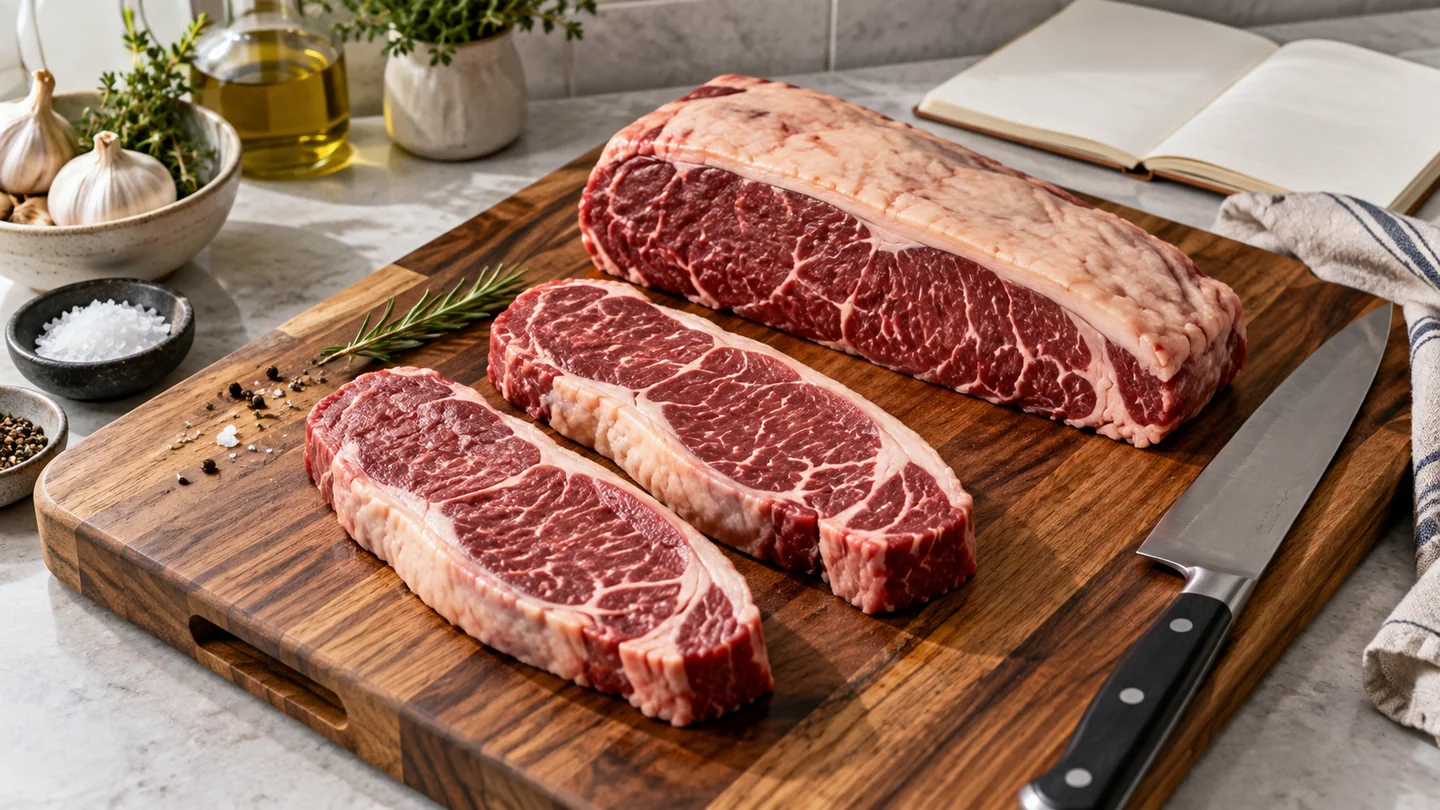
Buying a whole beef cut can give you a useful starting point for several meals, but the name of the cut and a price per kilogram are only part of the order. Before confirming, put the actual piece, weight basis, trimming, cutting, packaging and full charges in one written quote.
This matters when you are ordering steak in China and discussing preparation across languages. “A whole striploin, sliced” may sound precise, yet it leaves several decisions open. Do you want all of it prepared the same way? Are smaller end pieces included? Is the quoted weight measured before trimming? A clear quote lets both sides work from the same plan.
1. Identify the actual whole cut
Start with the cut name, origin, brand and grade as shown on the product being offered. Ask for current photographs and its original label. A seller’s archive is useful for understanding a product range, but it is not proof that a pictured piece is available today.
Our BLACK ONYX striploin page keeps a photographed MB3–4 card separate from a supplier description of M3+. That distinction is worth retaining in a quote. Combining different descriptions into a new, apparently certified grade makes the comparison less clear.
2. State which weight is being priced
Ask whether the price applies to the original whole-cut weight or a final prepared weight. Record the actual weight once a piece has been selected. Avoid treating an attractive example photograph as evidence of size.
A clear quote should identify the pricing unit and the weight used for calculation. If any part remains an estimate, mark it as an estimate and explain when the final amount will be confirmed. This is more useful than trying to compare two headline prices that use different weight bases.
3. Agree what trimming means
“Trimmed” can leave room for different expectations. Discuss the outer fat, visible membranes and any other preparation requested for the chosen piece. Ask how trimming affects the weight you pay for and what happens to the removed material.
Do not assume a fixed yield from a product photograph. The specific piece and the agreed preparation determine what can be supplied. If usable portions are central to your budget, ask for that uncertainty to be explained before cutting starts.
4. Choose a workable cutting plan
Begin with your meals and equipment. You might want steaks of a preferred thickness, pieces for a particular recipe, or a combination. Describe the intended uses, then ask which preparations are feasible for the actual cut and its condition.
Thickness and weight are related, but they are not interchangeable promises. A whole cut varies in shape along its length. Slices prepared to a similar thickness may therefore differ in weight. Decide which matters more to you and ask how smaller or differently shaped pieces will be handled.
5. Confirm the packing units
Think in terms of what you will open for one meal and what you can store. Ask whether the proposed portions can be packed separately and how the packs will be identified. Check whether the desired packing is available and whether it affects the price.
For a shared household, names or clearly described portion groups may help avoid confusion, but do not assume bespoke labels are included. Ask what information will accompany the product and follow the supplied storage instructions.
6. Put all charges together
Use the same checklist for each offer:
| Quote field | What should be written down |
|---|---|
| Product | Exact cut, origin, brand and stated grade |
| Weight and pricing | Actual or estimated weight, pricing basis and unit price |
| Preparation | Agreed trimming and cutting, including end pieces |
| Packaging | Pack units and any additional charge |
| Delivery | Recipient city, feasibility and quoted delivery charge |
| Payment | Supported method, currency and final payable amount |
There is no universal saving promised by buying a whole cut. Its value depends on the offer and how well the quantity fits your household.
7. Confirm the plan before preparation
Review the written summary together before accepting the order. Check substitutions, any remaining estimates, the point at which the final weight is agreed, and the applicable after-sales terms. Clear decisions here are easier than trying to reconstruct an informal conversation later.
Copy this enquiry
I am in [city] and would like to discuss a whole [cut] for [meals and household size]. My equipment is [details], and my preferred preparation is [cutting and packing plan]. Please send the current piece and label, actual weight, pricing basis, trimming arrangements, feasible portioning, all charges and supported payment method. Please identify anything that still needs confirmation before preparation.
You can start with the whole-cut selector. If you are unsure which cut fits the meals, use the buying guide first and bring the resulting shortlist to your enquiry.