Ribeye or Striploin for a Family Steak Night in China?
Compare real ribeye and striploin examples, plan portions around your household, and ask for a clear quote before buying steak for a family dinner in China.
A good family steak order starts with how your household likes to eat. Compare the actual ribeye and striploin being offered, decide whether everyone wants a separate steak or a sharing plate, and then confirm the cutting plan and total delivered price. A familiar brand or a high marbling number cannot make those decisions for you.
For people living in China, the extra challenge is often explaining a familiar meal across different product names and languages. You may call a cut ribeye while a package says Cube Roll. A supplier may offer a whole striploin when you were picturing two ready-cut steaks. A short, specific conversation before ordering helps close that gap.
Start with the dinner you actually want
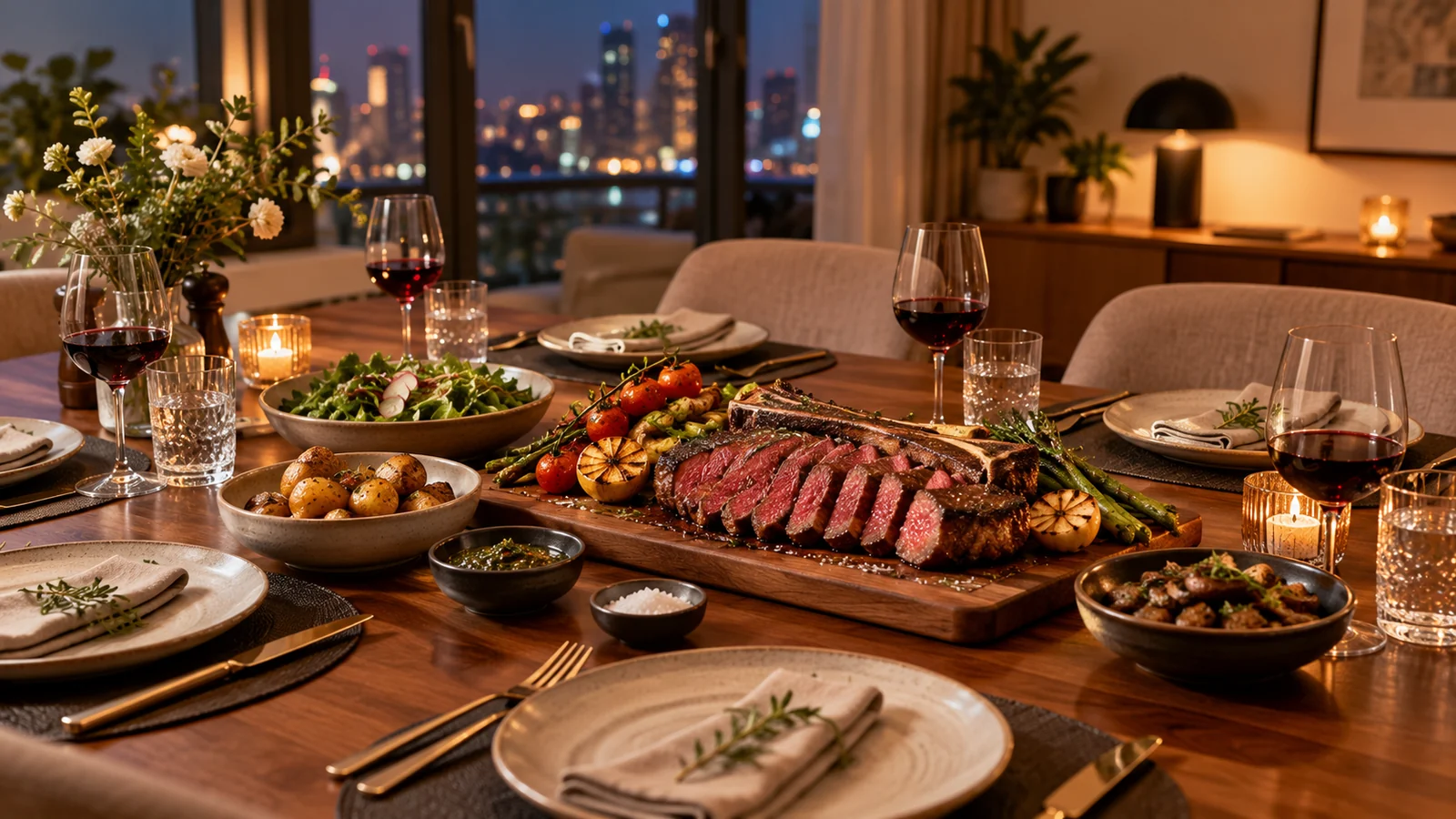
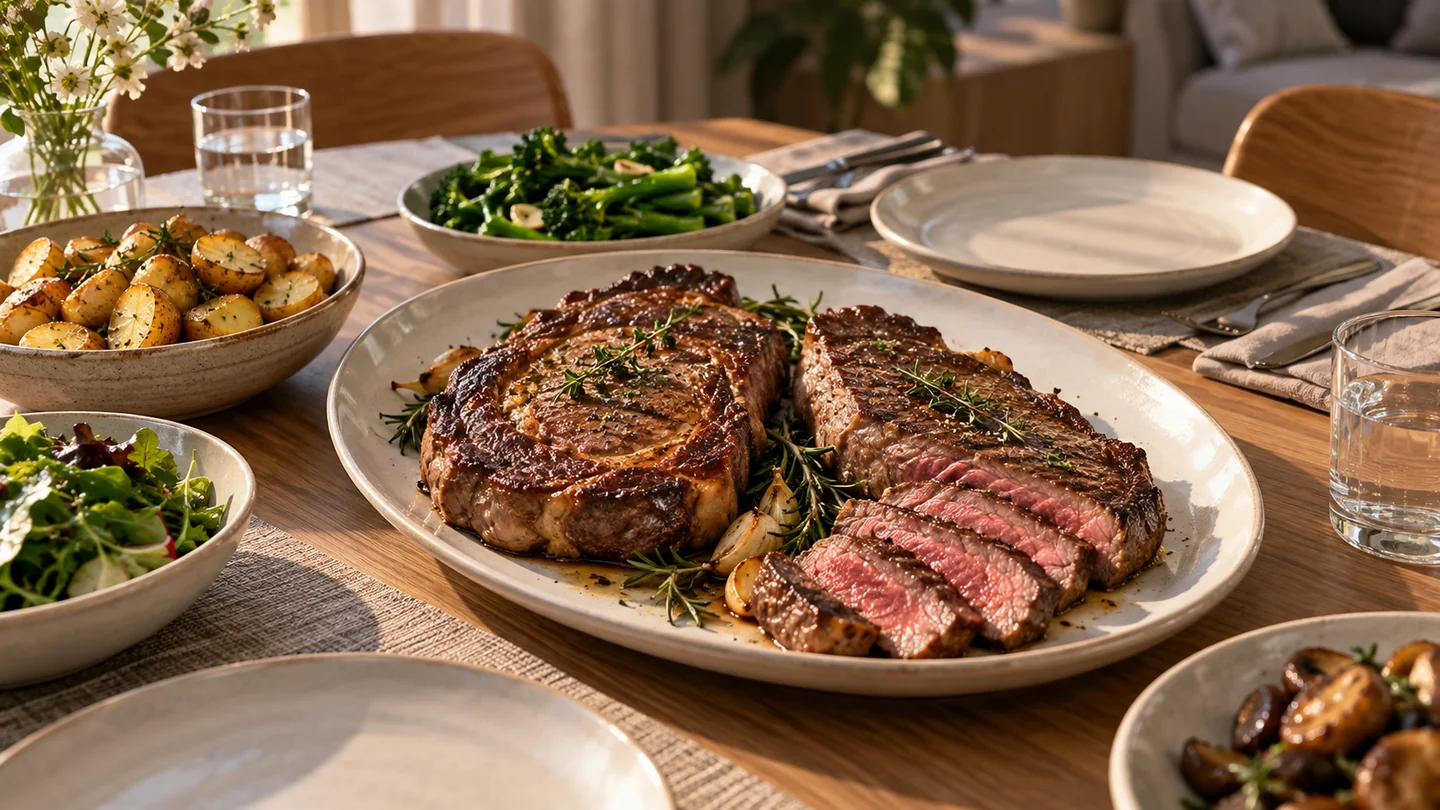
Imagine two possible evenings. On the first, each person wants their own steak, cooked and served individually. On the second, you plan to slice the cooked meat onto a platter beside vegetables and other dishes. Those meals may need different portioning and cooking arrangements even when they use the same cut.
Tell the seller how many people are eating, whether steak is the main dish, and what else is on the table. Mention different appetites and preferences instead of asking for a generic “family size.” If one person enjoys a visible fat edge and another tends to leave it behind, that is useful information for choosing and trimming the meat.
What can you learn from a real cut photograph?
Our ANGUS RESERVE ribeye record shows a central eye with surrounding muscle sections and visible fat between them. The photographed label identifies Cube Roll, GF ANGUS MB:3 UP and Australia. These details describe that archived sample; the retail cutting specification still needs confirmation.
The BLACK ONYX striploin record shows a defined meat eye and an outer fat cap. Its sample grade card reads MB3–4, while the supplier description says M3+. We preserve those as separate pieces of information. When comparing a current offer, ask to see its own label and cut surface.
| What matters at home | What to look for | What to ask |
|---|---|---|
| Preference for visible fat | The actual fat edge and internal structure | Can the trimming preference be discussed for this piece? |
| Individual steaks | The shape of the whole cut and likely variation between slices | What portion weights and thicknesses are feasible? |
| A sharing plate | The proposed pieces and your cooking equipment | Which cutting arrangement fits this meal? |
| Several meals | Individual packs and the amount you can store | Can the proposed order be packed in the units you need? |
The table is a way to compare an offer, not a claim that every preparation or pack size is always available.
Match the order to your kitchen
Describe your pan, hob or other cooking equipment before settling on thickness. A dramatic thick steak in a photograph may be appealing, but it does not tell the seller whether it fits your pan or how you plan to cook it.
Also think about cooking order. If your pan takes only one steak at a time, a dinner with several individual steaks needs planning. A smaller selection for the first order can help you learn what works in your kitchen before committing to a larger whole cut.
For cooking ideas, browse the World Table and use a recipe that suits the equipment you actually have. Product storage and handling should follow the instructions supplied with the confirmed order.
Compare the full order, not just the price per kilogram
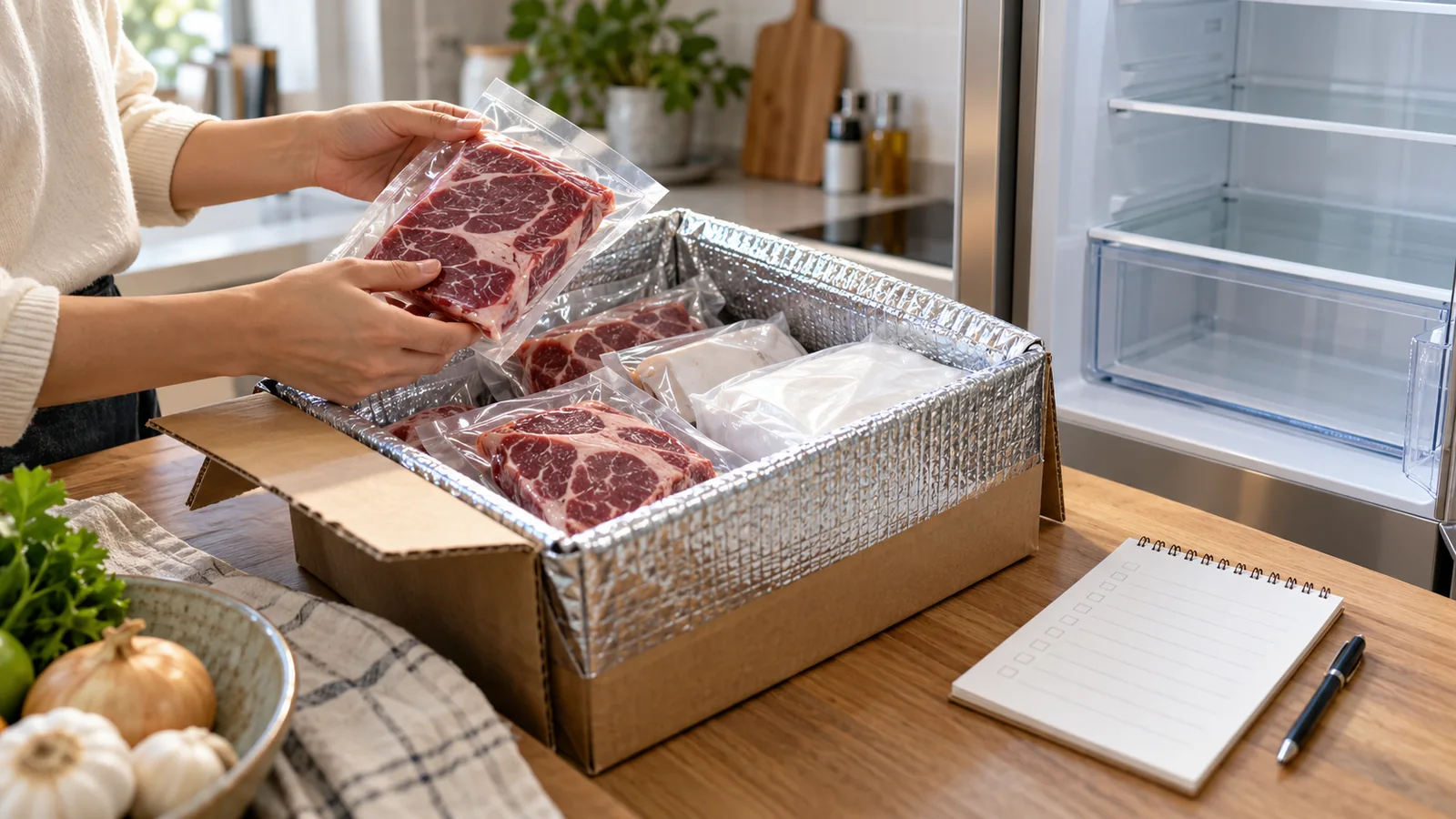
Before choosing between two offers, check that you are comparing the same things: cut, stated grade, actual weight, trimming basis, portioning, packaging and delivery charges. Ask whether the quoted weight refers to the original whole cut or the final prepared contents.
A lower unit price does not by itself show which order is better for your household. The useful question is whether the amount and preparation fit meals you genuinely plan to make.
A message you can copy
We are in [city] and are planning a steak dinner for [number of people]. We will serve [individual steaks / a sharing plate] using [equipment]. Our preferences are [fat preference and appetite]. Please compare a suitable ribeye and striploin, with current product photographs, the original label, available cutting options, actual weight and the full price including any preparation, packaging and delivery charges.
Before you decide
Does ribeye always suit families better? No. The useful choice depends on the actual meat, preferences, cooking plan and proposed portions.
Can I order exactly what appears in the archive photograph? Ask which current product is being offered. Archive photographs help explain a selection; they do not establish today’s stock or an identical finished portion.
Where should I begin? Build a cutting enquiry with your city and meal plan, then ask for a comparison you can evaluate before committing.