A proper steak night
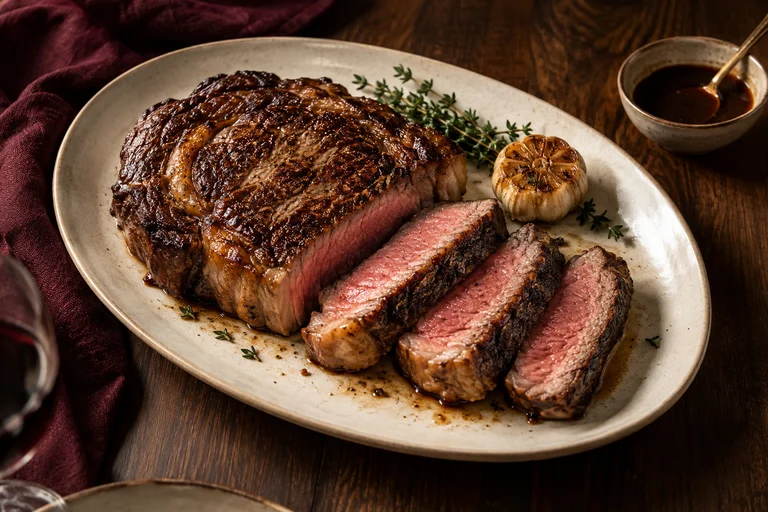
A golden crust, a juicy centre, and no restaurant reservation. Start with ribeye.
Ribeye · 30 mm starting point
Start with this mealA steak night for two or a roast for the whole table: start with what you want to cook. Then understand the difference in price, and the breed, production and grading details worth checking before you choose.
Follow the meal, the texture and the label. You do not need to learn every trade name before your first order.
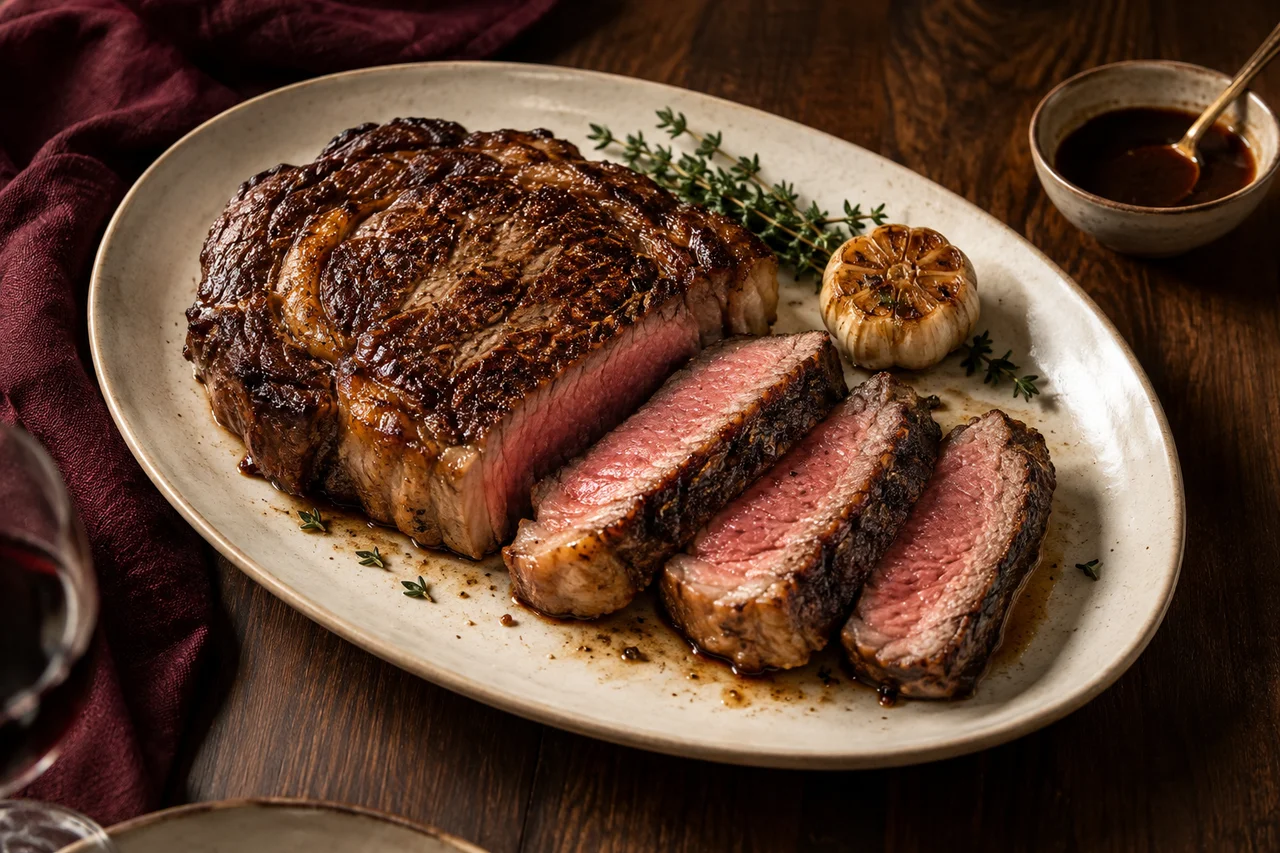
A golden crust, a juicy centre, and no restaurant reservation. Start with ribeye.
Ribeye · 30 mm starting point
Start with this meal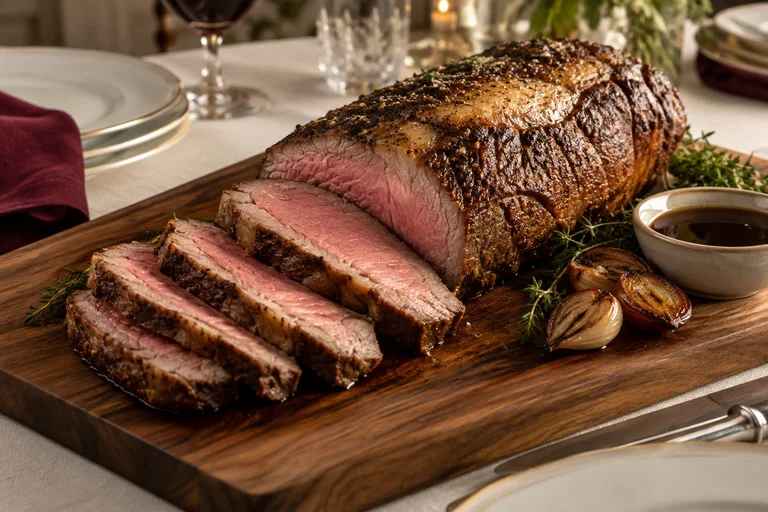
Bring one beautifully browned piece to the table and carve as you eat. Check the size against your oven.
Picanha / rump cap · whole
Start with this meal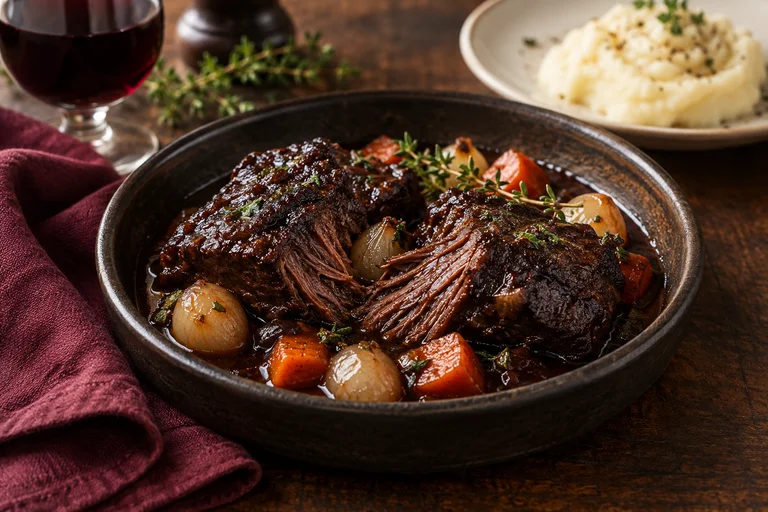
Short ribs, a deep sauce and time to spare. Choose the piece for the recipe, then agree the trimming.
Boneless short ribs · 40 mm pieces
Start with this mealExplore 35 trade entries in seven families, from familiar steaks to seam-separated muscles and A–F shin specifications. Inspect actual archive photographs, learn the important naming differences and choose a cooking direction. The twelve-cut comparison and fifteen-region animal map are here when you need them.
Find the right muscle, understand the trim, imagine the meal. A butcher’s reference for choosing with confidence.
Steak cuts, seam-separated muscles, shin specifications and blending meat—organised by anatomy and use, not a quality ladder.
Cube rollHAM 2240
A central eye with surrounding muscles and fat seams; a generous steakhouse texture.
Specify lip length, fat trim and steak thickness. A whole roll can be portioned for steaks or roasted.
Cube roll is a boneless trade cut; a tomahawk retains a long rib bone. Neither name specifies a marbling grade.
A thick-cut ribeye, deeply browned, with roasted garlic and a simple pan sauce.
StriploinHAM 2140
A defined bite and a recognisable fat edge; an excellent choice when you enjoy structure as well as tenderness.
Agree the fat-cap thickness and remove tough surface tissue. Portion across the grain.
The outer fat cap is not marbling. “Sirloin” can mean different cuts in American and Australian usage.
New York strip with peppercorn sauce: a familiar steakhouse dinner at home.
Tenderloin side strap offHAM 2150
Fine-textured and tender, with less of the pronounced chew of striploin.
Side strap off means the side strip has been removed. Still confirm silverskin removal, head/tail treatment and centre-cut yield.
Chuck tender is a shoulder cut, not tenderloin. A tapered fillet does not yield identical medallions from end to end.
Centre-cut fillet for an intimate dinner, or a trimmed whole tenderloin for Wellington.
Neck meat
An active region with connective tissue and intermuscular seams.
Trim coarse connective tissue and separate irregular pieces before cubing for a long braise.
Neck meat is not chuck eye. Rich marbling alone does not make every piece suitable for a quick steak sear.
A red-wine beef stew that develops depth during a slow Sunday cook.
Chuck rib meatHAM 2640
Layered muscle with a broad cut face; trim and slice direction strongly influence the bite.
Confirm rib extent, remove surface membrane and slice across the grain for barbecue, or keep larger pieces for braising.
The Chinese name “triangular shoulder” is not tri-tip. Tri-tip comes from the rump region.
Thin yakiniku slices, served in small batches straight from the grill.
Chuck eye roll
Texture varies along the roll; the rib end and neckward end need not cook alike.
Ask which end is being portioned. Select and seam-trim steak-suitable pieces; use other sections for roasting or braising.
Chuck eye roll is not the whole chuck roll, and not every chuck-eye slice is a ribeye substitute.
Selected chuck-eye steaks with a cast-iron crust; reserve firmer pieces for a slow pot roast.
Chuck tail flap
A broad, well-defined grain; careful seam removal opens up steak and barbecue options.
Specify membrane and seam-fat removal. Change slicing direction where the grain changes.
Not abdominal flap meat. Denver describes a prepared steak presentation, not every untrimmed chuck tail flap.
Seam-trimmed Denver-style steaks, or cross-grain slices for a Korean-style grill.
Bolar bladeHAM 2302
A useful whole-muscle roasting and braising cut, with seams that need attention.
Separate along natural seams if required, remove heavy connective tissue and portion for an even cook.
Bolar blade and oyster blade are different shoulder items. Bolar blade is not flat iron.
A family pot roast with vegetables and a sauce made from the cooking juices.
Oyster bladeHAM 2303
A central connective-tissue seam is a defining feature of the untrimmed piece.
For flat iron, split along and remove the central seam rather than cutting straight through it.
Oyster blade names the source cut; flat iron names the seam-removed steak preparation.
A cleanly trimmed flat iron steak with herb butter and crisp potatoes.
Chuck tender
A tapered shape resembling a small fillet, but with different connective tissue and cooking needs.
Trim silverskin; choose a controlled roast or moist slow cook according to the piece, then slice across the grain.
“Tender” is part of the trade name, not a promise that this shoulder cut cooks like tenderloin.
Slow-braised shoulder with mushrooms, sliced neatly for a shared dinner.
Topside cap offHAM 2001
A substantial, generally lean group suited to deliberate portioning and thin slicing.
Separate muscles where needed and remove heavy connective tissue. Roast or braise appropriately, then slice thinly across the grain.
The workbook calls this “rump meat”, but topside is a round/inner-leg item, not Australian rump. The photo here is Angus.
Thinly sliced roast beef for a Sunday table or a generous next-day sandwich.
Eye roundHAM 2040
An even shape and clear grain, usually with a leaner eating profile than rib or loin steaks.
Trim surface tissue, cook with moisture control and carve thinly across the grain.
Eye round is not ribeye. “Eye” describes its shape here, not a rib location.
Thin roast-beef slices, horseradish cream and a warm sandwich roll.
Outside flatHAM 2050
A larger, working muscle with a distinct grain; thin slices offer a different experience from a thick steak.
Remove tough surface tissue and slice across the grain. For rolls, ask for evenly sized thin sheets.
Outside flat is distinct from eye round and topside, even though all are hind-leg items.
German-style beef rouladen, rolled with a savoury filling and gently braised.
KnuckleHAM 2070
A muscle group, not one uniform steak. Individual pieces differ in shape and texture.
Separate by natural seams before deciding which pieces to roast, thin-slice or braise.
Knuckle here is boneless muscle, not a joint bone. US “sirloin tip” should not be confused with striploin.
A carefully trimmed roast, carved into thin slices for a family platter.
RostbiffHAM 2110
Identify the specification before judging the appearance.
A matched photograph from the selected producers is not yet included. No other cut is used as a substitute.A rump-centre presentation with a structured bite; seam trimming determines the finished portions.
Remove heavy connective tissue and portion the remaining muscles to suit steaks or a whole roast.
Not the entire rump, not rump cap and not tri-tip. Ask whether the supplied trim follows HAM 2110.
Rump-heart steaks with chimichurri, or a carved roast for a small gathering.
Rump capHAM 2091
A distinctive fat edge and pronounced beef flavour; the fat cap and internal marbling are separate features.
Agree fat-cap trim and whole-piece boundaries. Plan the grain direction before skewering or carving.
Picanha is the cap only, not a generic name for every rump cut.
Brazilian-style picanha, carved at the table for friends to share.
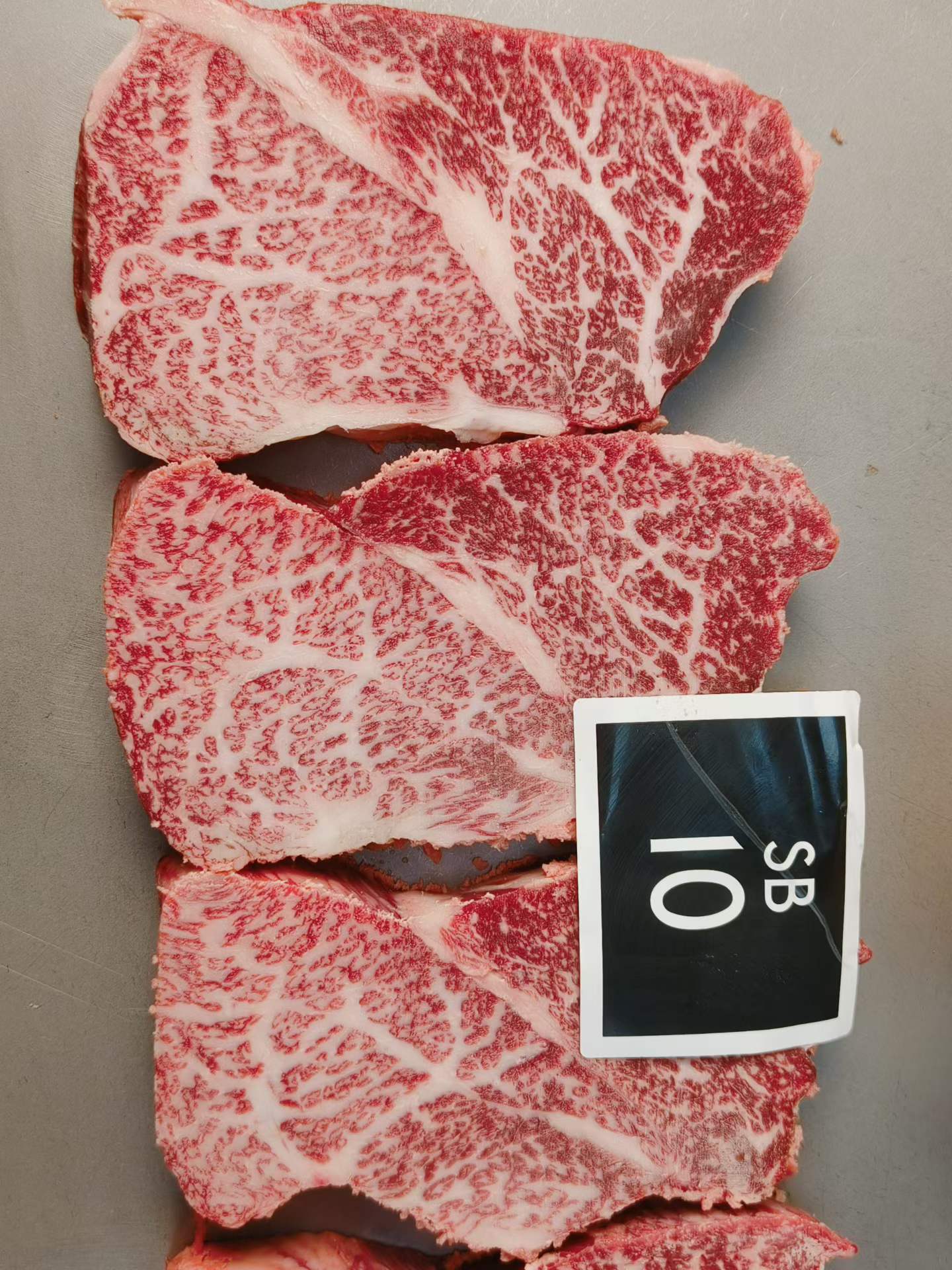
Tri tipHAM 2131
 View original ↗
A triangular muscle with a grain that changes direction: rewarding as a small whole-cut roast.
Trim surface membrane. Identify both grain directions before cooking, then divide and carve each section across its grain.
Not chuck rib meat / “triangular shoulder”. This archive photograph is labelled TRI TIP EXTENDED; its trim is not proof of exact HAM 2131 conformity.
Santa Maria-style tri-tip: grill a whole piece, then carve for a relaxed Californian-style gathering.
Inside skirtHAM 2205
A thin muscle with coarse, visible fibres; slicing and membrane removal matter.
Remove membrane and excess fat. Portion for quick grilling and slice across the fibres.
Inside skirt is an abdominal-wall muscle, not the diaphragm. Outside skirt and hanging tender are different items.
Sizzling fajitas with grilled peppers, onions and warm tortillas.
Flap meatHAM 2206
An open, distinct grain with a robust chew; especially rewarding when sliced correctly.
Trim membrane and uneven thin ends. Grill suitable portions and carve thinly across the grain.
Not chuck tail flap, inside skirt or hanging tender. The word “bavette” alone is not a precise international specification.
Carne asada, sliced for tacos with lime, salsa and a table full of toppings.
Flank steakHAM 2210
Broad and comparatively flat, with long, clearly visible fibres.
Trim the surface, plan an even cook and carve thinly across the long grain. For a stuffed roll, agree the opening cut.
Not inside skirt and not generic stewing brisket, despite the Chinese trade name containing “牛腩”.
An Argentine-style stuffed beef roll, sliced to reveal its colourful filling.
Short rib meat
Muscle and fat layers create a rich mouthfeel, but trimming and muscle selection vary.
For barbecue, ask for trimmed, cross-grain slices; for braising, choose larger portions with suitable structure.
Boneless short rib is not cross-cut bone-in galbi. A name alone does not establish the rib count or muscle composition.
Korean-style grilled short rib slices, or red-wine short ribs for a slow dinner.
Brisket point end deckle offHAM 2353
A substantial chest cut with connective tissue and layered fat; time is part of the recipe.
Confirm seam-fat and membrane trim. Leave as a suitable whole piece for slow smoking or portion for a moist braise.
An Australian point-end cut is not automatically a US whole packer brisket or a fully isolated point muscle.
A patient barbecue cook with bark and carved slices, or a deeply savoury slow braise.
Brisket navel endHAM 2340
Identify the specification before judging the appearance.
A matched photograph from the selected producers is not yet included. No other cut is used as a substitute.A layered chest/ventral cut whose final appearance depends heavily on rib boundary and retained muscles.
Specify rib extent and whether diaphragm, intercostals, inner membrane and inside skirt are retained or removed.
Not automatically US brisket flat, karubi plate or deckle. No differently labelled karubi photograph is substituted here.
A long, gentle braise with aromatics, chosen around the supplied trim rather than the name alone.
Deckle
Irregular pieces with seams and fat; a broad trade name does not guarantee a uniform whole roast.
Check the pack label and trim first. Separate excess fat and coarse tissue, then plan a braise or a measured blend.
“Deckle” is used inconsistently across markets. Do not sell it as whole brisket, brisket flat or ribeye cap without confirmation.
A carefully trimmed slow-cooked beef dish, with the texture matched to the actual pack.
IntercostalsHAM 2430
Long strips with visible grain and variable attached membrane and fat.
Specify minimum length, width, source primal and membrane trim. Slice appropriately for grilling or leave pieces for braising.
HAM 2430 lists Rib Fingers as an alternate name. “Long rib” is this workbook’s trade distinction, not a separate anatomical muscle.
Trimmed rib strips on the grill, or tender strips folded into a rich stew.
Rib fingersHAM 2430
Identify the specification before judging the appearance.
A matched photograph from the selected producers is not yet included. No other cut is used as a substitute.The workbook distinguishes this listing from its long-rib item; actual portion length still needs confirmation.
Confirm whole strips versus portions, minimum dimensions, source primal and connective-tissue removal.
Rib Fingers and Intercostals share HAM 2430. They are not automatically two anatomically distinct cuts or two quality levels.
Small barbecue portions for a sharing platter, after the supplier’s trim has been checked.
Rib capHAM 2470
A covering cut with its own grain and connective tissue, not the curved cap visible around every ribeye steak.
Check the English label and muscle specification, remove membrane and choose slicing or braising around the actual structure.
Do not equate HAM 2470 with a US spinalis dorsi ribeye-cap steak. “Ribeye cap” can mean different muscles in different systems.
Trimmed rib-cover slices for a barbecue tasting, selected by structure rather than a premium-sounding nickname.
Shin shank AHAM 2365
A muscle-specific or muscle-group shin specification. Connective-tissue structure matters more here than a steak-style marbling comparison.
Specify retained skin/connective tissue and tendon trim. HAM 2365 allows a maximum tendon length of 15 mm; confirm the supplied specification.
A identifies the muscle specification, not a quality rank. Trade nicknames such as “golden coin” do not reliably identify A–F across suppliers.
Soy-braise, chill and slice for a neat cold platter, or serve warm in a slow-cooked beef broth.
Shin shank BHAM 2365
A muscle-specific or muscle-group shin specification. Connective-tissue structure matters more here than a steak-style marbling comparison.
Specify retained skin/connective tissue and tendon trim. HAM 2365 allows a maximum tendon length of 15 mm; confirm the supplied specification.
B identifies the muscle specification, not a quality rank. Trade nicknames such as “golden coin” do not reliably identify A–F across suppliers.
Soy-braise, chill and slice for a neat cold platter, or serve warm in a slow-cooked beef broth.
Shin shank CHAM 2365
A muscle-specific or muscle-group shin specification. Connective-tissue structure matters more here than a steak-style marbling comparison.
Specify retained skin/connective tissue and tendon trim. HAM 2365 allows a maximum tendon length of 15 mm; confirm the supplied specification.
C identifies the muscle specification, not a quality rank. Trade nicknames such as “golden coin” do not reliably identify A–F across suppliers.
Soy-braise, chill and slice for a neat cold platter, or serve warm in a slow-cooked beef broth.
Shin shank DHAM 2365
A muscle-specific or muscle-group shin specification. Connective-tissue structure matters more here than a steak-style marbling comparison.
Specify retained skin/connective tissue and tendon trim. HAM 2365 allows a maximum tendon length of 15 mm; confirm the supplied specification.
D identifies the muscle specification, not a quality rank. Trade nicknames such as “golden coin” do not reliably identify A–F across suppliers.
Soy-braise, chill and slice for a neat cold platter, or serve warm in a slow-cooked beef broth.
Shin shank EHAM 2365
A muscle-specific or muscle-group shin specification. Connective-tissue structure matters more here than a steak-style marbling comparison.
Specify retained skin/connective tissue and tendon trim. HAM 2365 allows a maximum tendon length of 15 mm; confirm the supplied specification.
E identifies the muscle specification, not a quality rank. Trade nicknames such as “golden coin” do not reliably identify A–F across suppliers.
Soy-braise, chill and slice for a neat cold platter, or serve warm in a slow-cooked beef broth.
Shin shank FHAM 2365
A muscle-specific or muscle-group shin specification. Connective-tissue structure matters more here than a steak-style marbling comparison.
Specify retained skin/connective tissue and tendon trim. HAM 2365 allows a maximum tendon length of 15 mm; confirm the supplied specification.
F identifies the muscle specification, not a quality rank. Trade nicknames such as “golden coin” do not reliably identify A–F across suppliers.
Soy-braise, chill and slice for a neat cold platter, or serve warm in a slow-cooked beef broth.
Pieces 50CL
Identify the specification before judging the appearance.
A matched photograph from the selected producers is not yet included. No other cut is used as a substitute.50CL denotes a chemical-lean target of 50%; the remaining proportion is fat. It is not a marbling or eating-quality score.
Confirm contractual tolerance, composition and testing. Use it as part of a calculated blend rather than assuming the pack is ready-to-cook burger mince.
CL measures chemical lean in the product. It does not describe Wagyu ancestry, feeding days or tenderness.
A butcher-designed burger blend, balanced with other beef to an agreed finished composition.
Pieces 65CL
Identify the specification before judging the appearance.
A matched photograph from the selected producers is not yet included. No other cut is used as a substitute.65CL denotes a chemical-lean target of 65%; the remaining proportion is fat. It is not a marbling or eating-quality score.
Confirm contractual tolerance, composition and testing. Use it as part of a calculated blend rather than assuming the pack is ready-to-cook burger mince.
CL measures chemical lean in the product. It does not describe Wagyu ancestry, feeding days or tenderness.
A butcher-designed burger blend, balanced with other beef to an agreed finished composition.
The 35 entries follow the trade names in the Wagyu 08-22 archive: 33 grade-bearing listings and two CL manufacturing specifications. They include alternate trade names and A–F shin descriptions, not 35 independent muscles. Historical quantities and weights are not a live-stock offer.
Cut definitions and selected codes are cross-checked against AUS-MEAT and MLA. The code is a reference, not certification of a pictured pack. Archive photos illustrate the stated producer and cut; Angus examples are labelled. Confirm the actual product label, muscles, trimming, grade and availability before ordering.
What would you love to cook?
Serving inspirationActual archive photos. Practical cutting notes. Select a cut or compare two side by side.
 View full photograph ↗
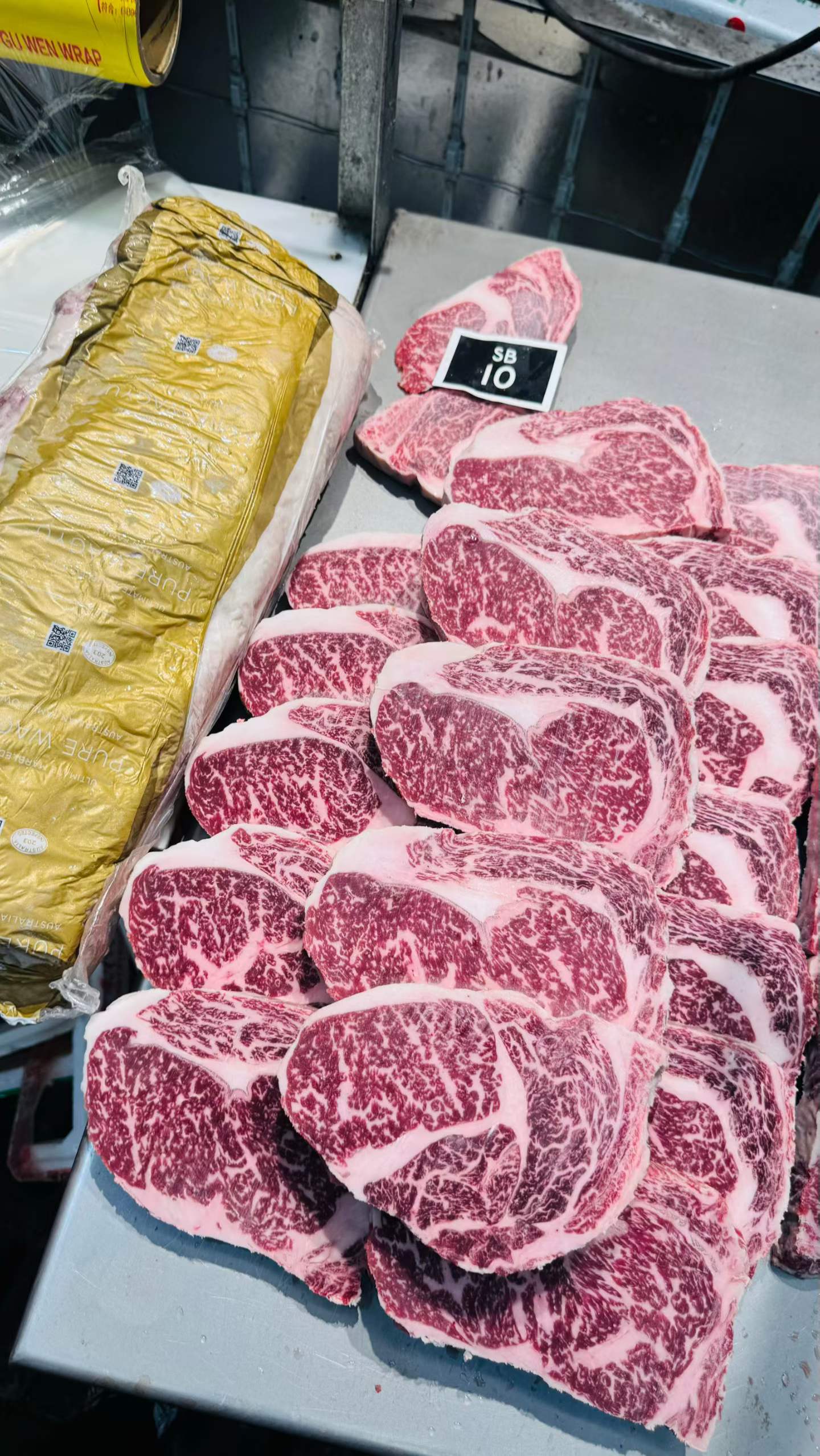
Ribeye / Scotch fillet / Cube roll
Rich, rounded and generous. A classic choice when you enjoy fat as part of the steak.
Steaks; whole roll for roasting
A cooking suggestion, not an official cutting standard. Confirm the feasible specification before ordering.Choose a cut above and add it to the comparison. Then pick a second.
A cut name, a fabrication code and a quality grade answer different questions. These references help identify the piece and its preparation; they do not certify the photograph or guarantee current stock.
The 7th edition is a 2005 fabrication reference. Selected examples: cube roll 2240, striploin 2140, bolar blade 2302 and oyster blade 2303. Codes are not marbling grades.
Read the Australian handbook ↗US guides distinguish primal cuts, subprimals and the portions prepared from them. For example, a top blade becomes Flat Iron only with the appropriate seam-removing fabrication.
Explore US cut charts ↗Naming trap: AUS-MEAT “Rib Cap 2470” should not be treated as an automatic translation of the US ribeye cap (spinalis). Always check the muscle and specification.
Ribeye · AU · Cube roll 2240 ↗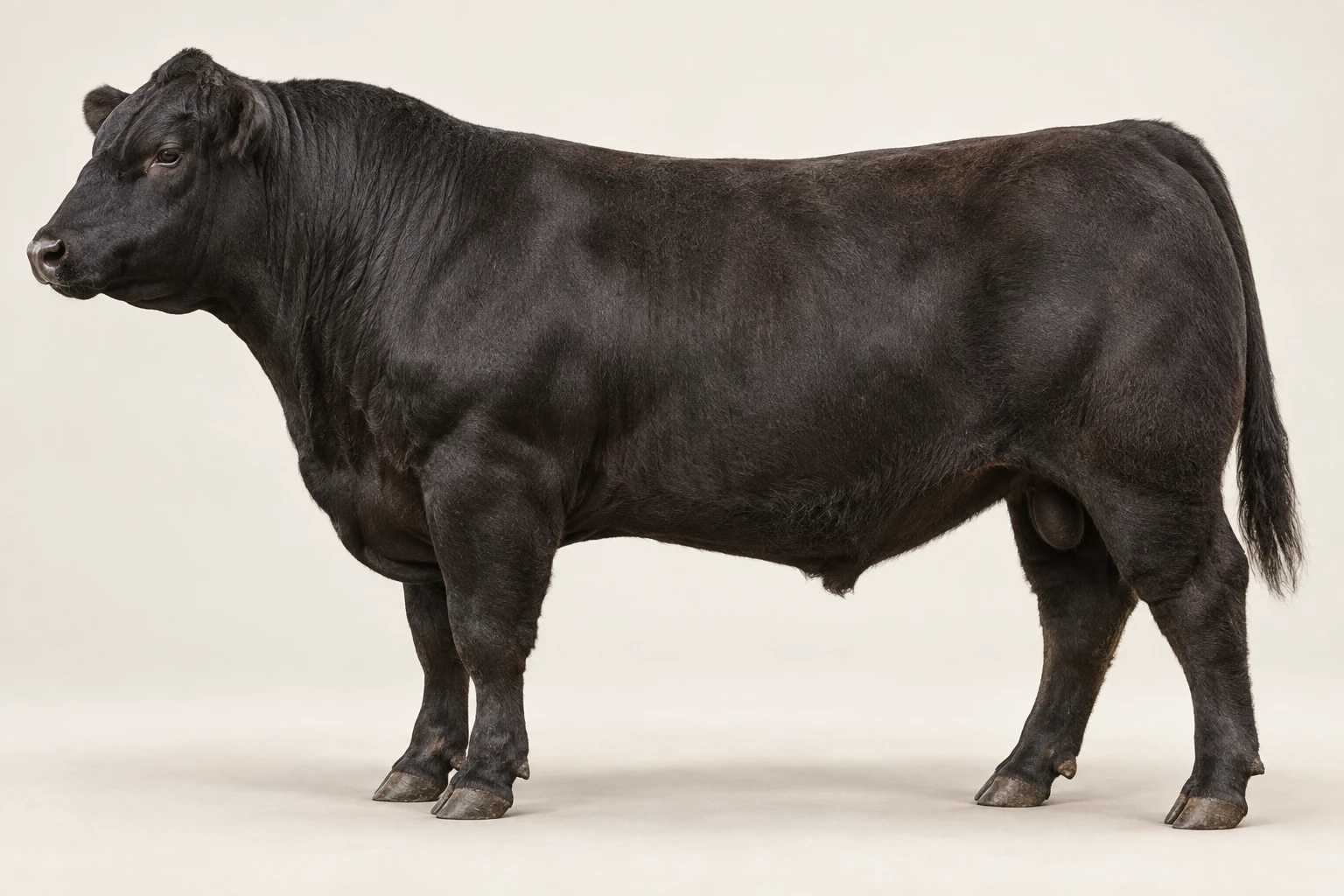
Approximate regional orientation, not exact cutting lines. Dashed regions indicate internal items. International fabrication boundaries differ; this illustration cannot replace a cutting specification.
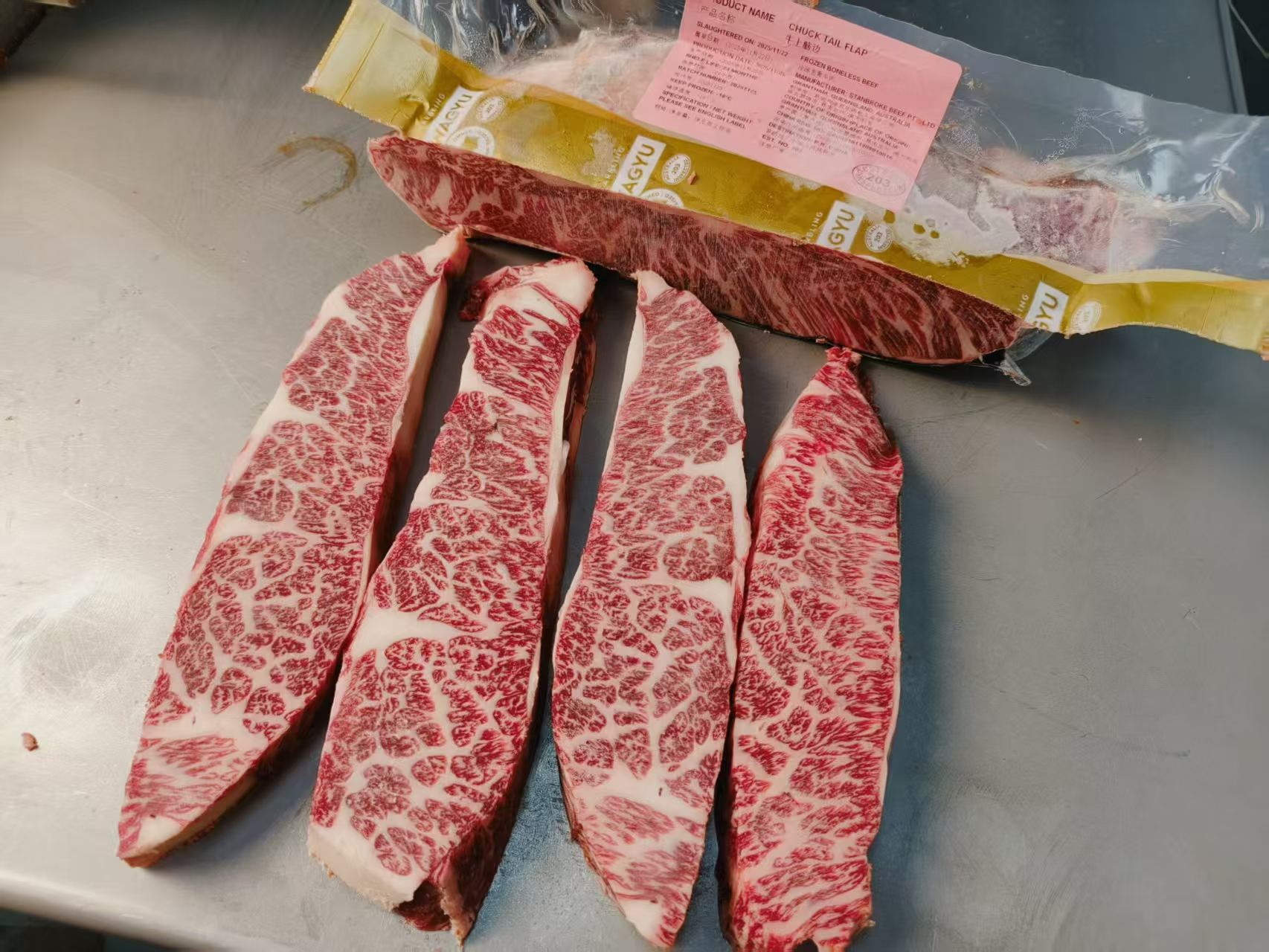 ACTUAL ARCHIVE PHOTOGRAPHChuck tail flap ↗SANCHOKU PURE WAGYU · Trimmed chuck tail flapACTUAL ARCHIVE PHOTOGRAPHRibeye ↗SANCHOKU PURE WAGYU · Ribeye / cube-roll cut faces
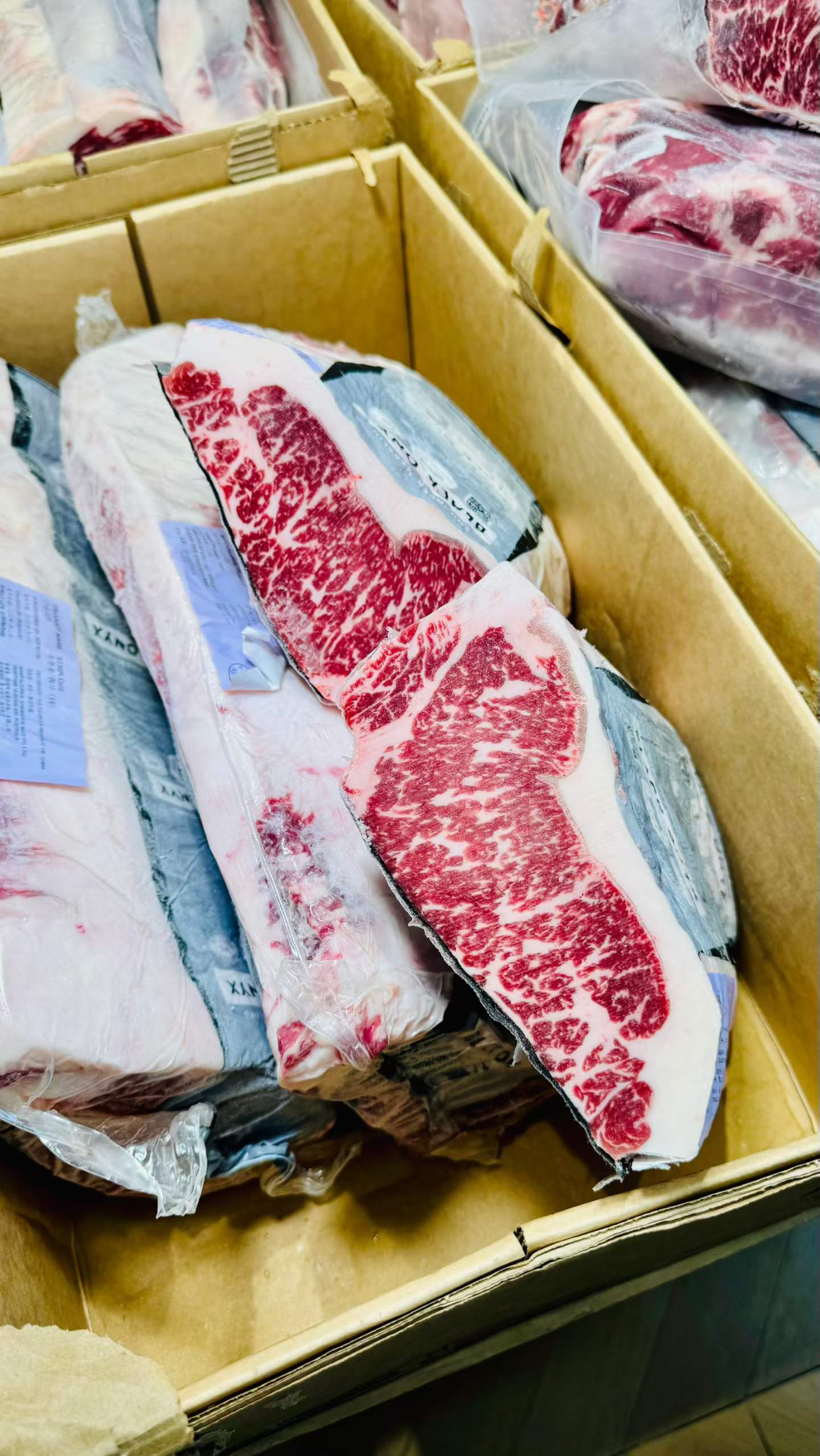 ACTUAL ARCHIVE PHOTOGRAPHStriploin ↗SANCHOKU BLACK ONYX · Striploin cut faces
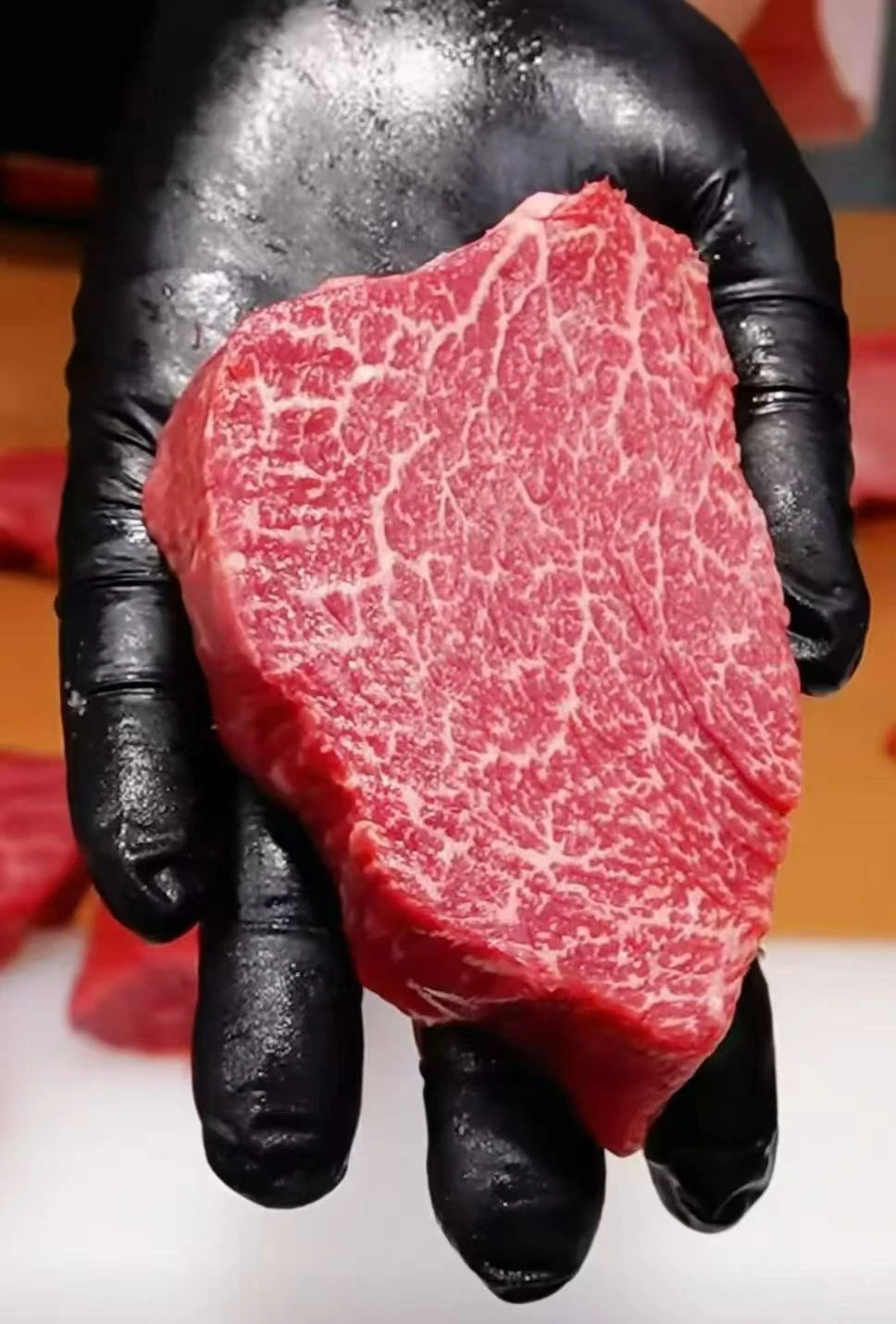 ACTUAL ARCHIVE PHOTOGRAPHTenderloin ↗LOTTE L’grow · Tenderloin cut faces
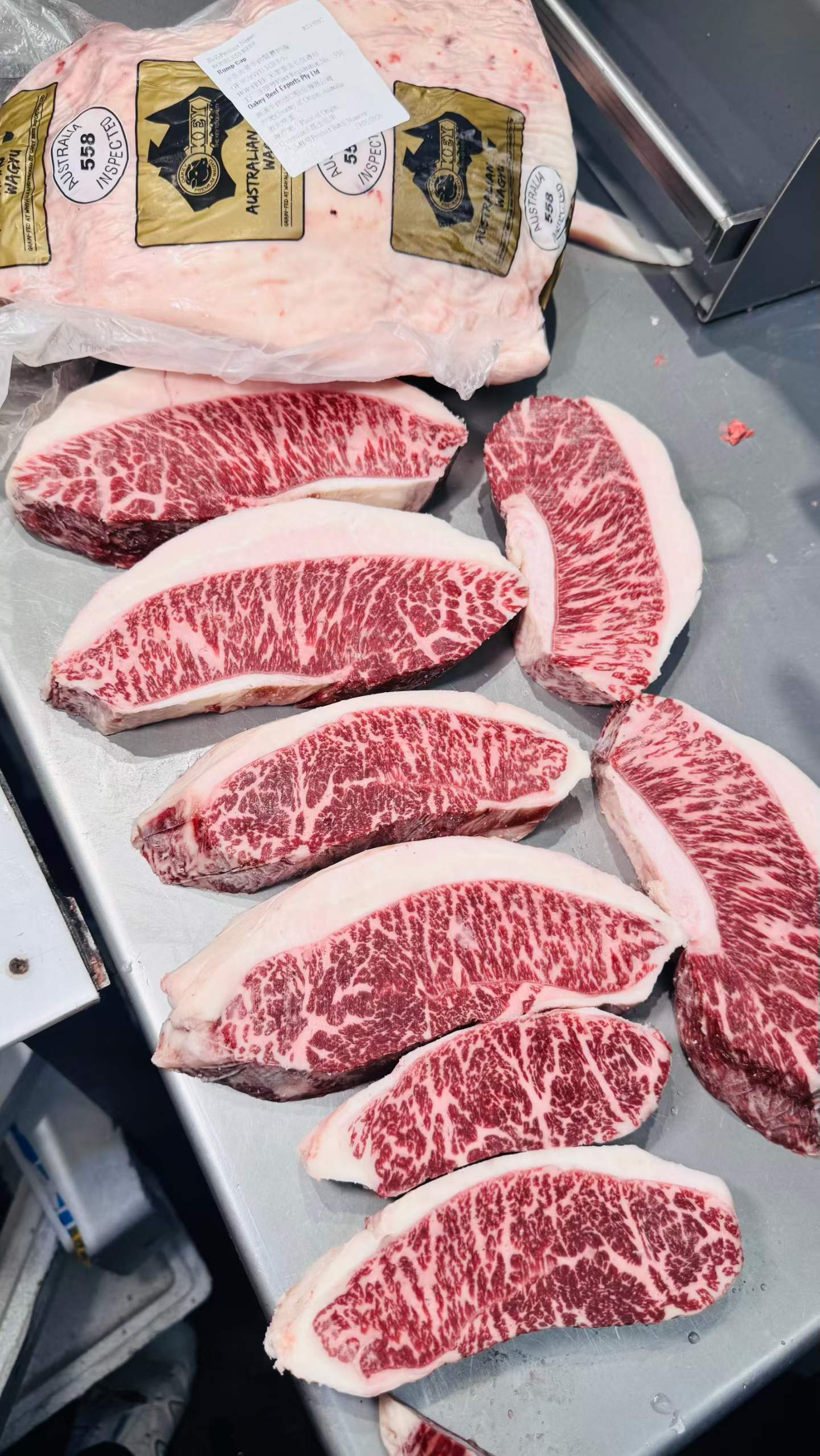 ACTUAL ARCHIVE PHOTOGRAPHRump cap ↗OAKEY AUSTRALIAN WAGYU · Rump-cap slices with fat cap
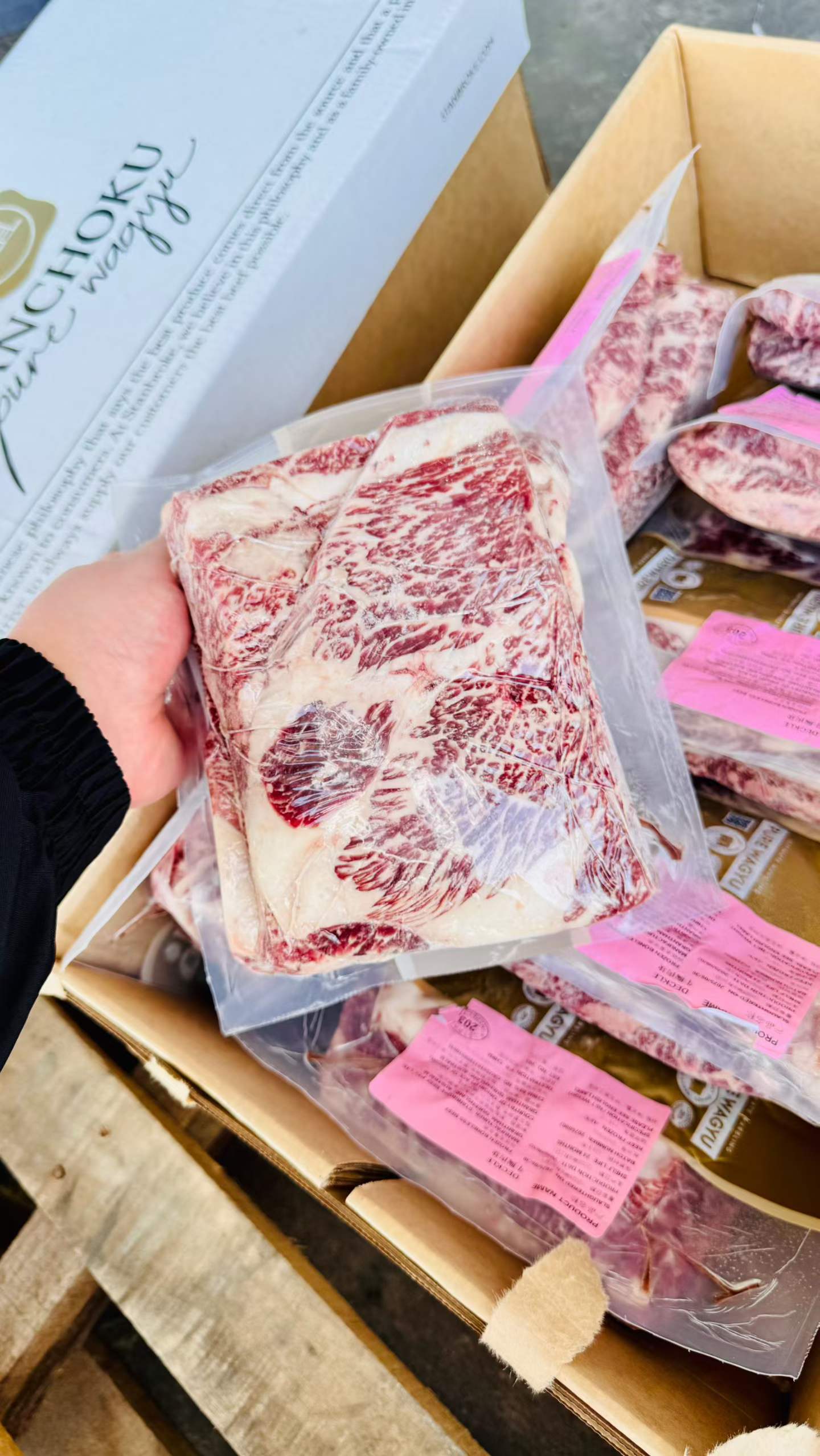 ACTUAL ARCHIVE PHOTOGRAPHBrisket deckle ↗SANCHOKU PURE WAGYU · Packaged deckle pieces, not whole packer brisket
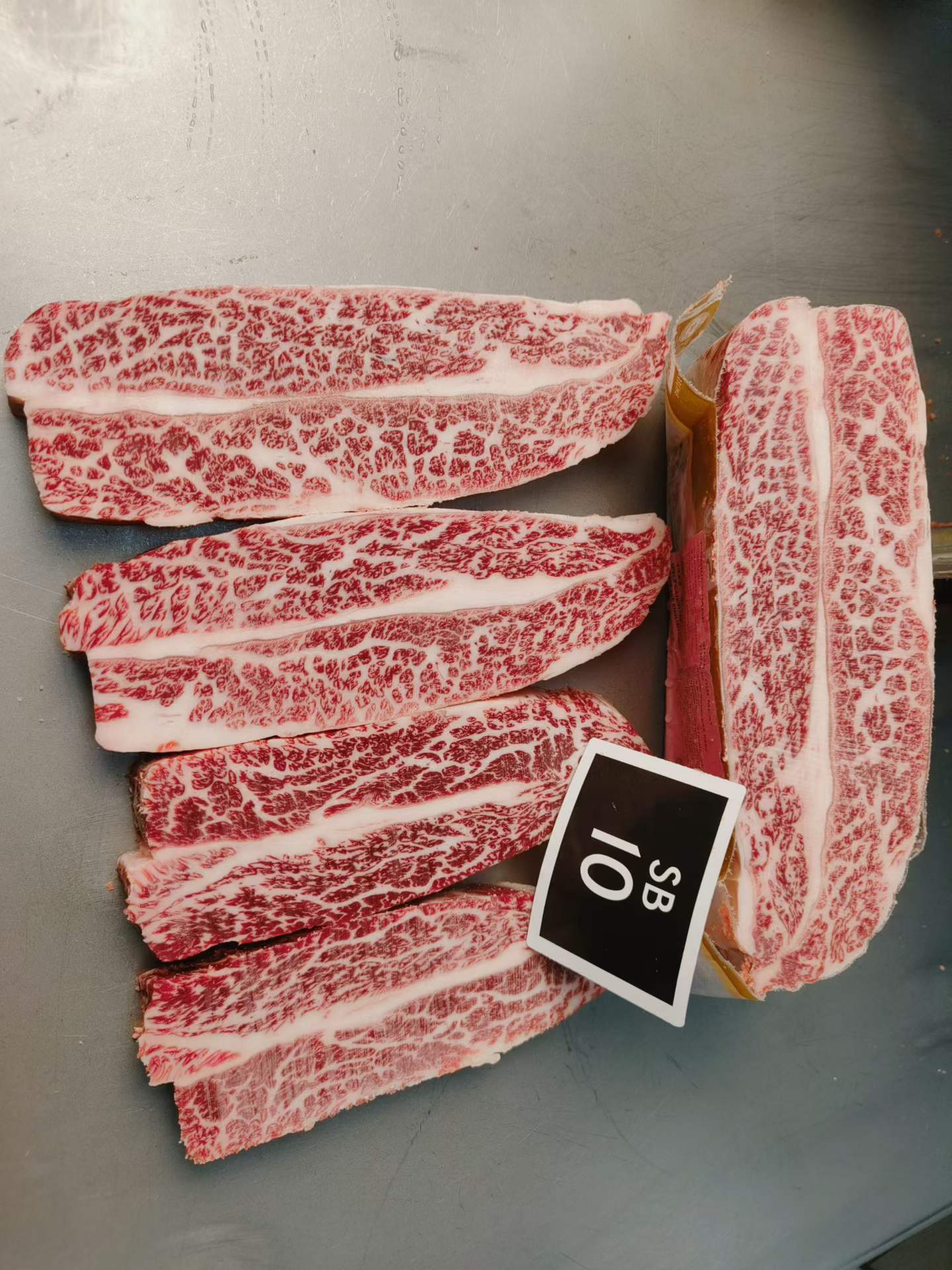 ACTUAL ARCHIVE PHOTOGRAPHBoneless short ribs ↗SANCHOKU PURE WAGYU · Trimmed boneless short rib meat
Found a cut you like? The next question is what makes one version worth more than another.
Understand the difference in price →The name and marbling number are only the beginning. A premium should have a clear explanation: what the cut gives you, what went into producing it, and why it suits the meal you want to make.
Tenderloin, rib cap and shoulder are different products. Even within one cut, trimming and usable yield matter. Compare the same cut and preparation specification—not just the pack weight or price per kilo.
Breeding, a defined feeding programme and daily care help explain production cost. The next chapters follow those details from breed and origin to named producer programmes, so you can ask which apply to your chosen beef.
A rich tasting portion, a thick steak for two and a family roast call for different choices. Put your budget into the cut, portion and cooking experience you want. The highest marbling number need not be your starting point.
Now follow the reasons behind those differences—starting with the breed, then the place and the way the animal was raised.
Start with Angus, Wagyu and beyond →Open the reference chapters when you want to compare the details.
You know the cut and what to compare. Now look behind names such as Angus and Wagyu: the breed is one part of the product story, not a quality verdict. These twelve portraits introduce representative breeds and colour varieties.
Colour, horns and body shape vary within breeds; appearance alone cannot establish pedigree or predict a grade. Open a card for its field note and source.
The familiar steak-house names.
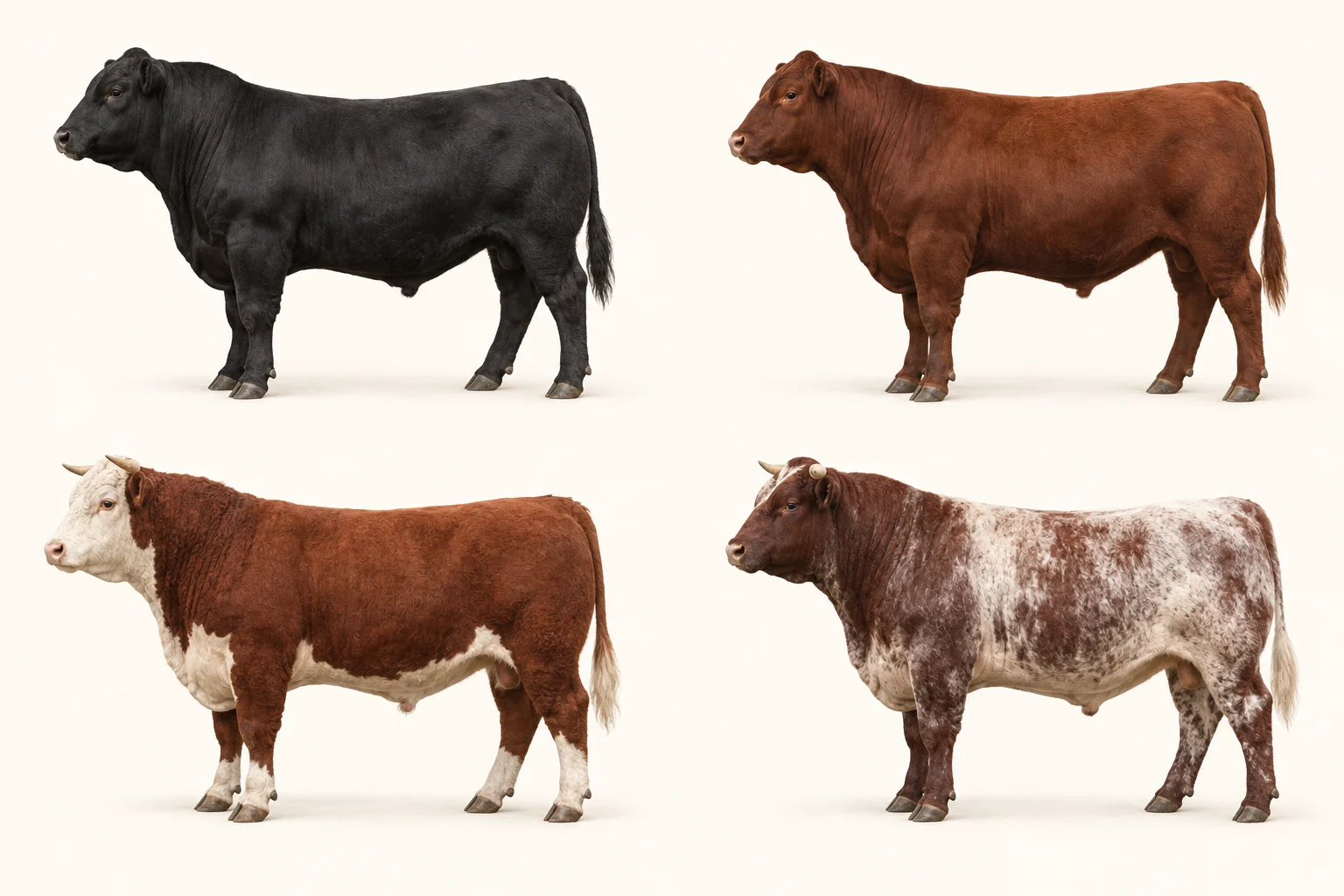
Naturally polled, usually solid black. Angus genetics are used across many beef-producing countries. A black coat alone does not prove Angus ancestry.
Breed reference ↗Red-coated, naturally polled Angus. Black and red are not different quality grades; registration practices vary between breed associations.
Breed reference ↗Recognisable white face and red body. Horned and polled populations both exist. Widely used in pasture-based herds and crossbreeding.
Breed reference ↗Red, white or roan coats. Beef Shorthorn is a beef-oriented population; the wider Shorthorn family also includes dairy lines.
Breed reference ↗Muscle, frame and a different expression of beef.
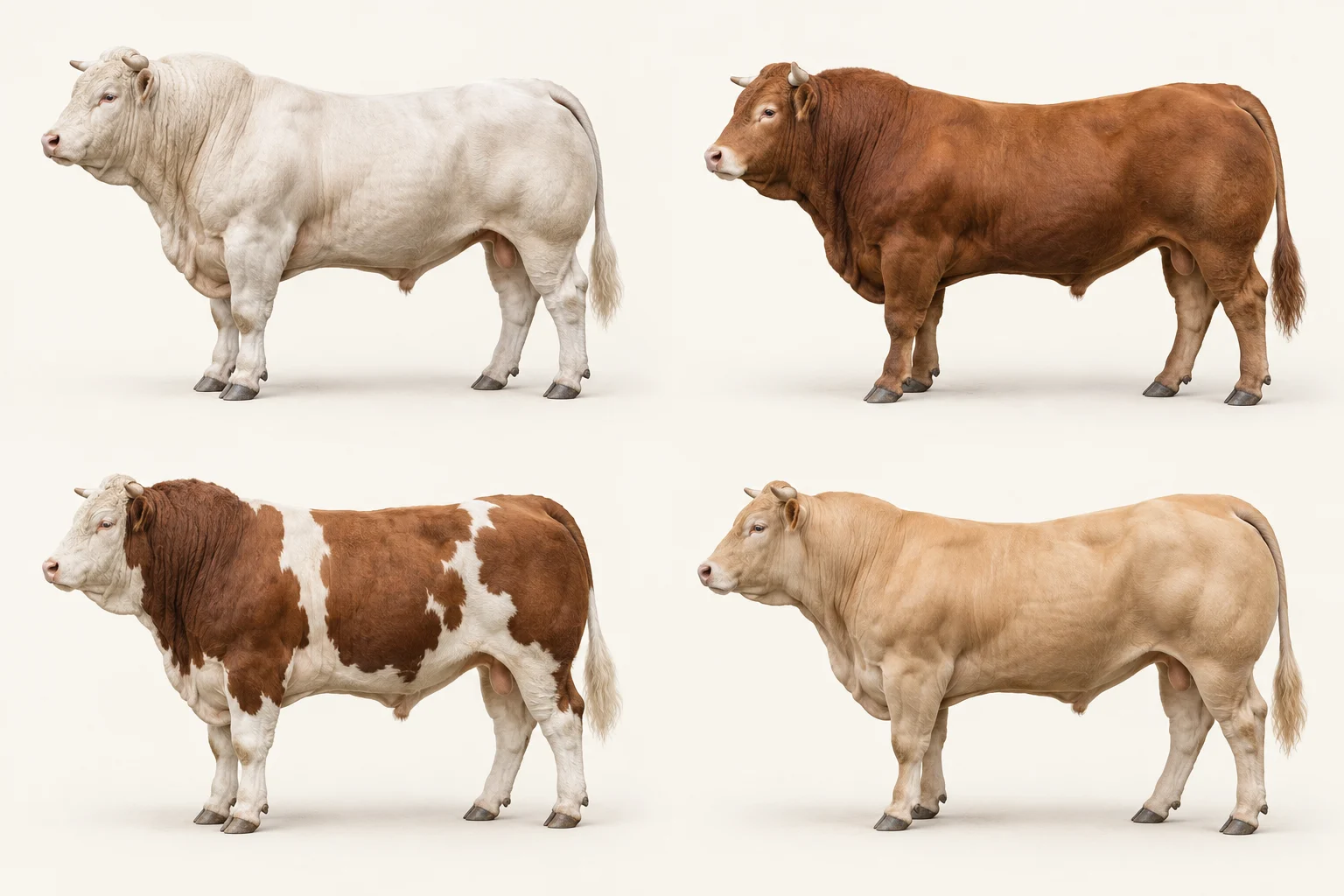
Typically cream-white, large-framed and muscular. Its production story centres on growth and carcass yield—not a promise of a particular marbling score.
Breed reference ↗Traditional golden-red colour with lighter muzzle and eye surrounds; black lines also exist. Noted for muscular hindquarters and lean yield.
Breed reference ↗A widely distributed family with beef and dual-purpose lines. Red-and-white is a familiar appearance, but modern populations vary in colour.
Breed reference ↗Light golden coat, a long frame and pronounced muscling. A reminder that premium beef need not always follow a high-marbling style.
Breed reference ↗Two very different breeding stories—not a quality ranking.
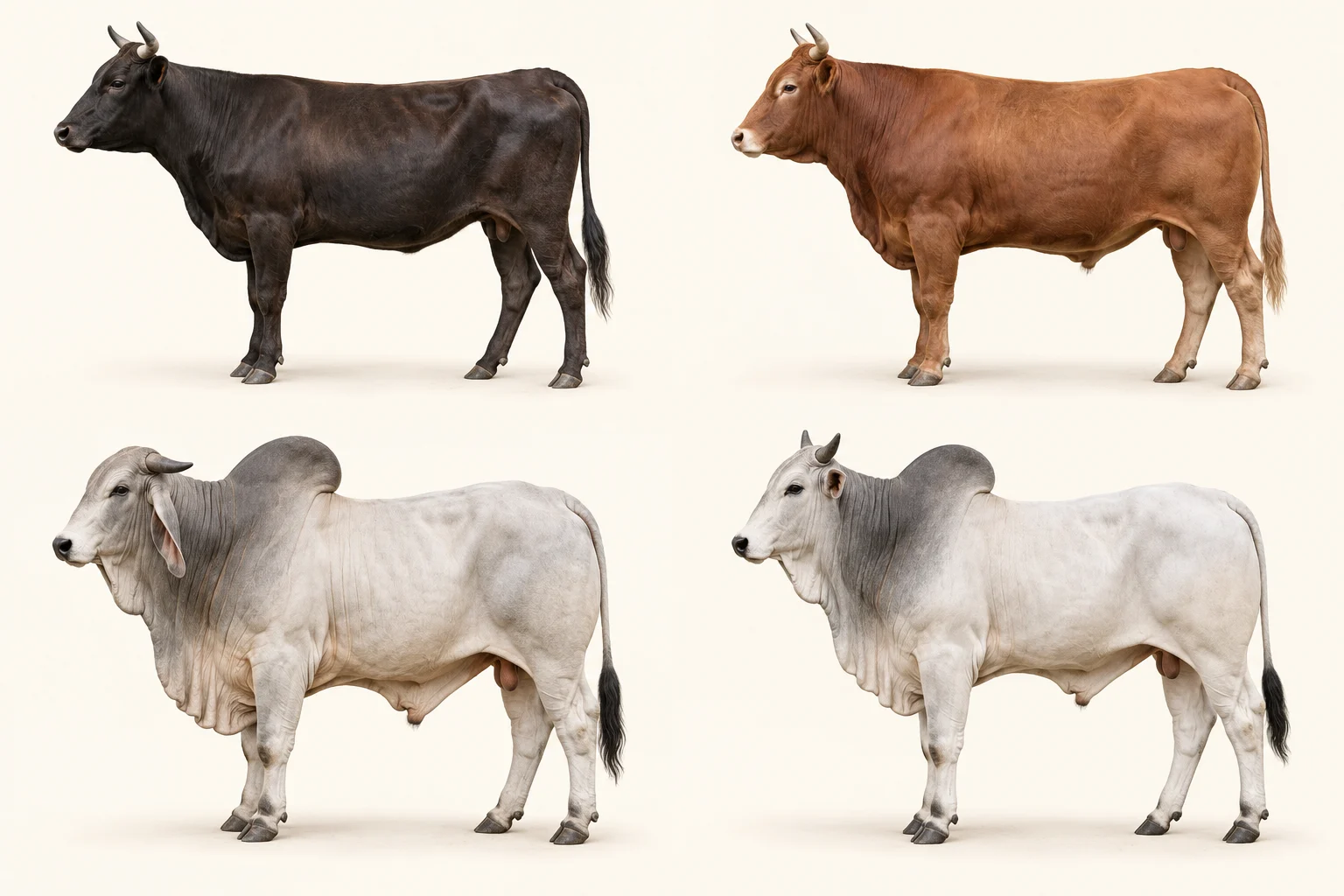
One of Japan’s four Wagyu breeds, central to many marbling-focused programmes. Tajima is a bloodline within Japanese Black, not a fifth Wagyu breed.
Breed reference ↗A distinct Wagyu breed, not red Angus. Wagyu does not mean every animal is black, Japanese-raised or graded A5.
Breed reference ↗A shoulder hump, loose dewlap and long ears distinguish this heat-adapted zebu breed. Important in tropical herds and composite breeding.
Breed reference ↗Usually white-grey, with a hump and shorter ears than Brahman. A major part of Brazil’s beef story; it is not an Angus or Wagyu grading category.
Breed reference ↗Japan recognises Japanese Black, Japanese Brown, Japanese Shorthorn and Japanese Polled, and qualifying crosses. The two Japanese entries above are representative, not the whole family. Australian Wagyu describes cattle bred and raised under Australian programmes—not automatically beef from Japan.
MAFF · The Wagyu breeds ↗The breed tells you one part of the story; where and how it is raised adds another. A breed’s birthplace is not the origin of every cut bearing its name. Explore thirteen production contexts, then look at the feeding programme behind your chosen product.
 PRODUCTION CONTEXT / NOT IMPORT ELIGIBILITY
Queensland · New South Wales · Victoria · Western Australia
Pasture rearing and grain-finishing programmes can be stages of the same production journey. Compare the named programme, feeding specification and actual carton—not just “Australian beef”.
Read the source ↗See archived selections ↗North & South Islands
Pasture systems are central to the story. Grass-fed is a feeding claim, not a cattle breed or a national marbling score. Silver Fern Farms is one programme represented in our archive.
Read the source ↗See archived selections ↗US beef programmes
Creekstone’s programme links US-raised Black Angus with pasture rearing and a corn-based finish. USDA quality grading is a separate product claim; Black Angus is not synonymous with Prime.
Read the source ↗See archived selections ↗Canadian graded beef
Canada A, AA, AAA and Prime are Canadian grade names. Even where marbling standards share a basis with the US, the country’s grading identification must remain Canadian.
Read the source ↗Río de la Plata grasslands
Read animal category, carcass conformation and fat-cover classification separately from any brand marbling claim. The San Alberto archive label is evidence for that record—not a national MS3+ grade.
Read the source ↗See archived selections ↗Pampas & other production regions
Angus and Hereford have a long place in the country’s beef industry. “Argentine” identifies origin; it does not establish grass-only feeding, ageing duration or a USDA grade.
Read the source ↗Tropical and subtropical beef regions
Nelore’s heat adaptation helps explain why the breed matters here. Brazil also has differentiated breeding and finishing programmes; judge the named product, not a stereotype about one country.
Read the source ↗MIRATORG Black Angus programme
MIRATORG uses Select, Choice, Top Choice and Prime in its brand range. These familiar words do not make Russian beef USDA-certified, nor prove every Russian brand uses the same system.
Read the source ↗See archived selections ↗Multiple prefectural and regional brands
Breed, production region and branded beef designation are separate facts. Japanese Black is a breed; a regional beef name has its own requirements; A5 is a carcass grade.
Read the source ↗Scotland · England
The historical home of several internationally established breeds. Breed birthplace and the country where an individual animal was raised should never be confused.
Read the source ↗Irish cattle production
Carcass conformation and external fat cover are important in the European classification approach. A strong conformation class is not a promise of rich marbling.
Read the source ↗Charolais · Limousin · Aquitaine
A contrasting beef tradition, with muscular continental breeds and region-linked identities. Lean yield and muscle character tell a different story from a marbling-only comparison.
Read the source ↗Simme Valley and wider breeding influence
The Simmental name traces to Switzerland’s Simme Valley. Its descendants and crossbreeds are raised far beyond Switzerland, including beef and dual-purpose production systems.
Read the source ↗Representative production contexts, not a complete country list. Highlighted archive origins do not mean live stock. China import access, establishment approval, batch eligibility and availability must be checked separately. Land: Natural Earth, public domain; pins indicate countries broadly, not specific farms.
A breed and a country are only the beginning. Pedigree, feeding and daily management explain the production investment; named programmes and batch records show which claims belong to the beef you are considering.
In a conventional successive backcross to Wagyu, the expected ancestry is approximately 50%, 75%, 87.5% and 93.75%. These are pedigree expectations, not DNA results for an individual animal.
Purebred and Fullblood have distinct pedigree requirements. F4 is not automatically Fullblood, and a higher F-generation is not a marbling grade.
Australian Wagyu Association · Wagyu Content Check ↗Feed, daily care and management continue throughout a finishing programme. Longer programmes can help explain cost, but genetics, nutrition and management work together; more days do not guarantee better flavour for everyone.
Age How old the animal is.
Days on feed Time in the specified feeding programme.
Ageing Time after slaughter under controlled conditions.
Australian Angus and Wagyu do not have separate universal national grade ladders. Keep the producer’s specification intact: a 3+ minimum is not a closed 3–4 range.
Our Angus archive includes 0–2, 2–3, 3–4, 3+, SB5 and 5+. Wagyu examples include 2–3, 4–5, 6–7, 8–9 and 9+. These are recorded examples, not a universal stock list.
AUS-MEAT’s base scale is 0–9; the Australian Wagyu Association also discusses 9+ at the top end. Keep MB9+ as written, without converting it into Japanese A5 or a score of 10.
Australian Wagyu Association · Marbling ↗MLA · AUS-MEAT marbling ↗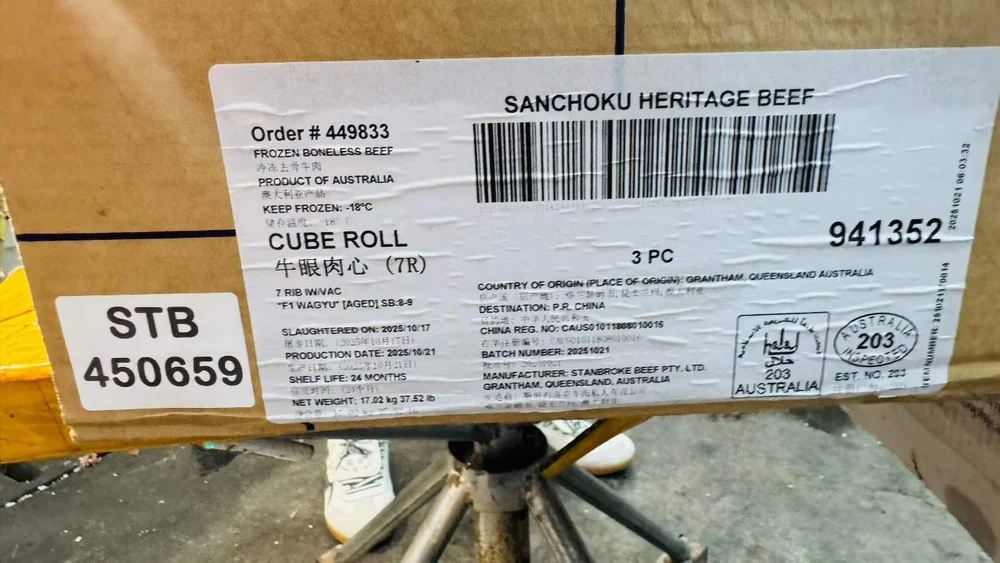
This Heritage carton record combines F1 with SB8–9. It is a useful reminder: pedigree describes breeding; marbling describes the assessed beef. One does not replace the other.
Compare actual label references ↗A programme explains an investment. A batch label establishes which product you are actually choosing. Keep both.
Pedigree and selection
Pasture and development
Feed, time and daily care
Grading, ageing and cutting
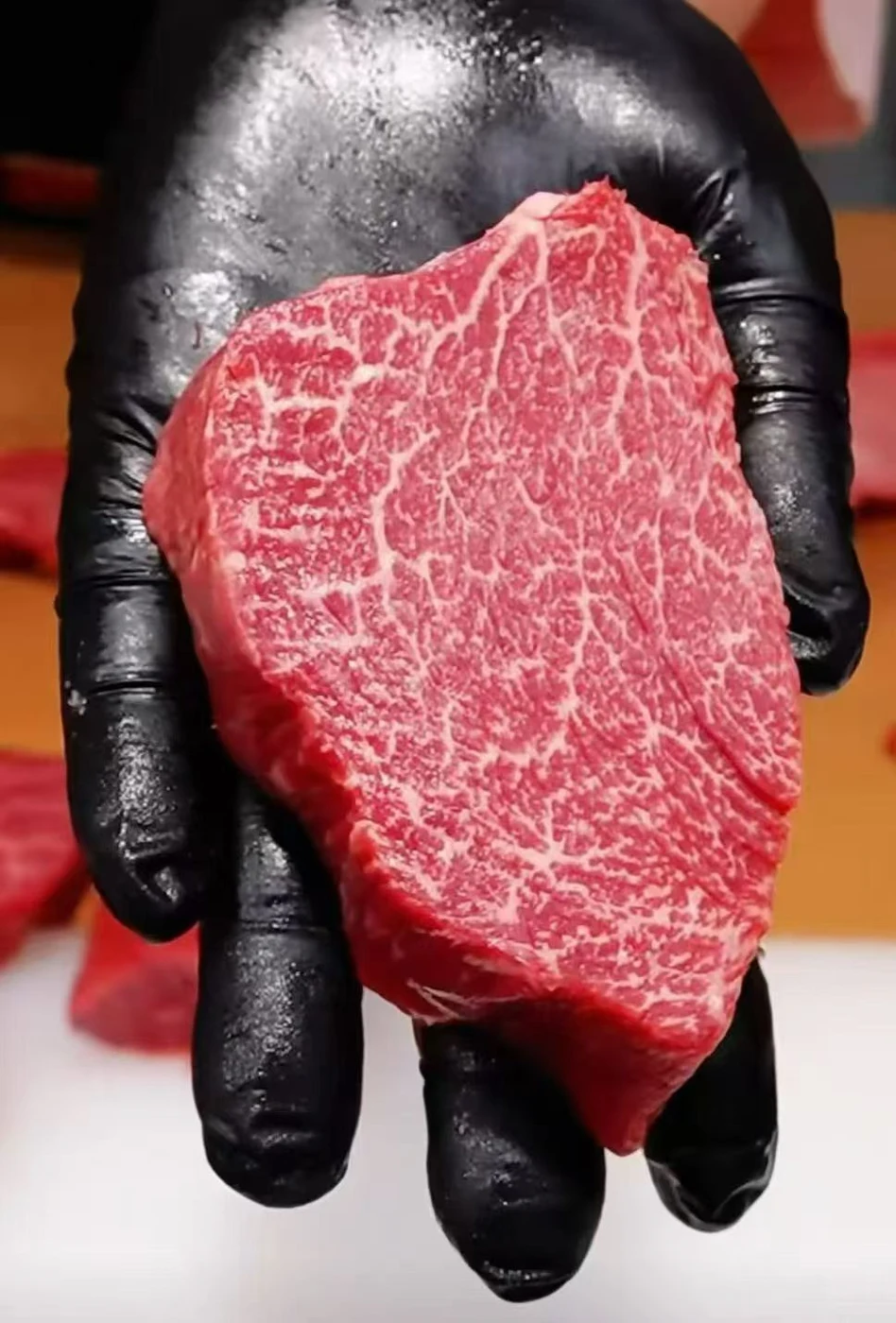
At Sandalwood, L’grow describes a 400-day feeding commitment before processing at John Dee. The story is not simply “wait longer”: feed, daily care and continuity of management are the investment.
Follow the producer’s story ↗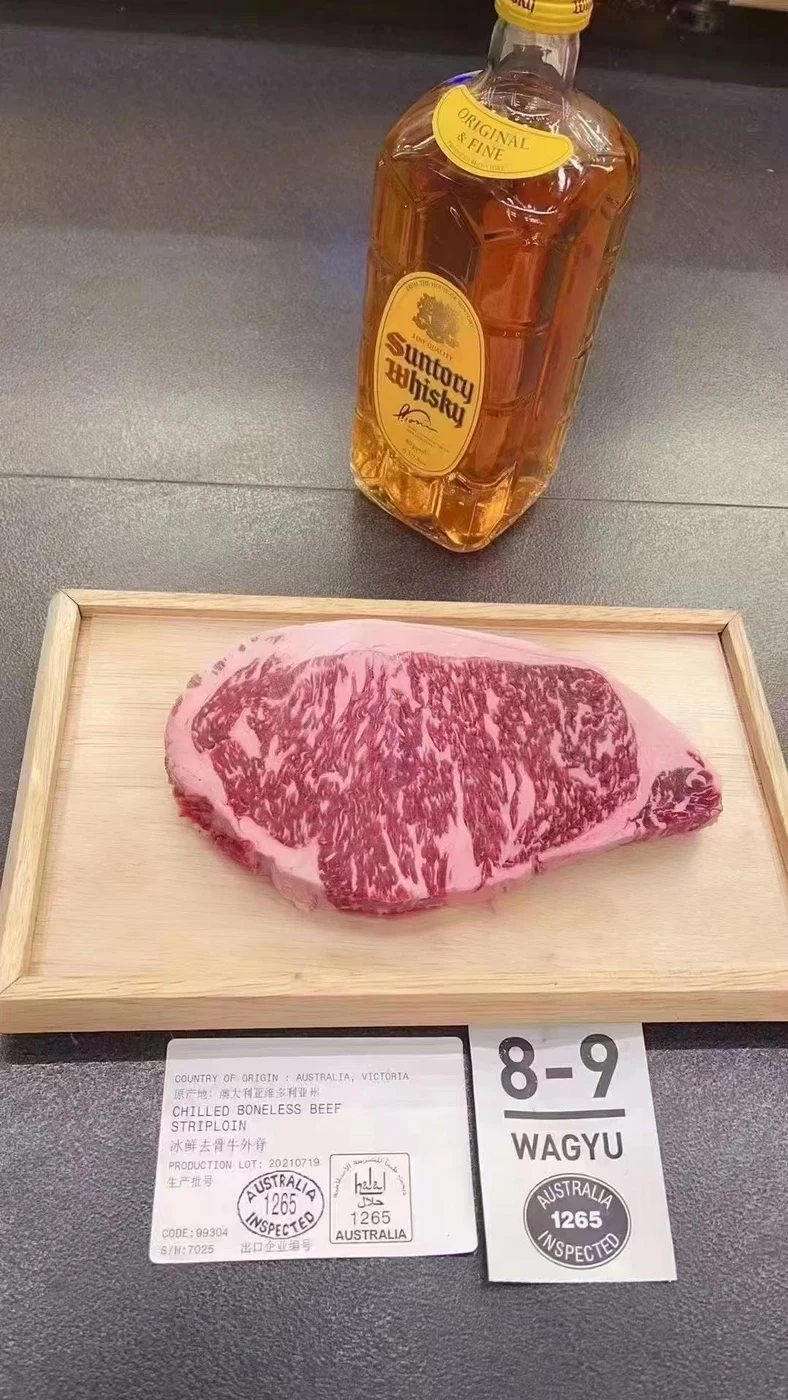
OMINO draws inspiration from the Omi tradition while raising cattle in Australia. Its producer emphasises precise nutrition in the final 380 days. Inspiration is part of the story; actual origin stays on the label.
Follow the producer’s story ↗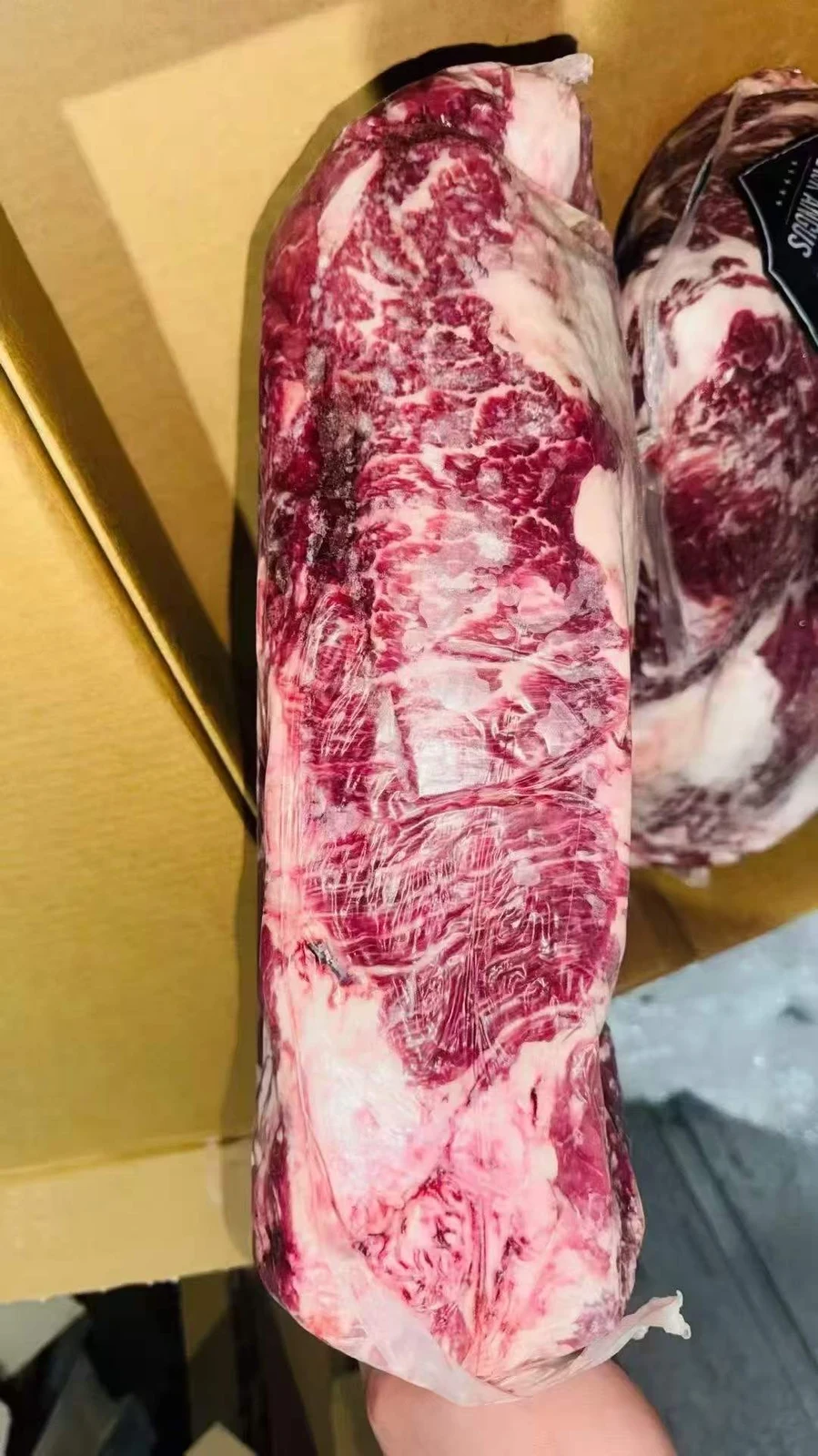
Jack’s Creek distinguishes Pure Black Angus, Verified Black Angus, Wagyu X and Purebred Wagyu programmes. Their 130, 180, 400 and 500-day specifications belong to different products—not every box carrying the logo.
Follow the producer’s story ↗Genetics, nutrition, health and management work together. Feeding days are not slaughter age or post-slaughter ageing days. A longer programme cannot, on its own, guarantee a grade or establish a health advantage.
Bring the production story back to the product: which system is on its label, and what does that system assess? These eight perspectives measure different things—marbling, eating quality, yield or fat cover—not one universal ranking.
AUS-MEAT uses 0–9 to assess marbling amount in the eye muscle. Angus and Wagyu do not have two separate universal national marbling ladders.
MSA marbling considers amount and distribution, in increments of 10. It is assessed independently of AUS-MEAT. This marbling score alone is not the whole MSA eating-quality prediction.
Preserve MB / MS / SB exactly as recorded and ask which system the brand uses. Commercial ranges can overlap and are not a universal official grouping. AWA also describes the top-end 9+ notation; do not rewrite a brand’s 9+ as Japanese A5 or AUS-MEAT 10.
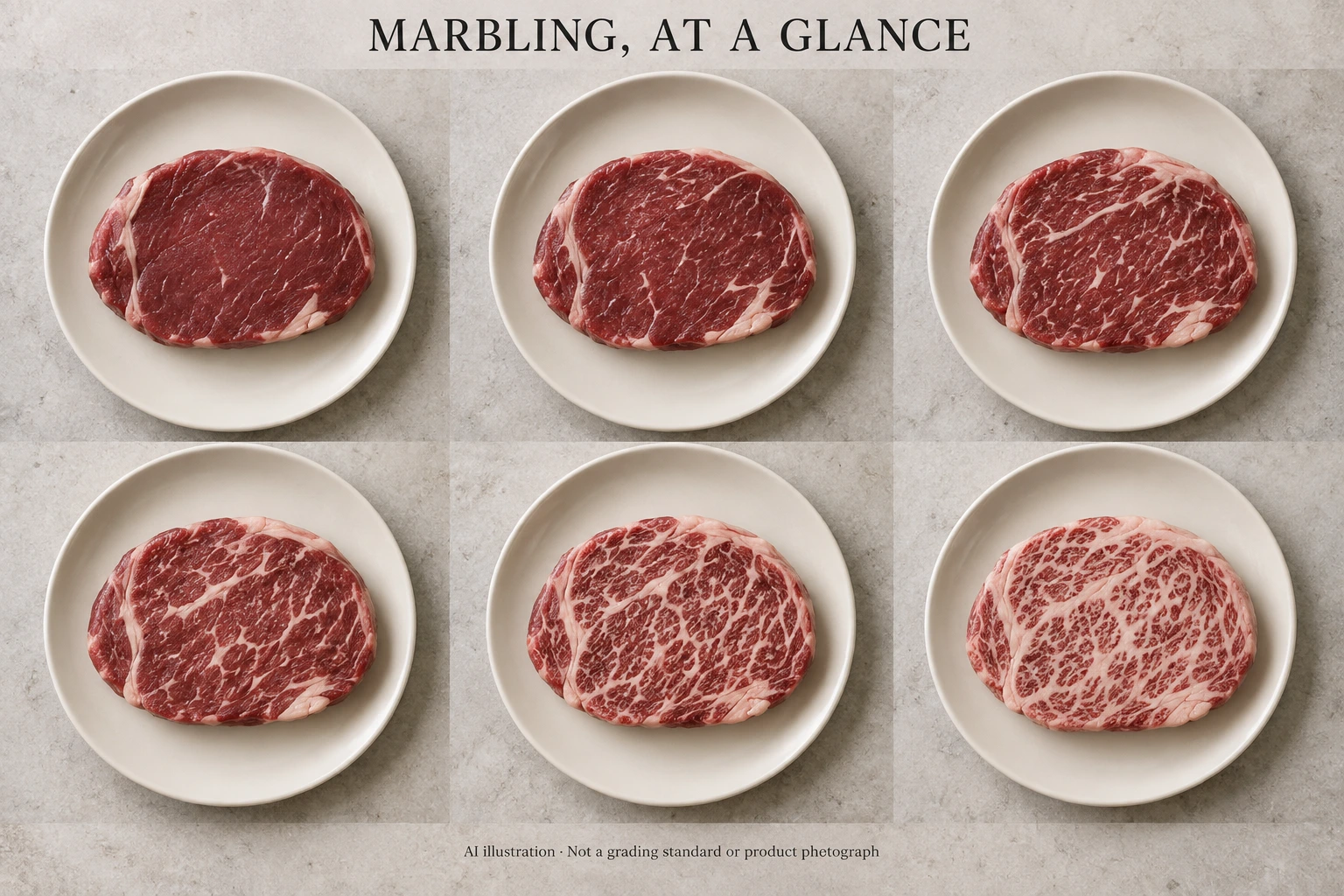
Australian Wagyu Association ↗Illustrative groupings, with the cut, plate and lighting kept consistent. Compare the progression from light to rich marbling.
Five archived brand specifications, photographed across different cuts and batches. Use them to inspect labels and product evidence, not as a controlled marbling comparison.
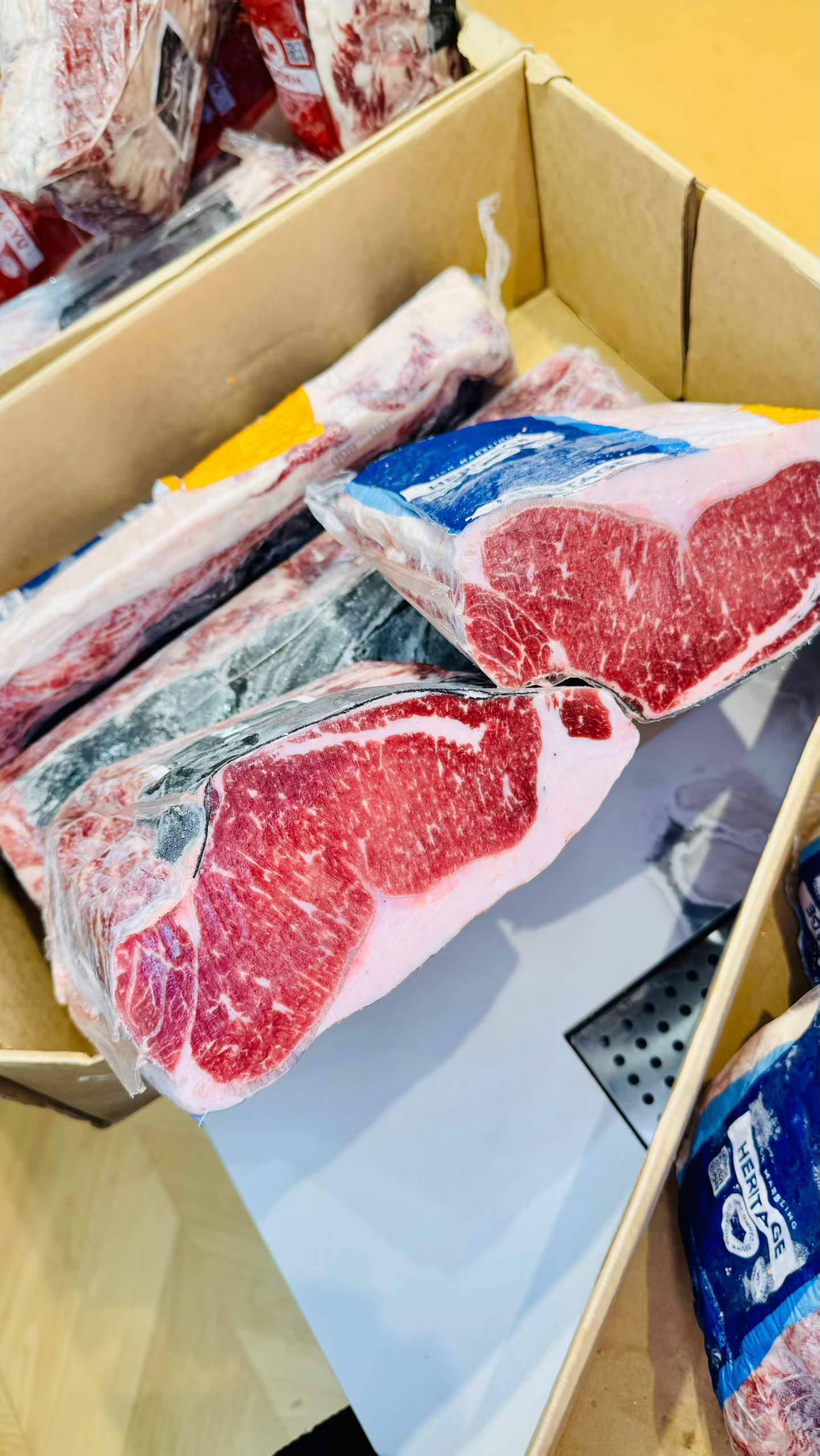
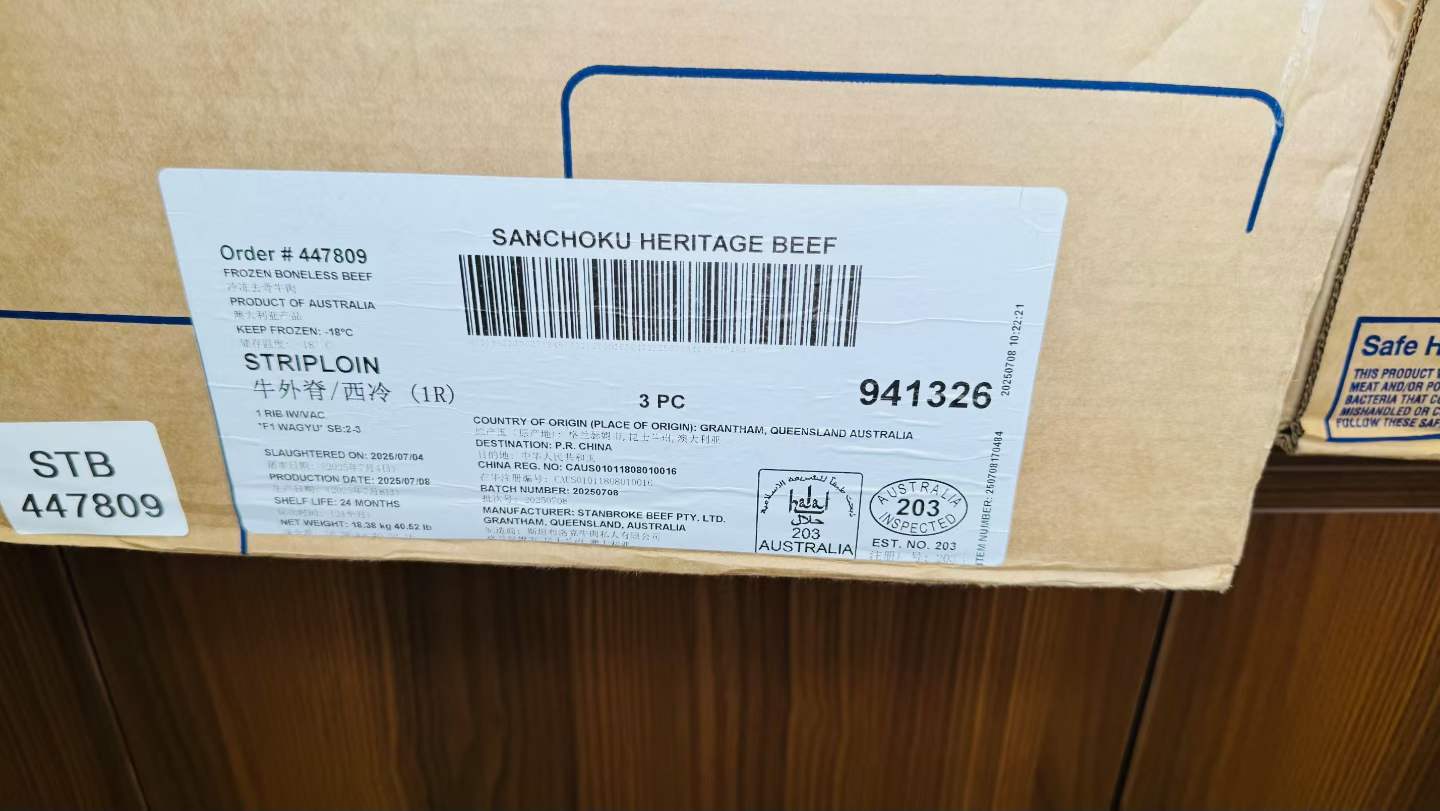
The carton reads F1 WAGYU SB2–3. The individual package sticker says SB3; the carton range is retained.
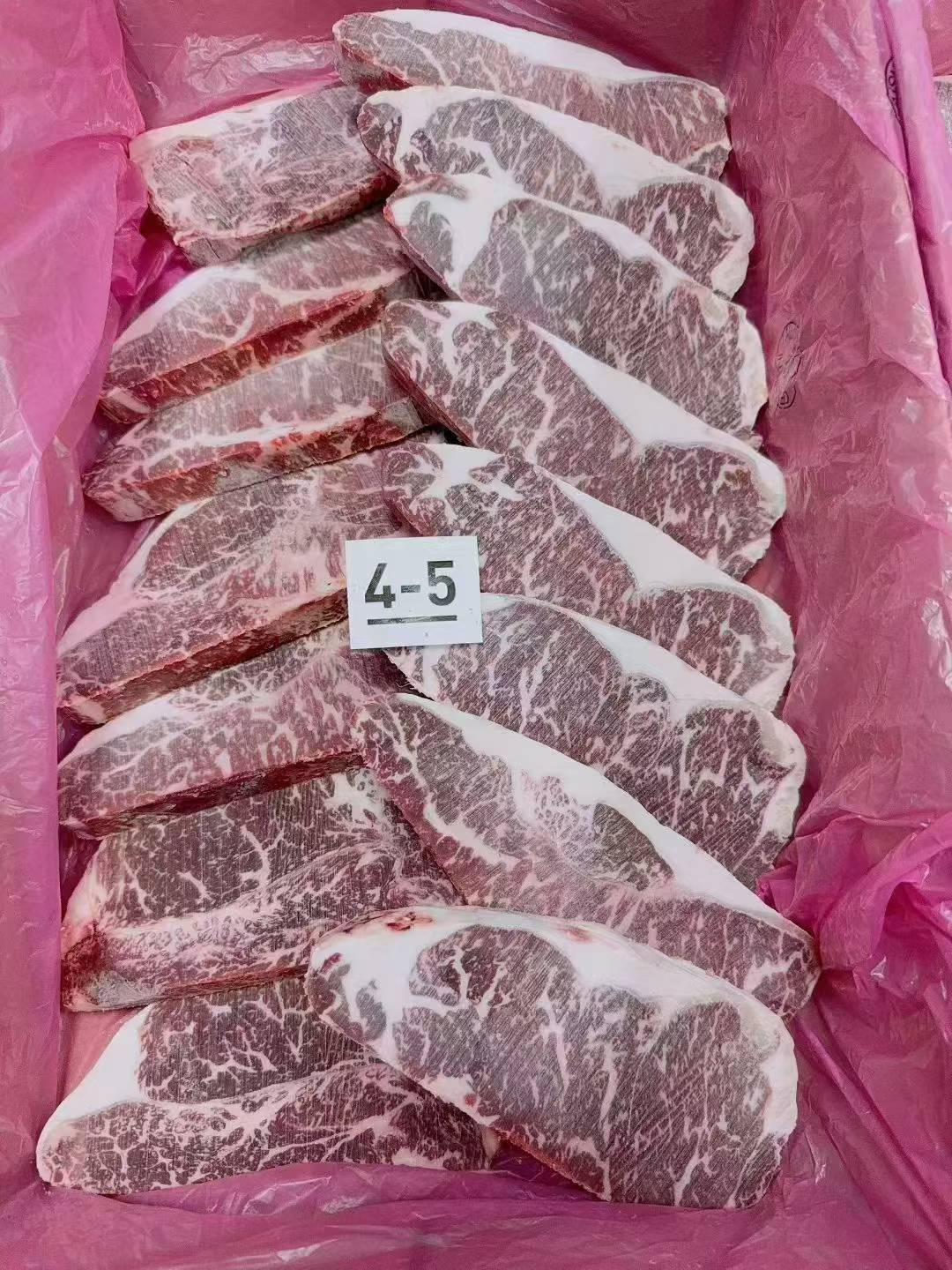
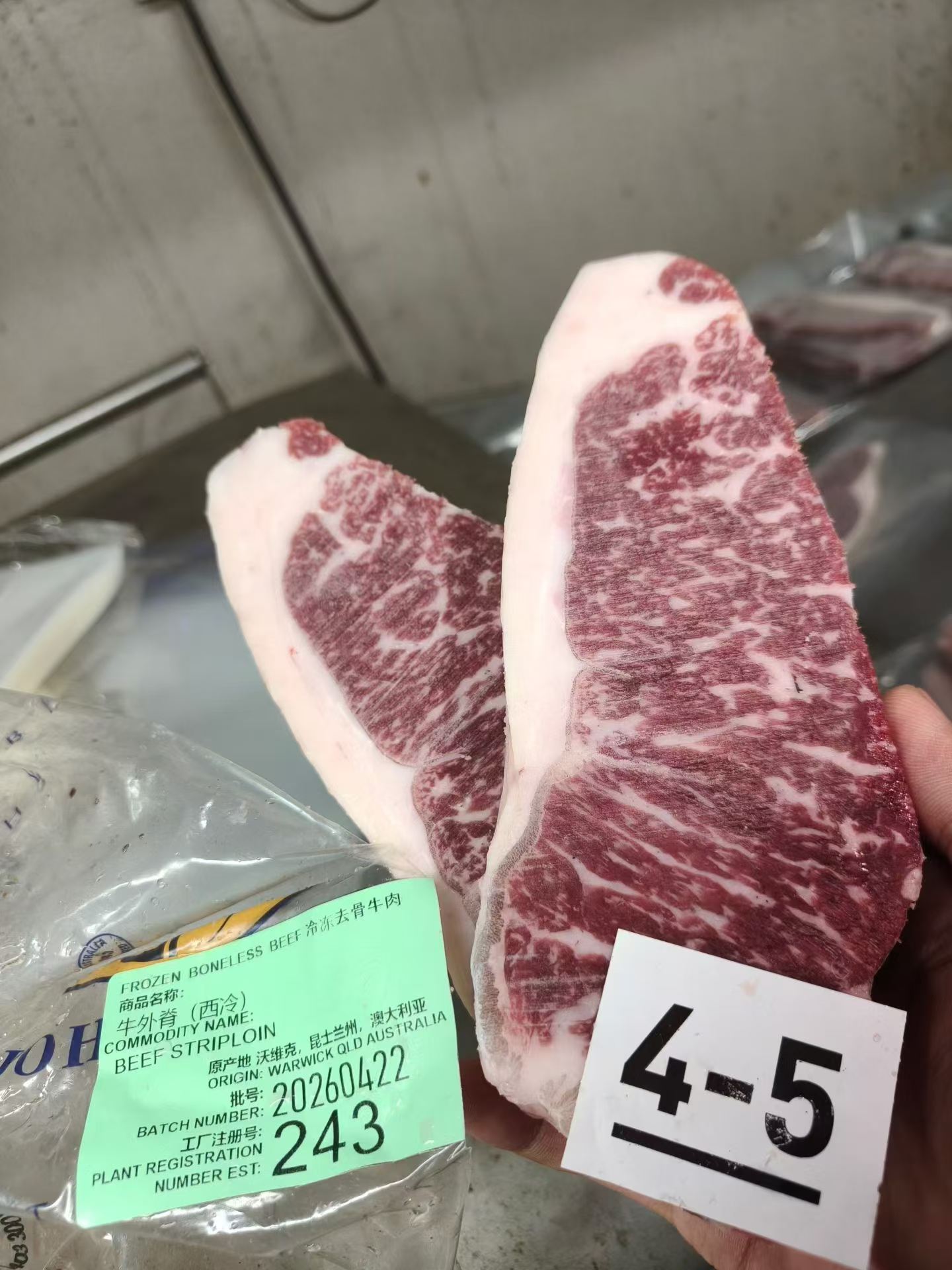
A 4–5 display card is photographed with the cuts and BEEF STRIPLOIN label, plant 243.
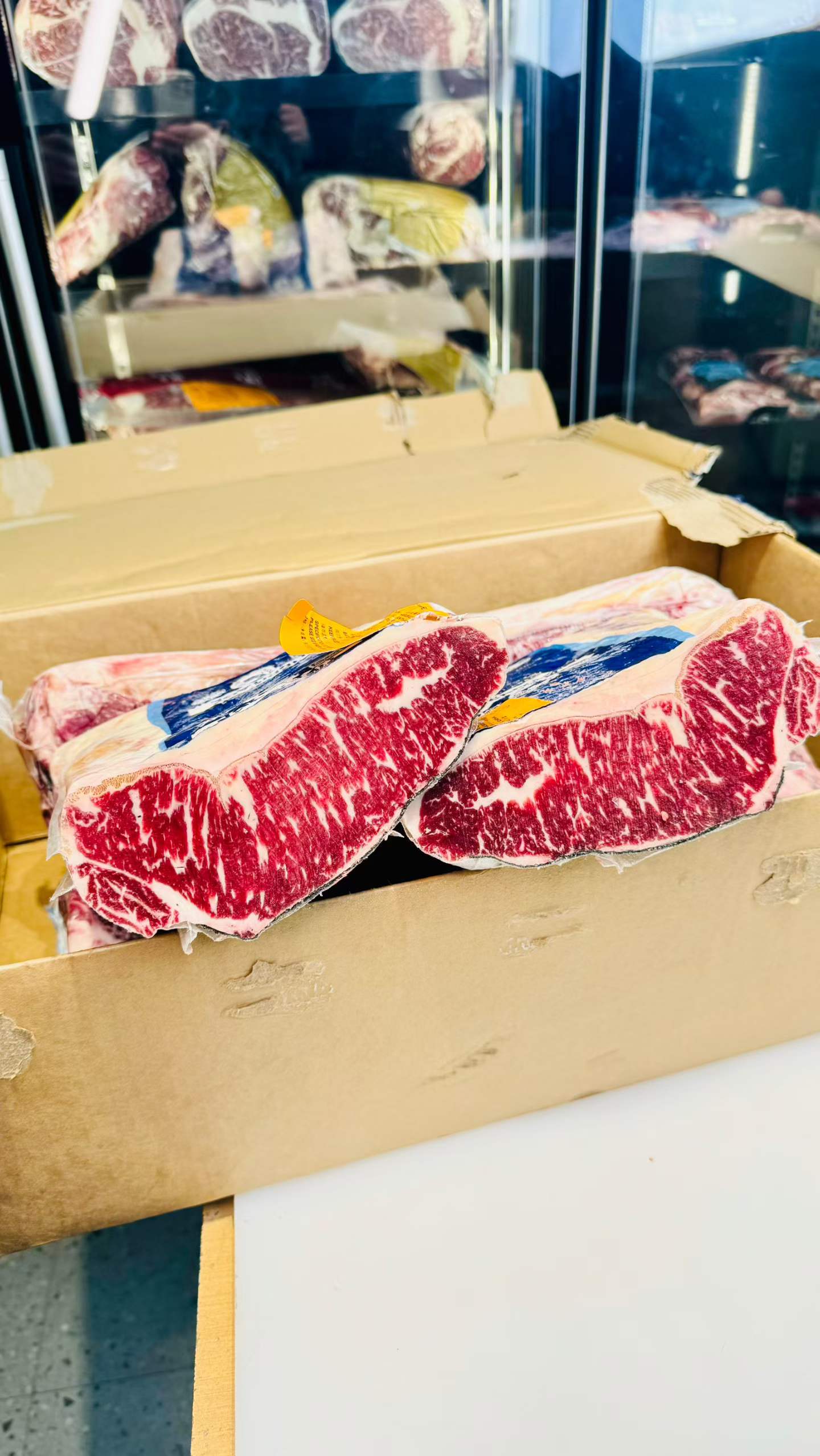
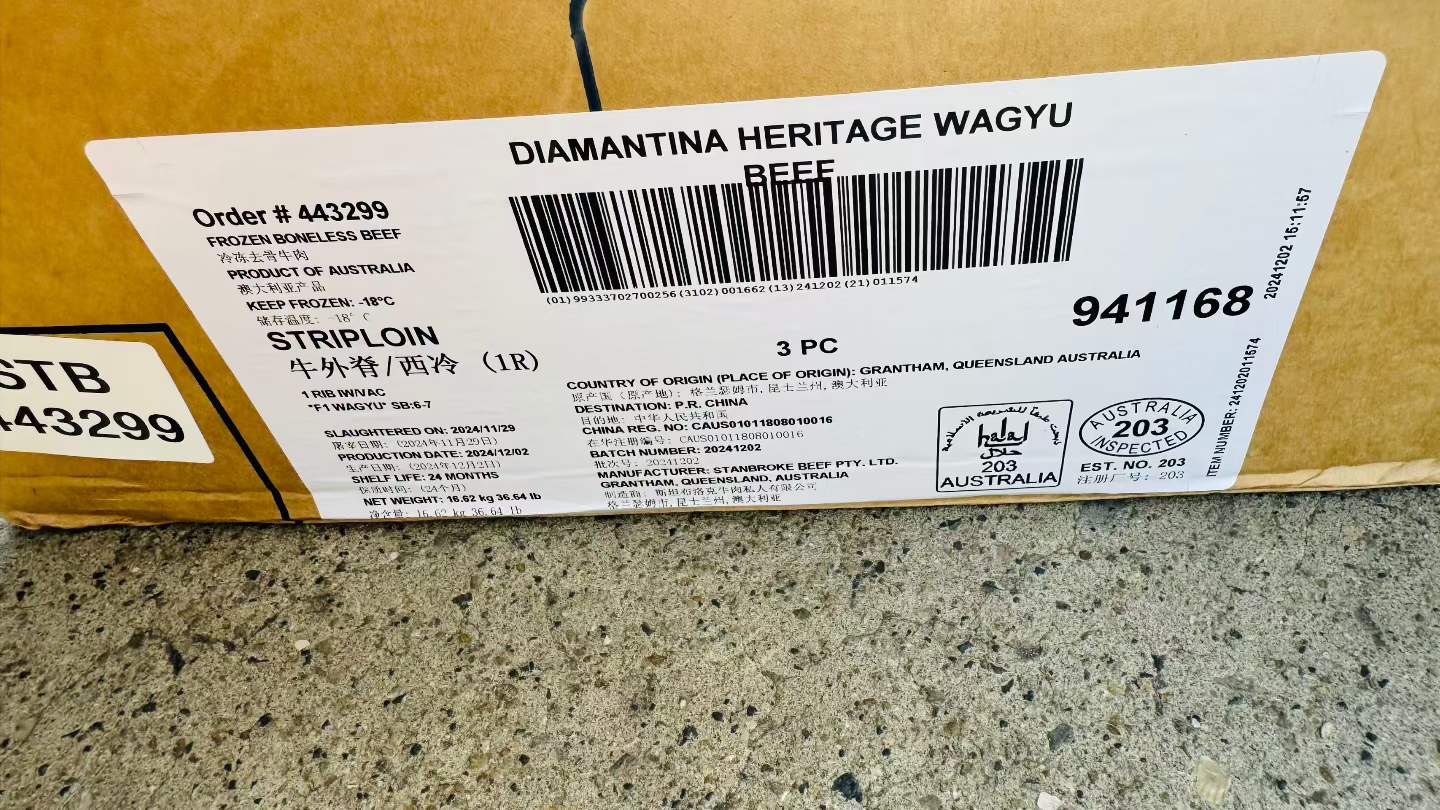
The carton identifies striploin, F1 WAGYU SB6–7 and Australian plant 203.
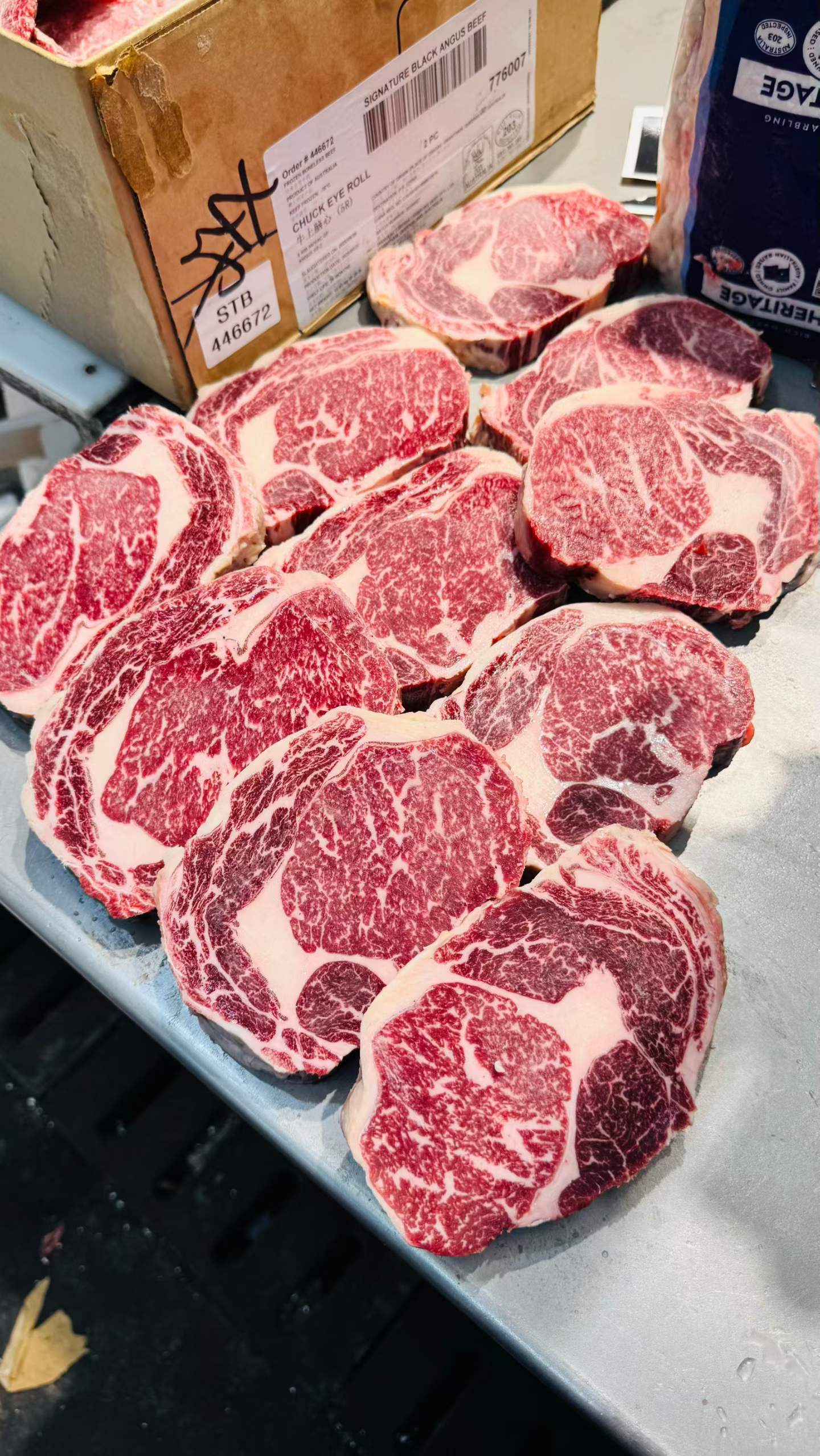
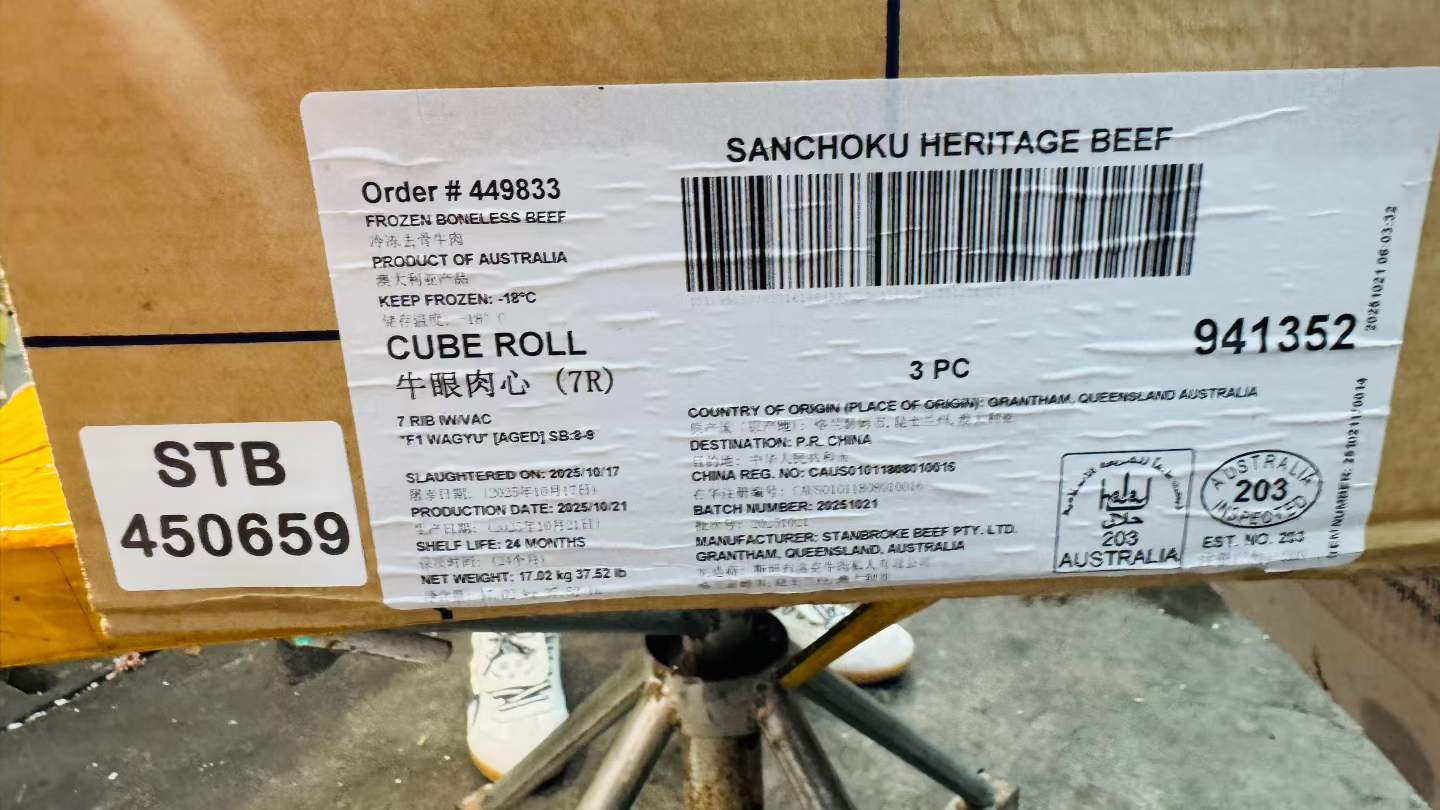
The carton records CUBE ROLL 7R and F1 WAGYU SB8–9. Range labels stay ranges.
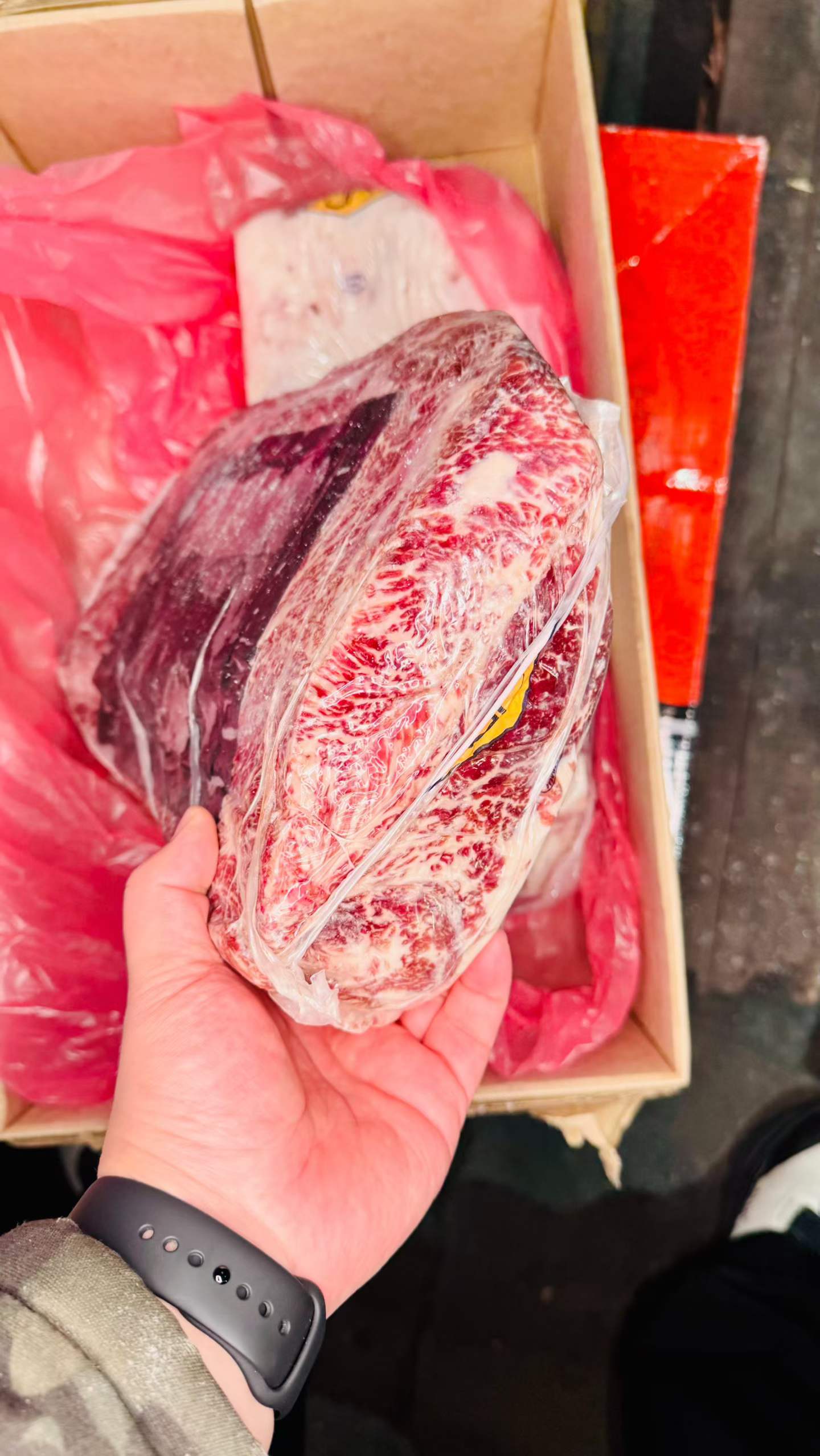
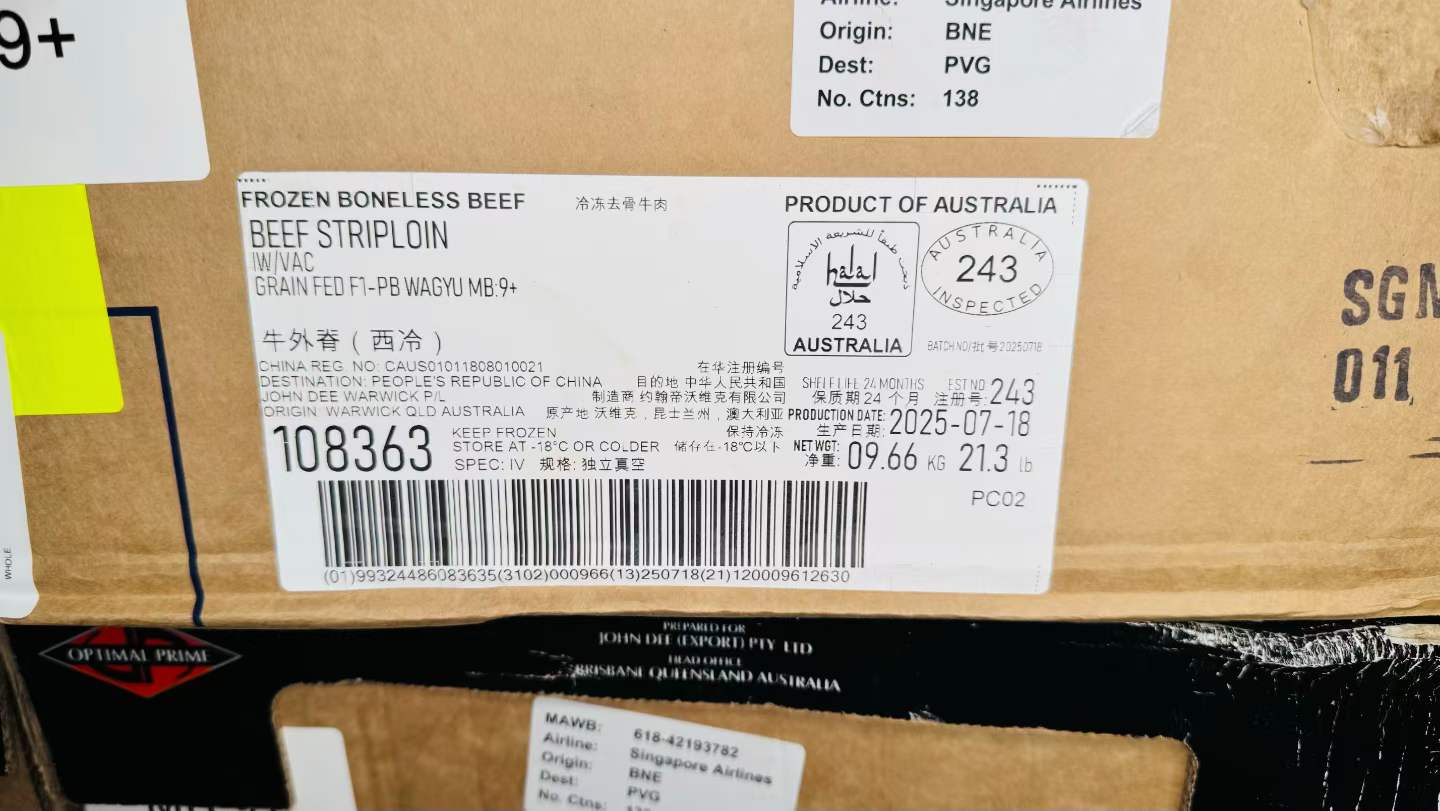
The factory carton uses MB9+. Retained as a brand label, not an AUS-MEAT score of 10 or a Japanese grade.
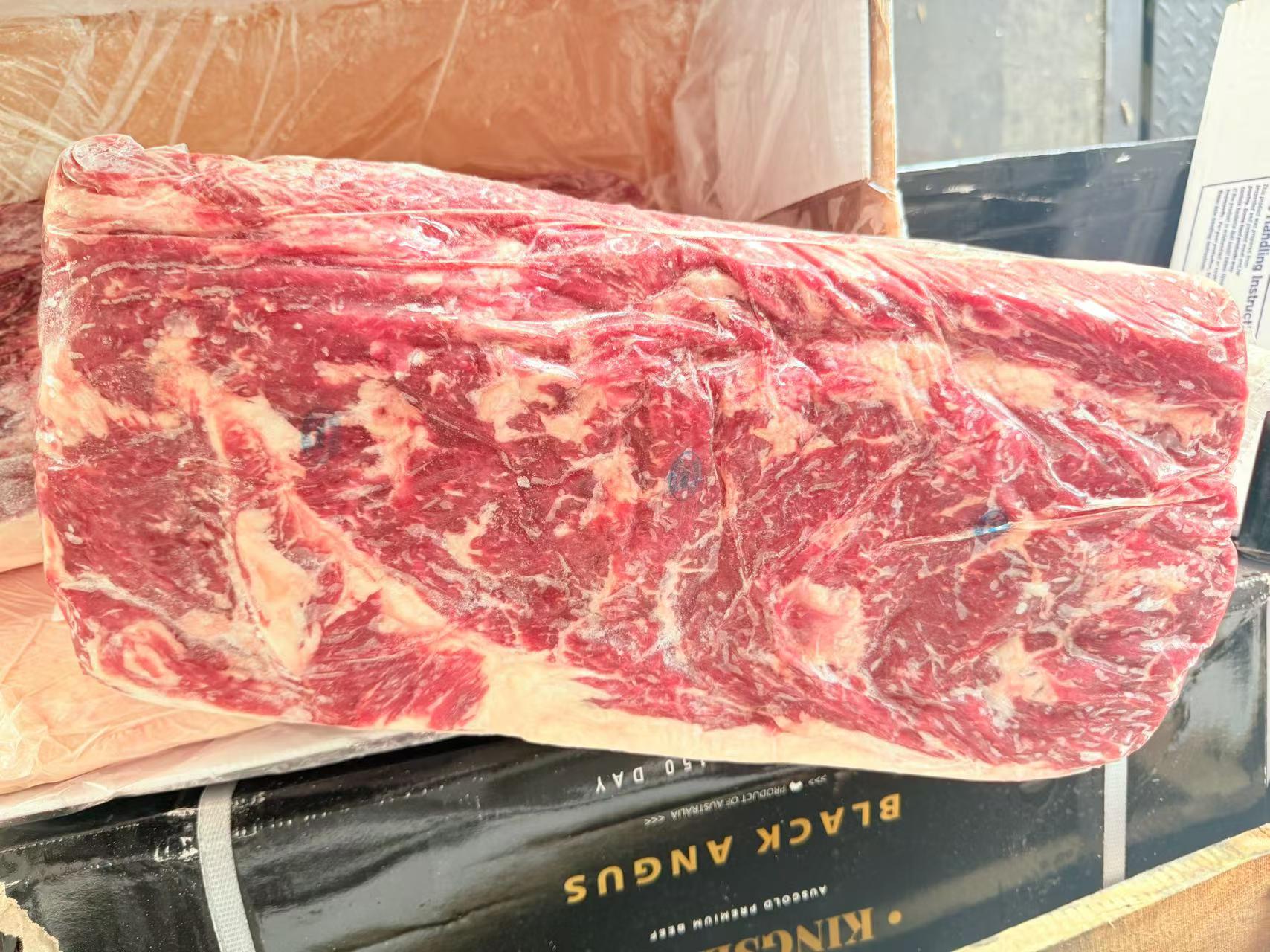
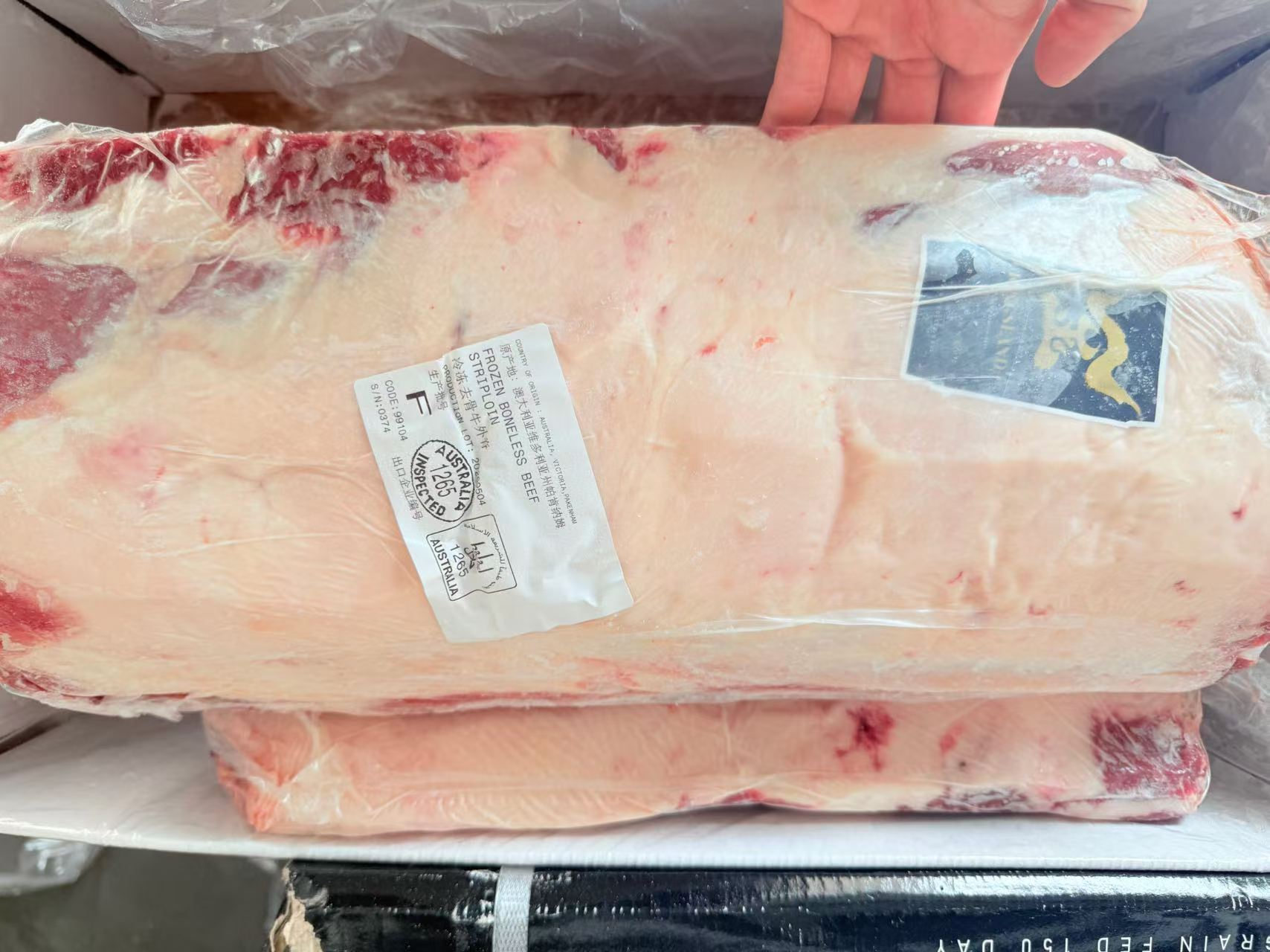
Black Angus and striploin are visible; 0–2 is the supplier’s archived range, not a legible grade field.
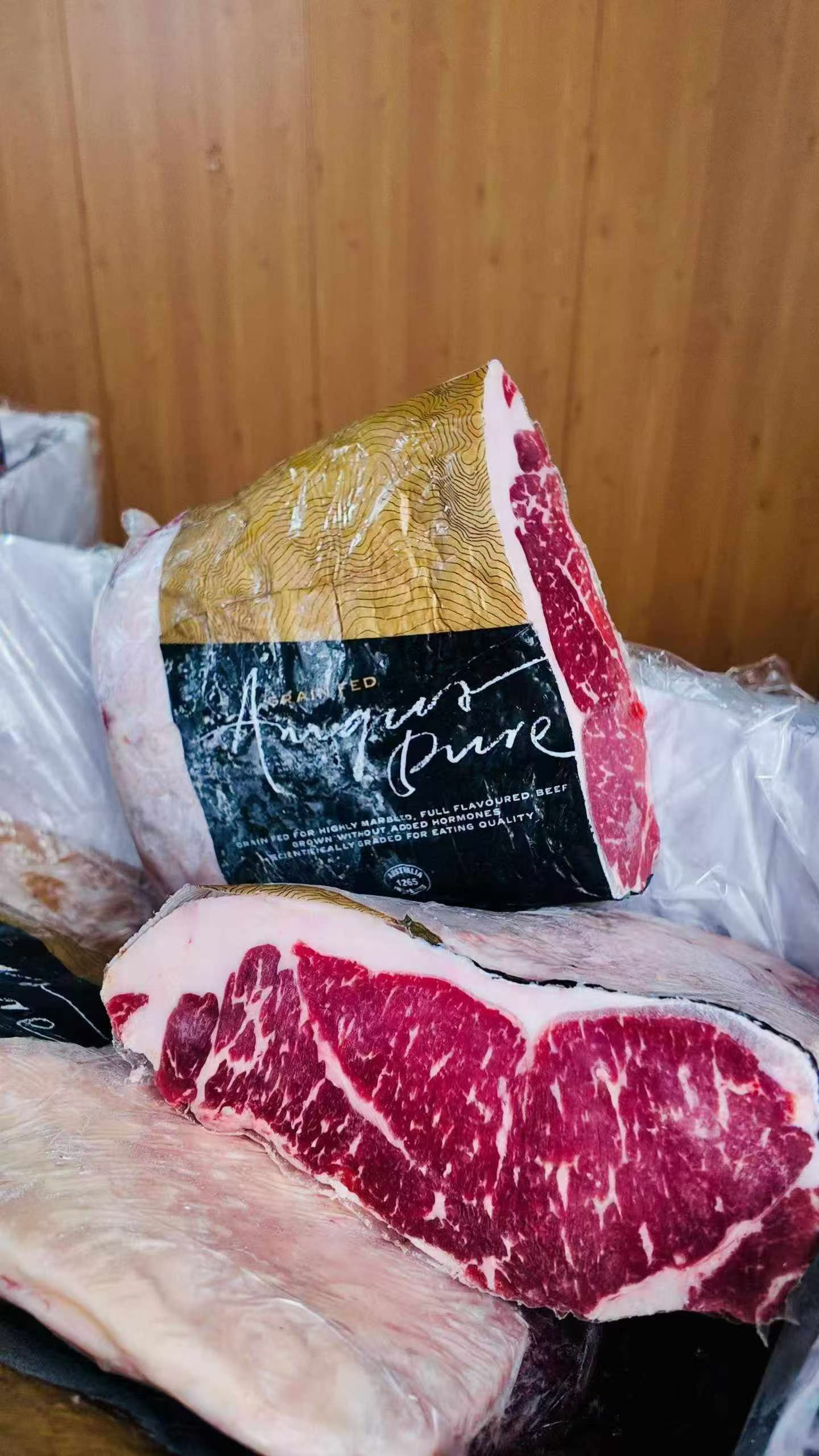
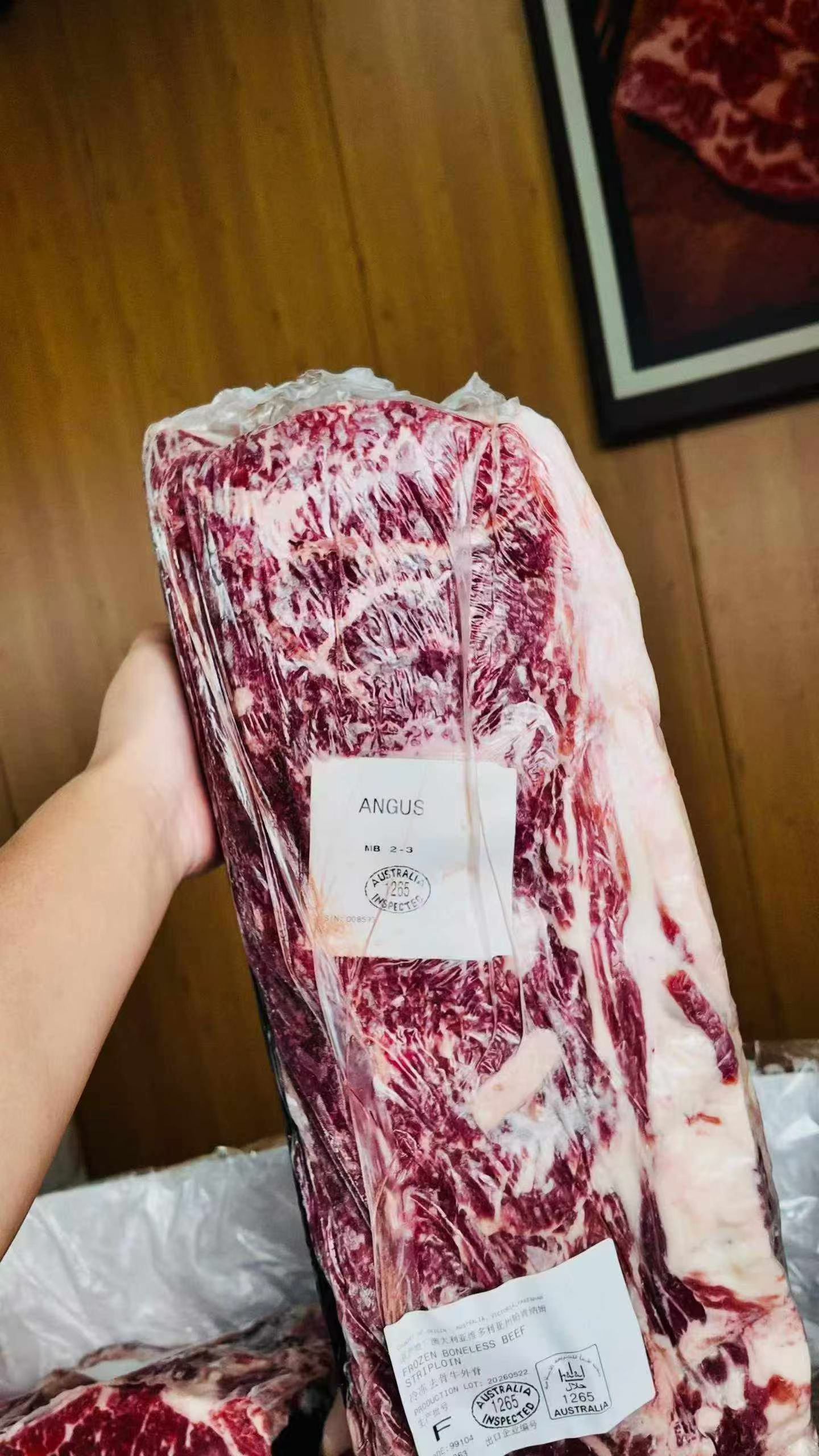
The grade sticker reads ANGUS MB2–3; the product label identifies Australian striploin, plant 1265.
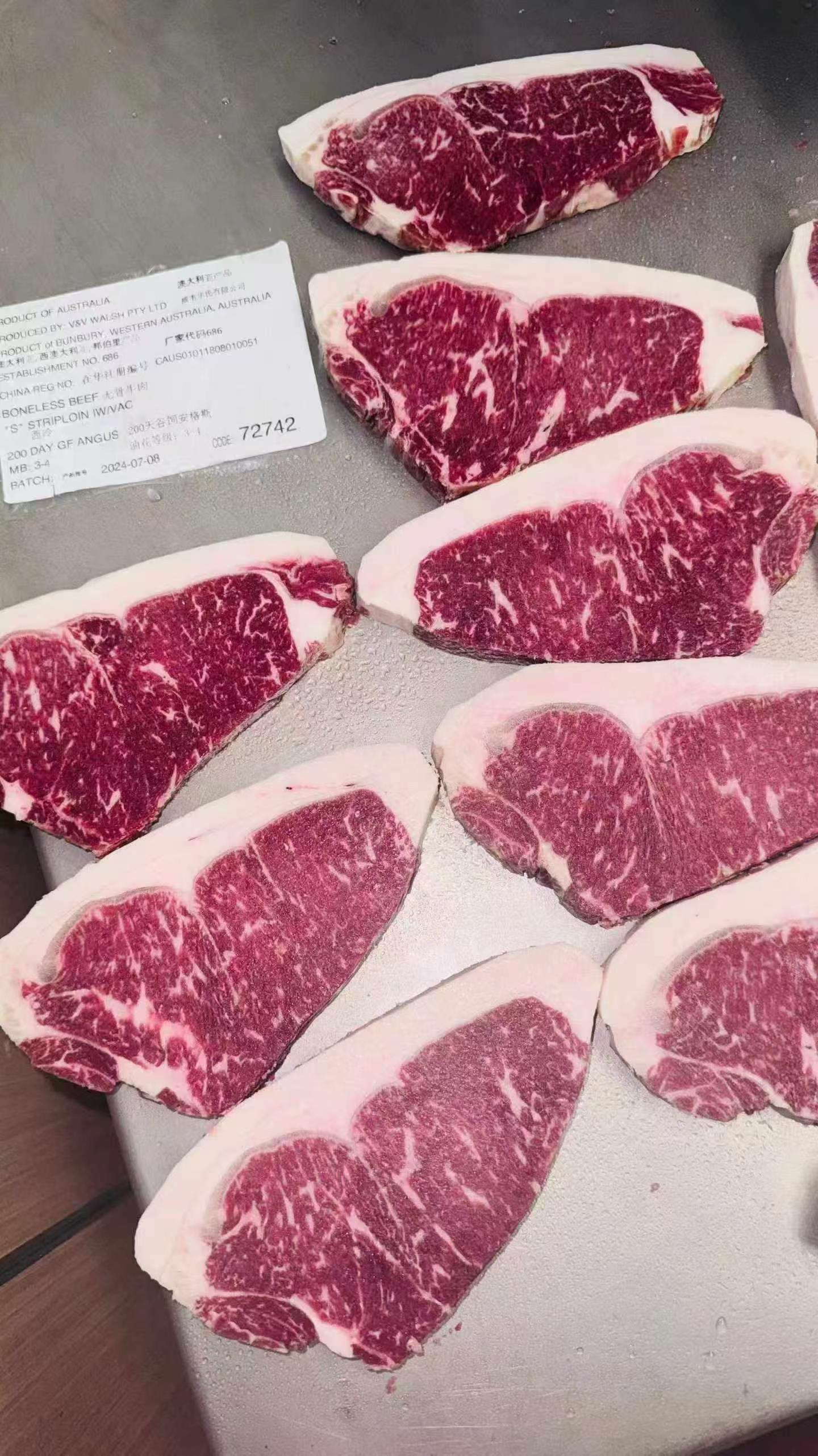
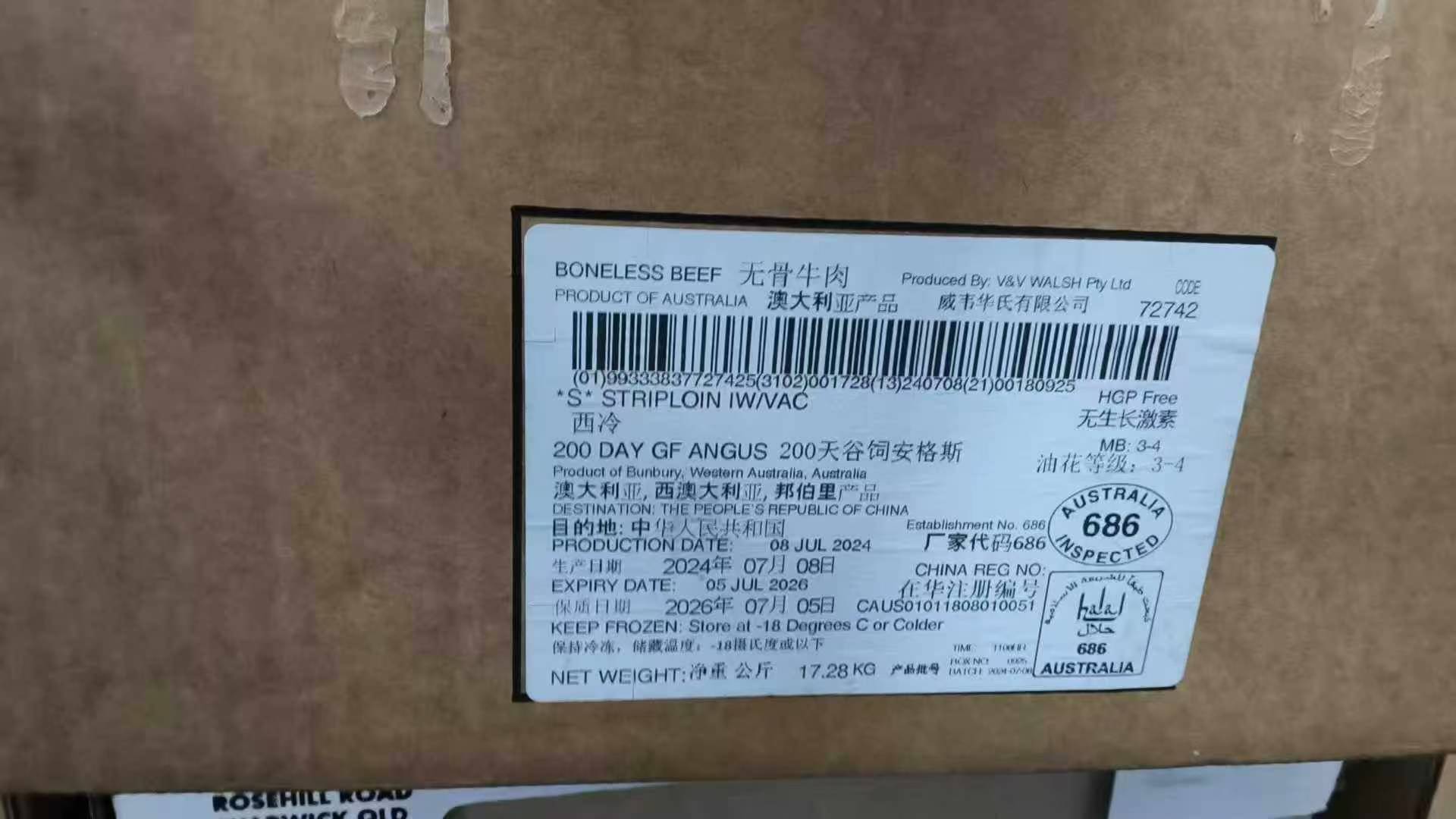
The carton records S STRIPLOIN, 200 days and MB3–4, plant 686. The photo remains a range reference.
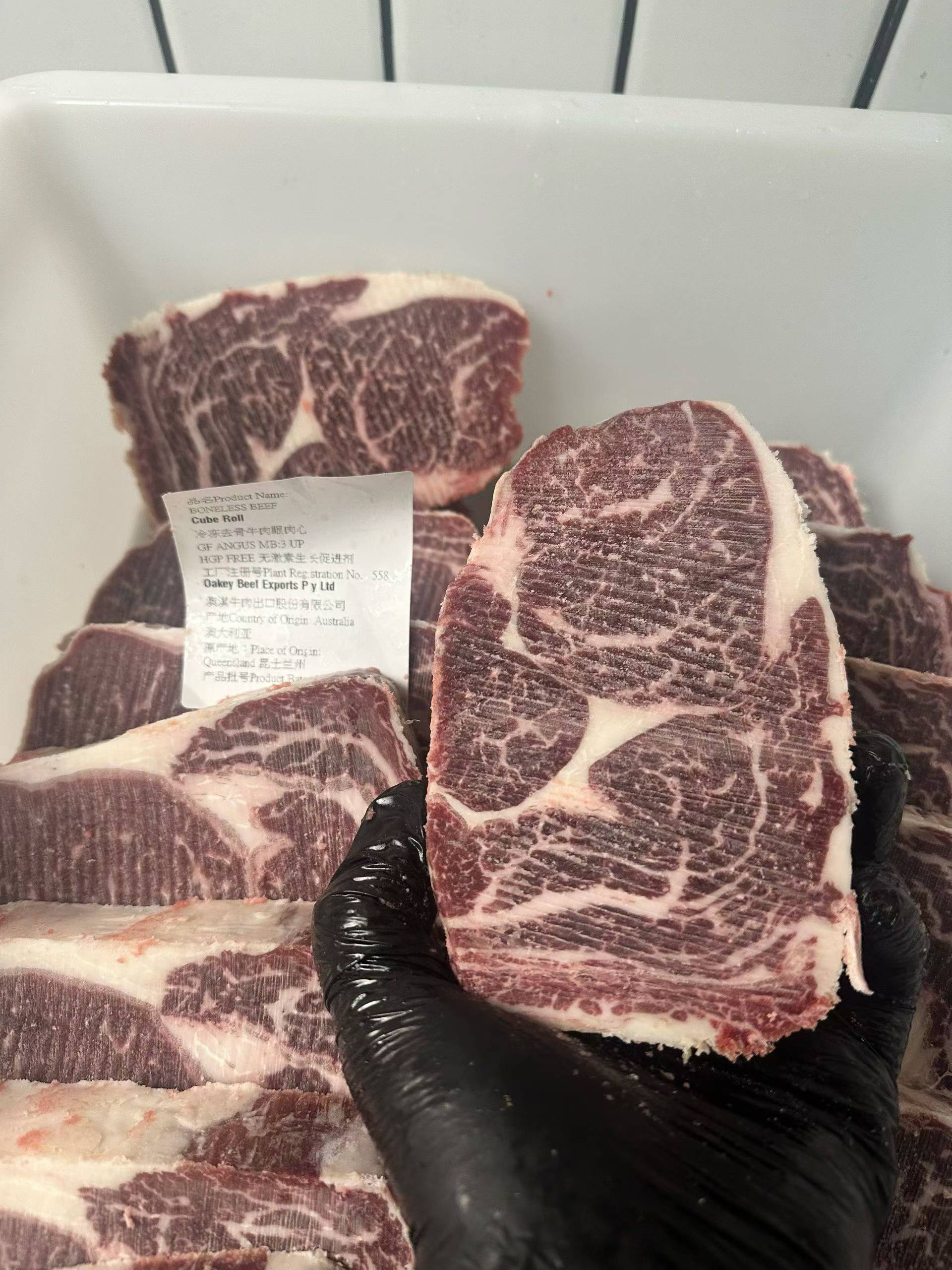
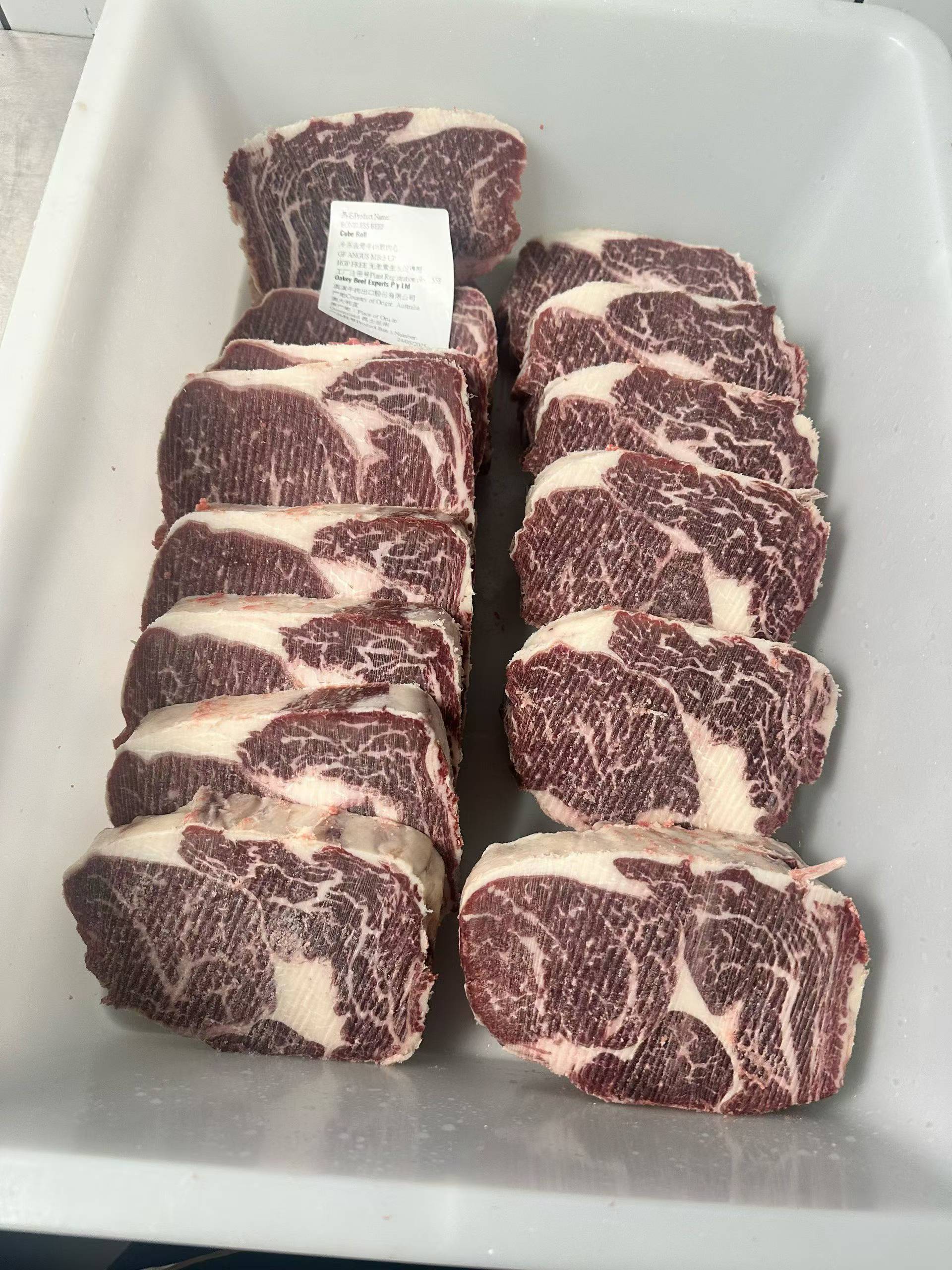
The package reads MB3UP. A minimum-grade label does not establish a specific higher score.
View this cut ↗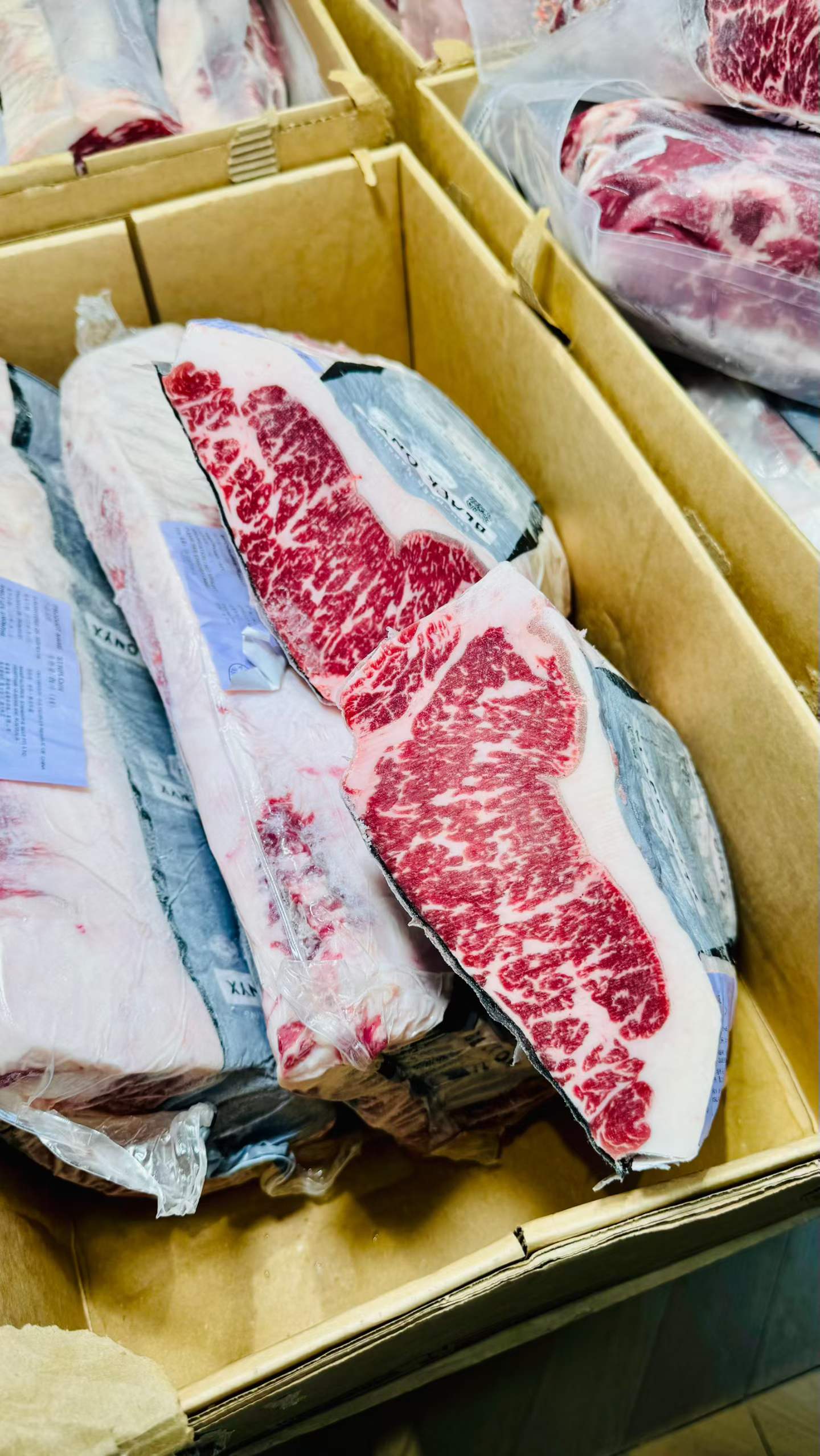
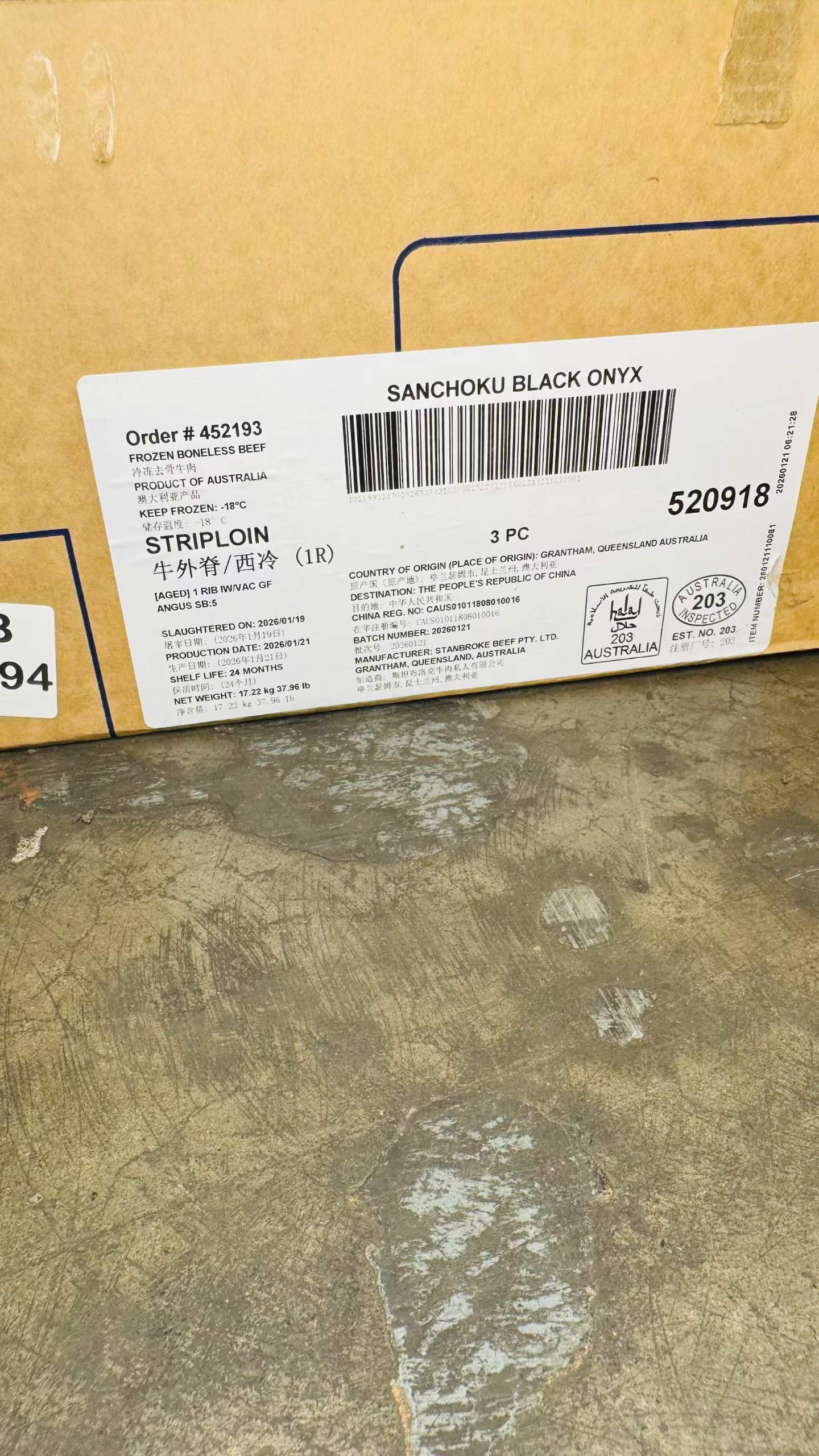
Plant 203, ANGUS SB5. SB is retained exactly as labelled; this is not the Rangers Valley BLACK ONYX product.
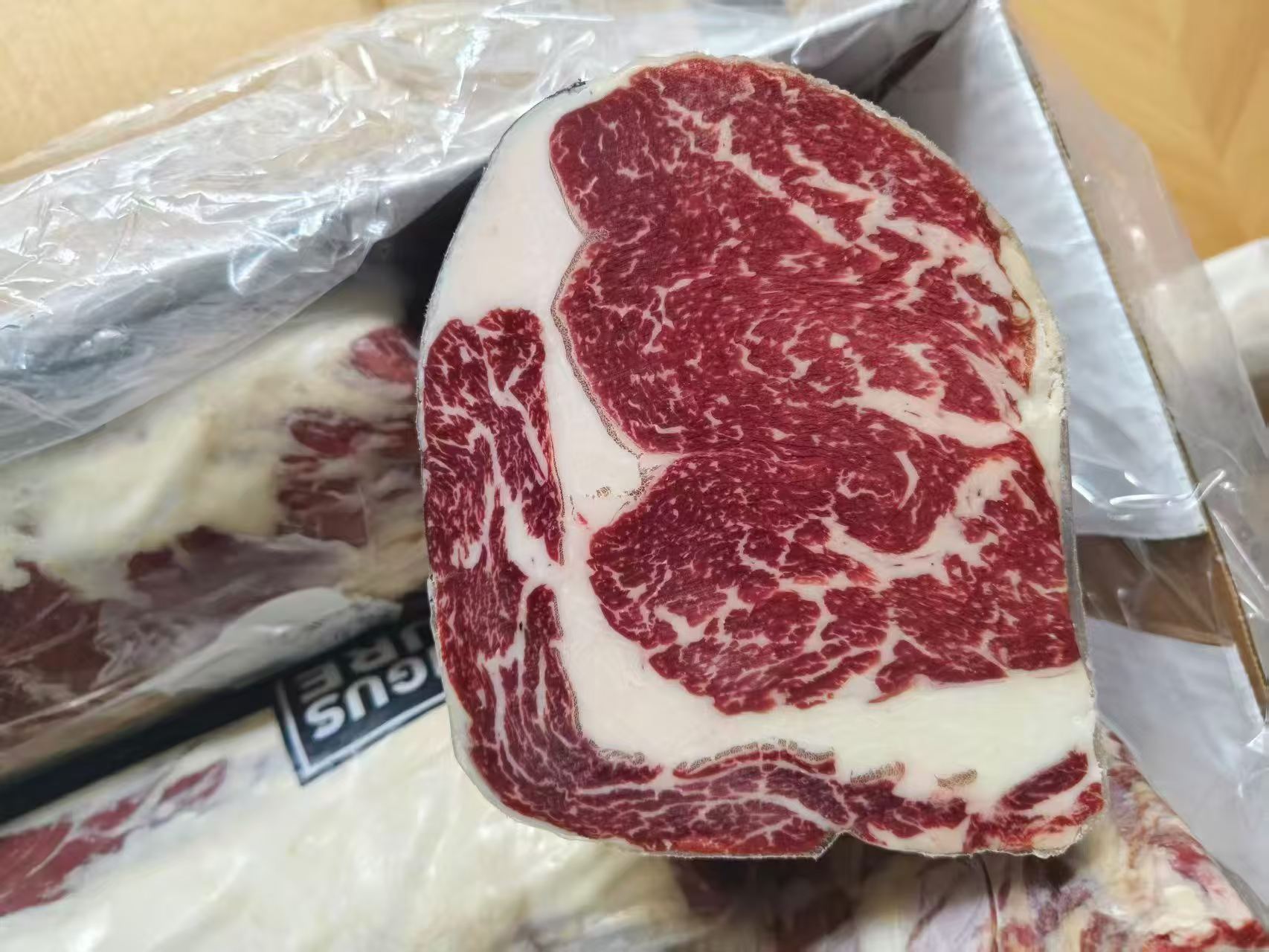
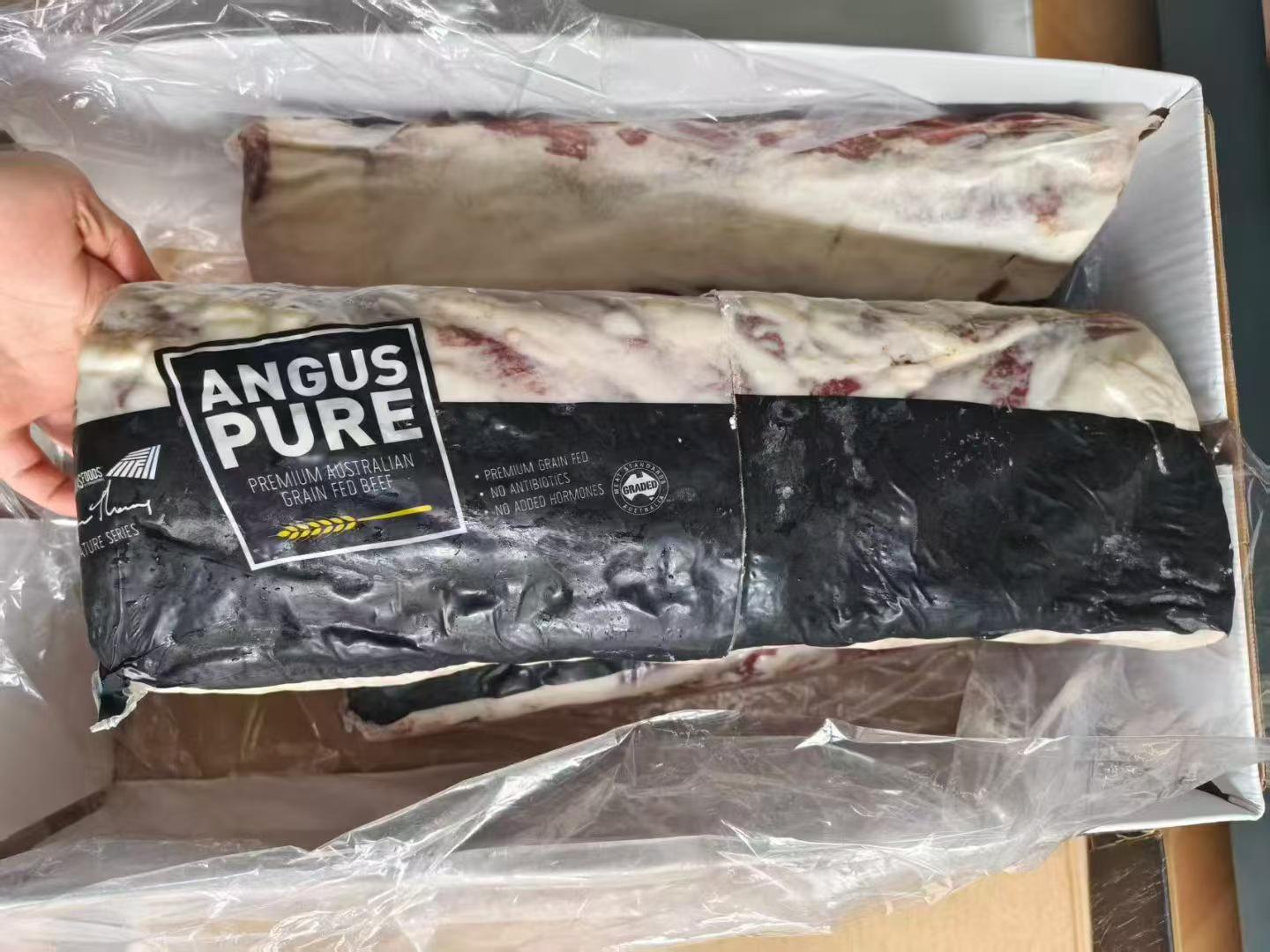
The Angus brand is visible, but MB5+ is a supplier description. No exact higher score is inferred.
USDA quality grading considers maturity and marbling. Select, Choice and Prime are the familiar retail grades—not Angus bloodline categories. Yield grading is a different assessment.
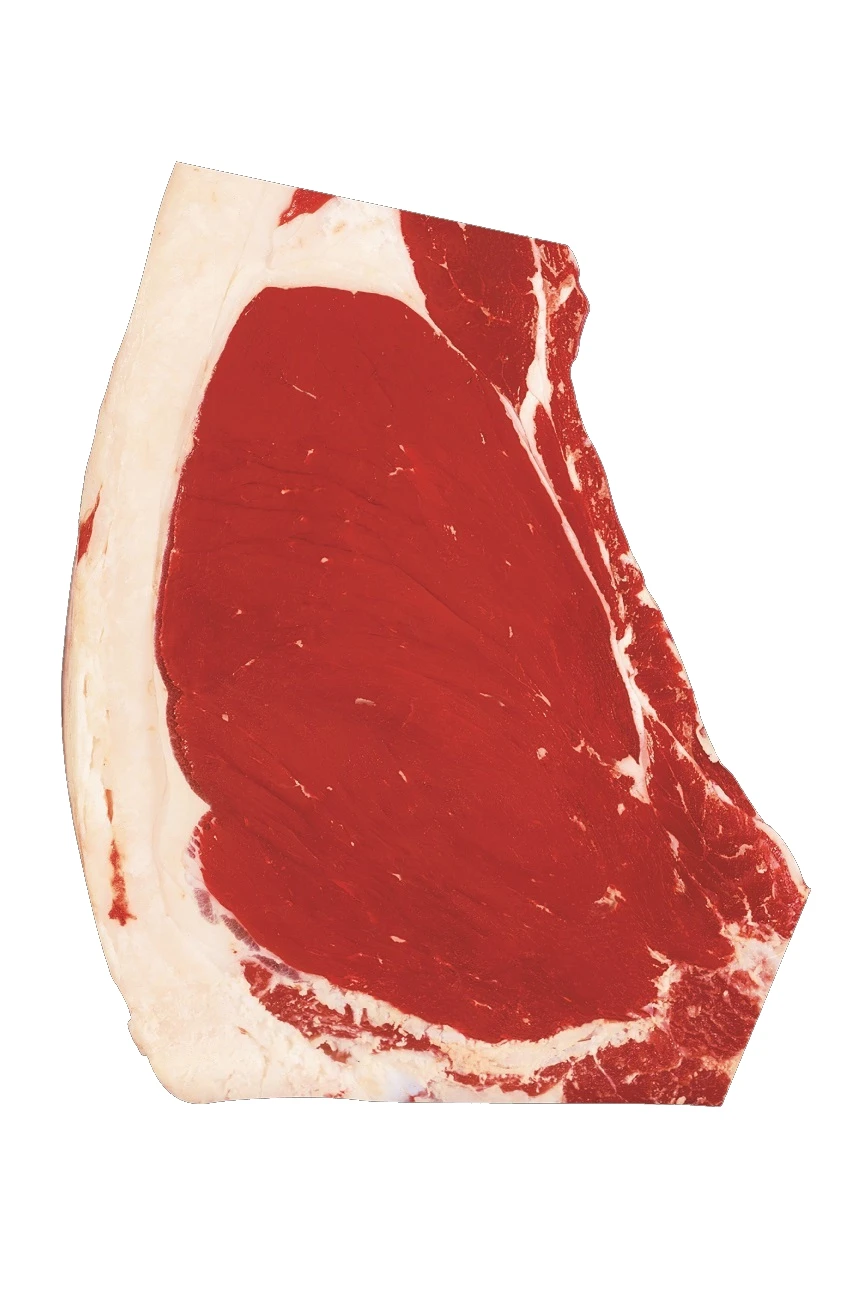
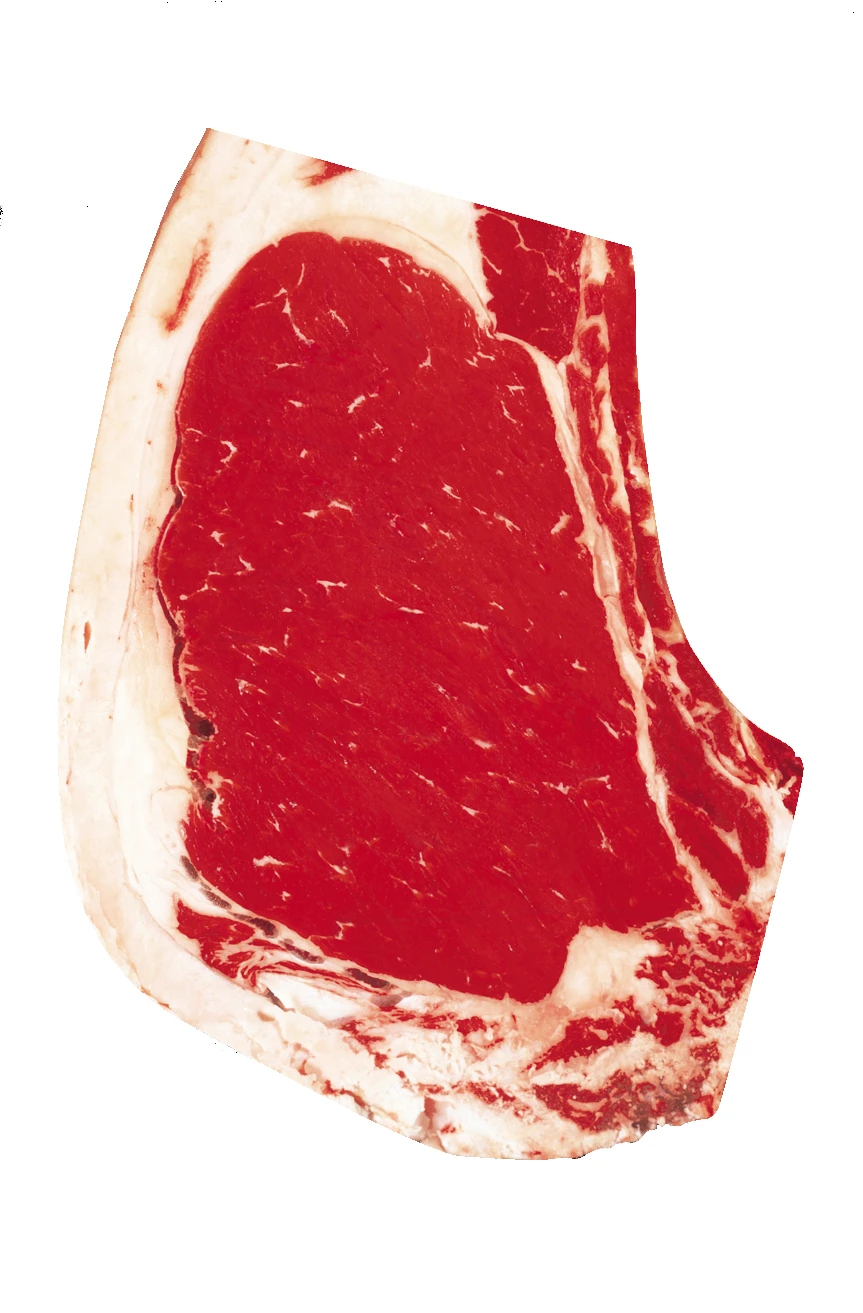
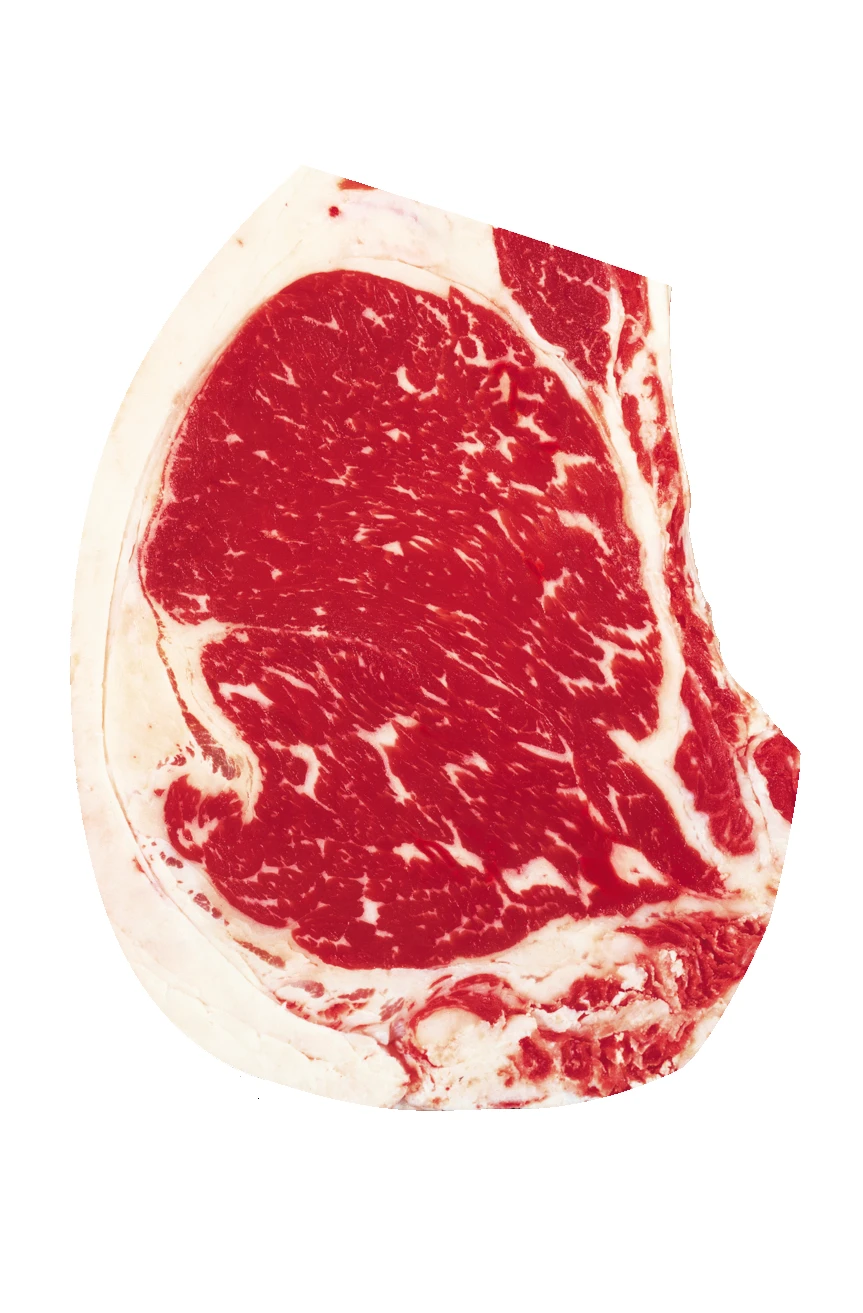
Source: USDA Agricultural Marketing Service marbling photographs. These illustrate marbling thresholds, not every condition for a full quality grade, and are not photos of our stock. Standard, Commercial, Utility, Cutter and Canner are other USDA quality grades.
USDA AMS · Official references ↗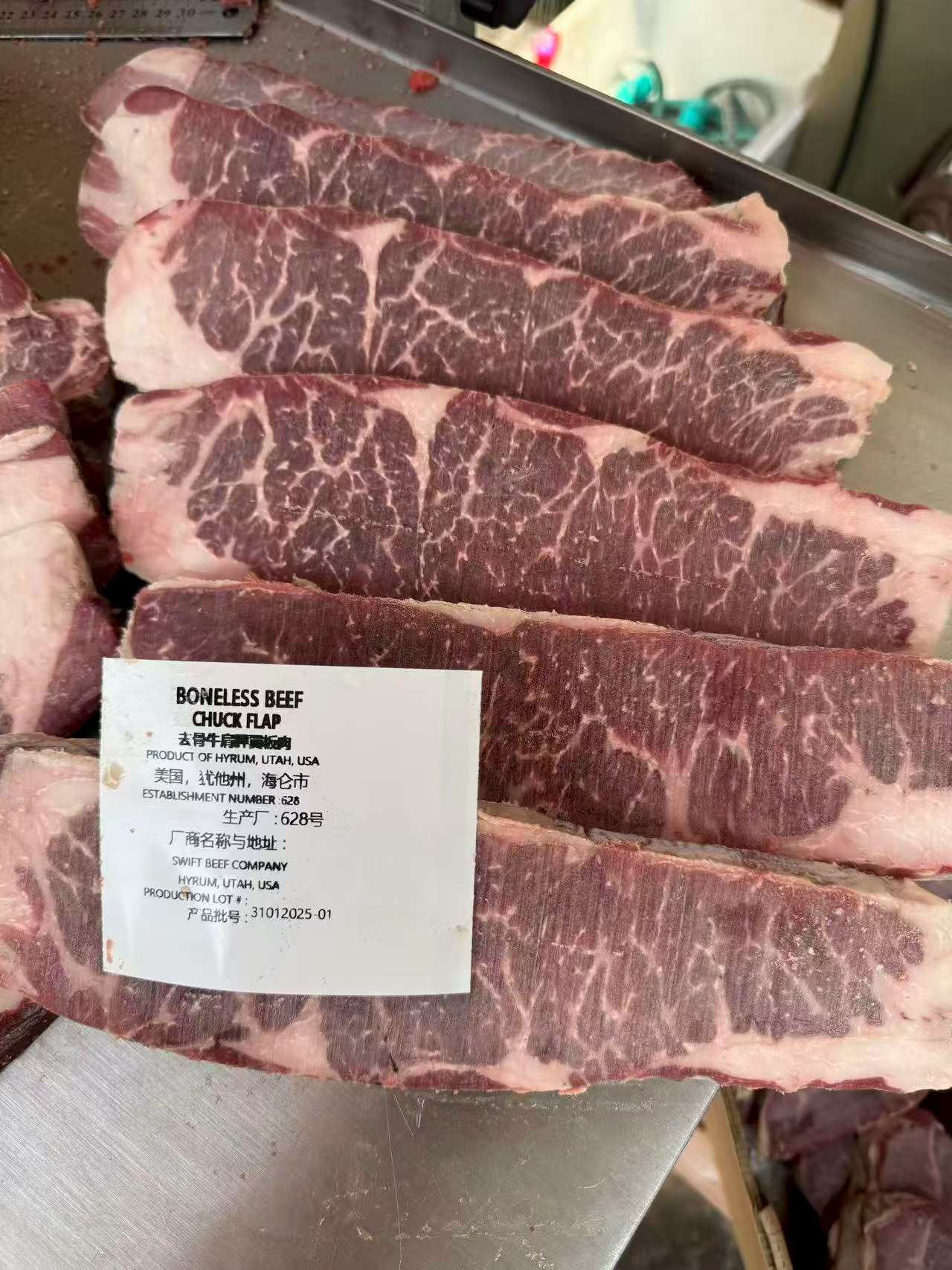
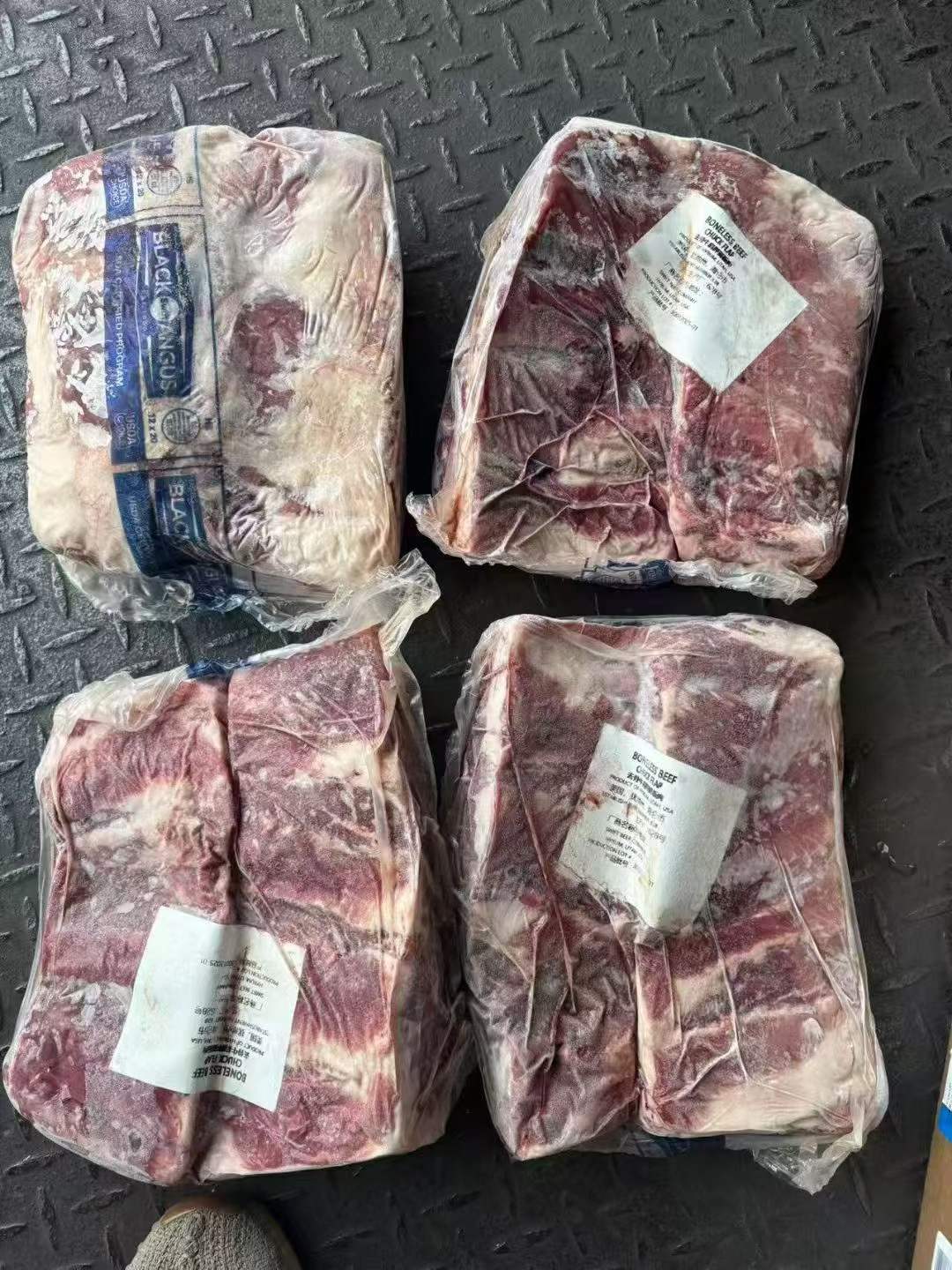
Black Angus and USDA Choice are visible. These photos show chuck flap, not a striploin or ribeye offer.
View this cut ↗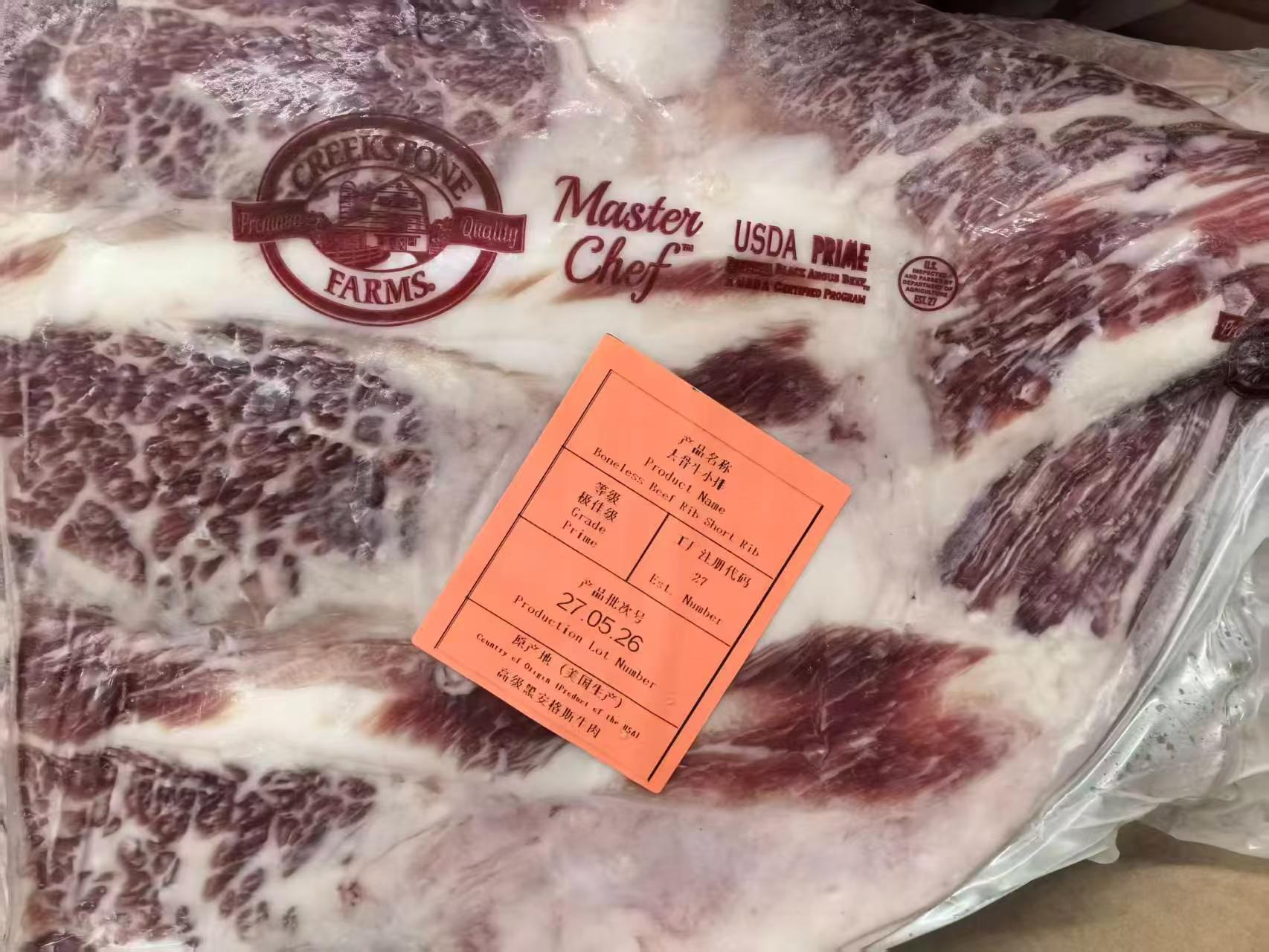
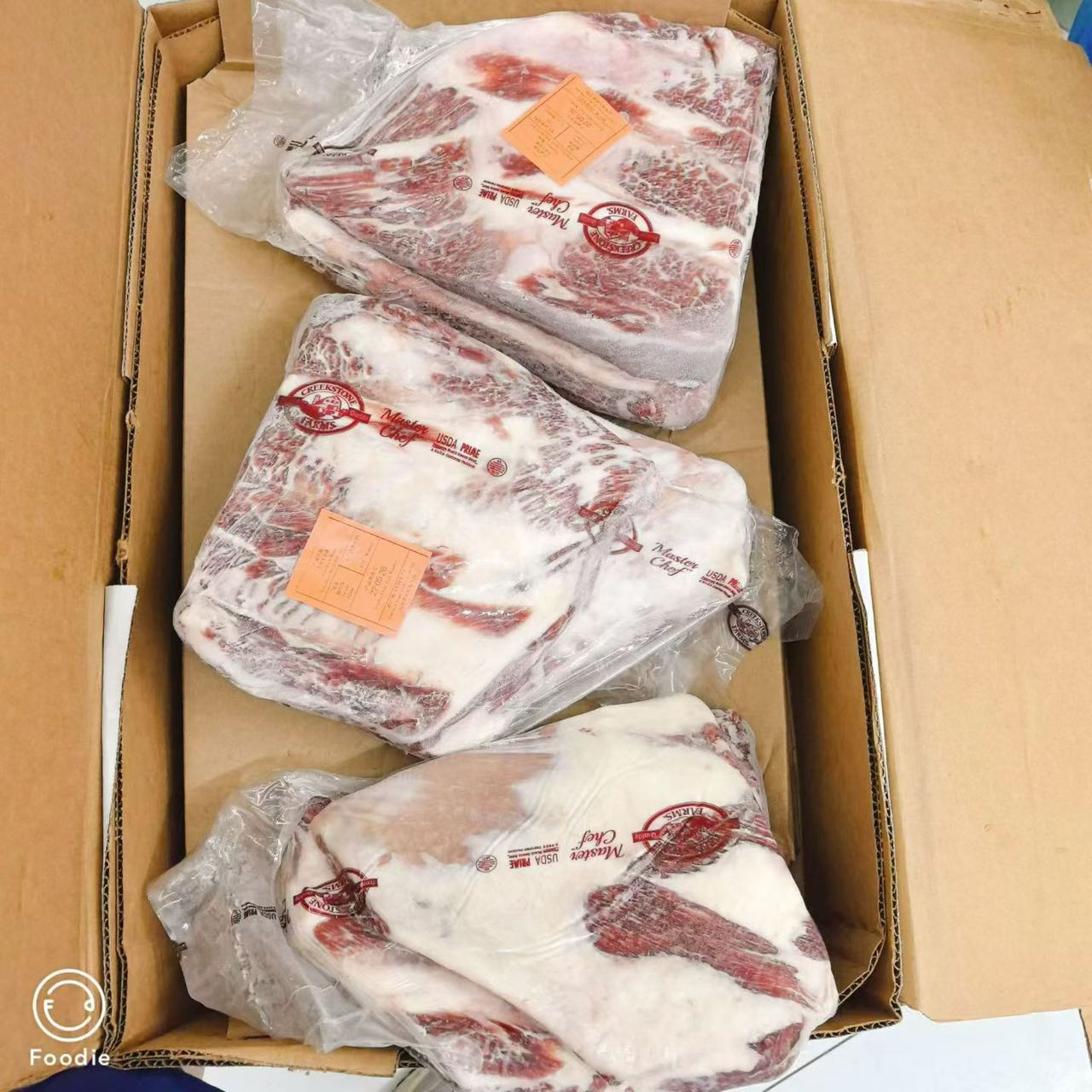
Black Angus and USDA Prime are visible on the short-rib packaging. This is a different-cut grading reference.
View this cut ↗A, B and C classify yield. A is not a genetic percentage, and it does not mean “more marbling”.
The lowest result across marbling, meat colour/brightness, firmness/texture and fat colour/lustre/quality sets the overall quality grade. A5 combines yield A with quality 5.
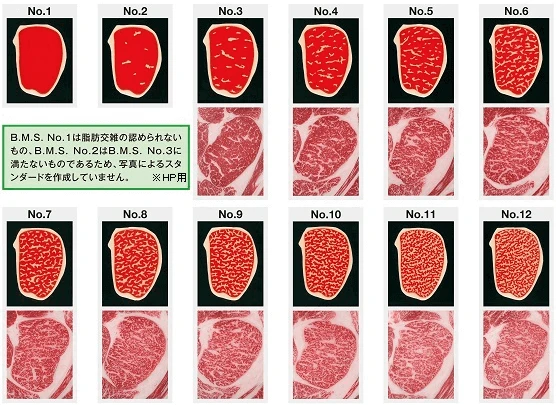
BMS 8 alone does not certify A5: the other three quality criteria and yield also matter. No Japanese product batch is represented by this educational image.
These are the four youthful high-quality Canadian grade categories and their marbling reference categories. Colour, maturity and fat attributes also matter. The broader Canadian system includes additional categories; this is not its entire grade list.
Canada and the US share a basis for marbling photographs, but Canadian beef retains Canadian grading identification. Similar words do not authorise a USDA claim.
Canadian Beef Grading Agency · Official marbling chart and criteria ↗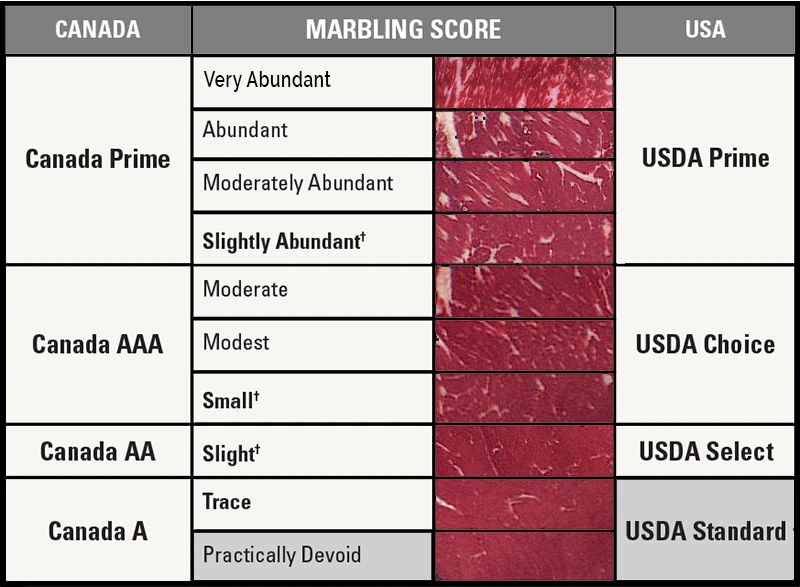
These names appear in MIRATORG’s Black Angus range. Treat them as that Russian brand’s designations—not USDA certification, and not proof that all Russian beef follows one identical system.
MIRATORG · Black Angus ↗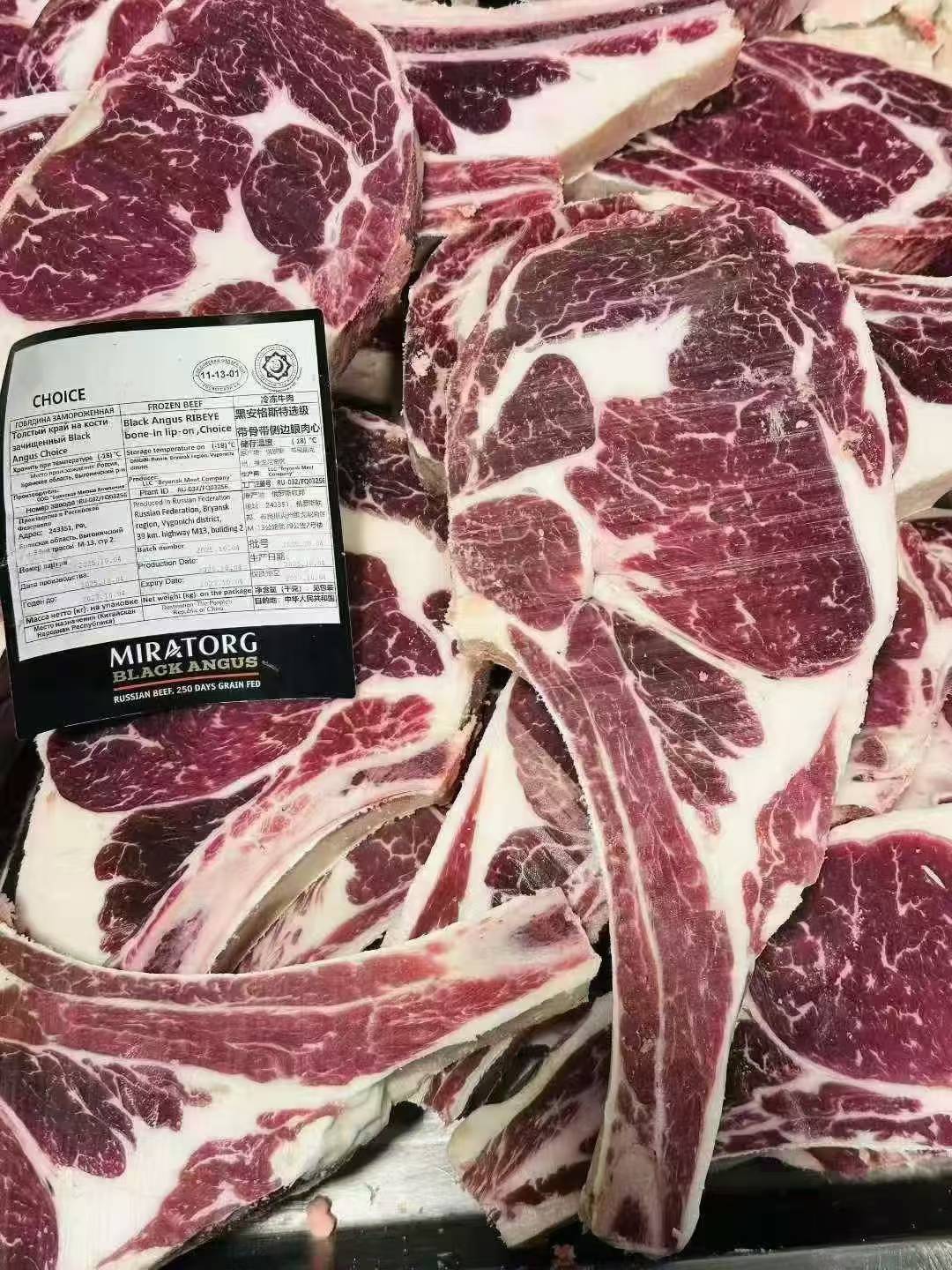
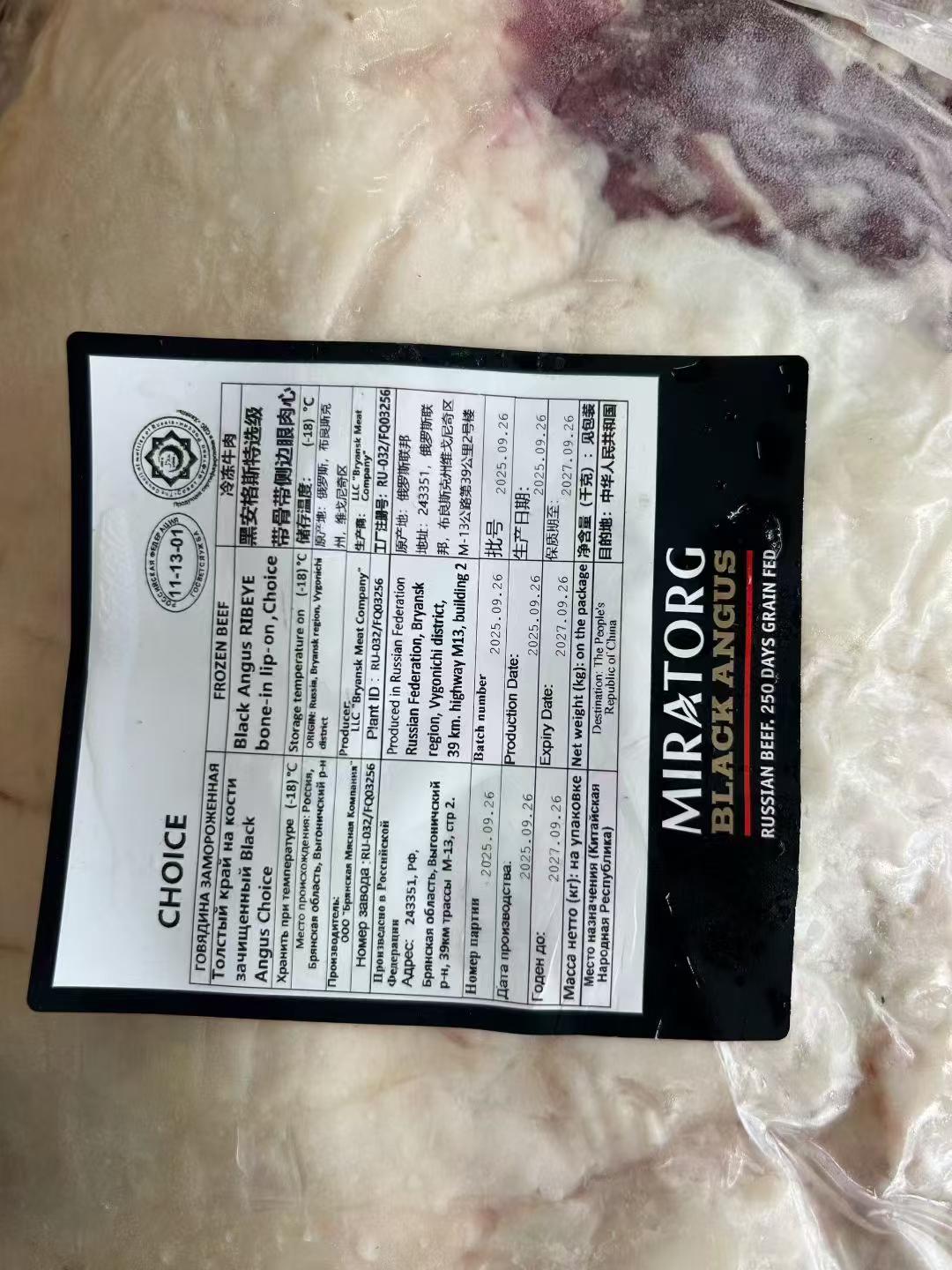
The Russian label reads Choice / 特选级 and BONE-IN LIP-ON RIBEYE. It is not USDA-certified or a boneless ribeye sample.
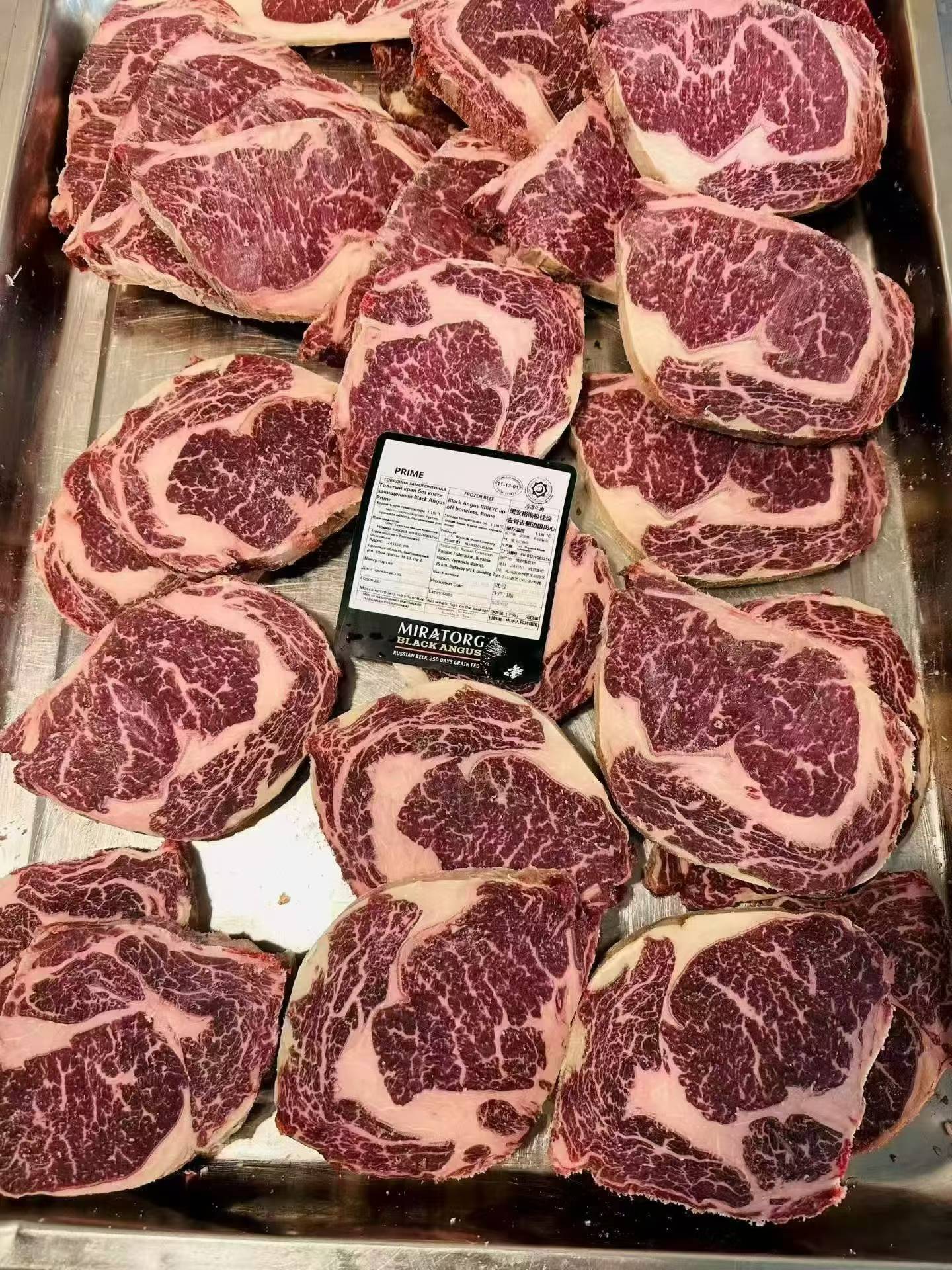
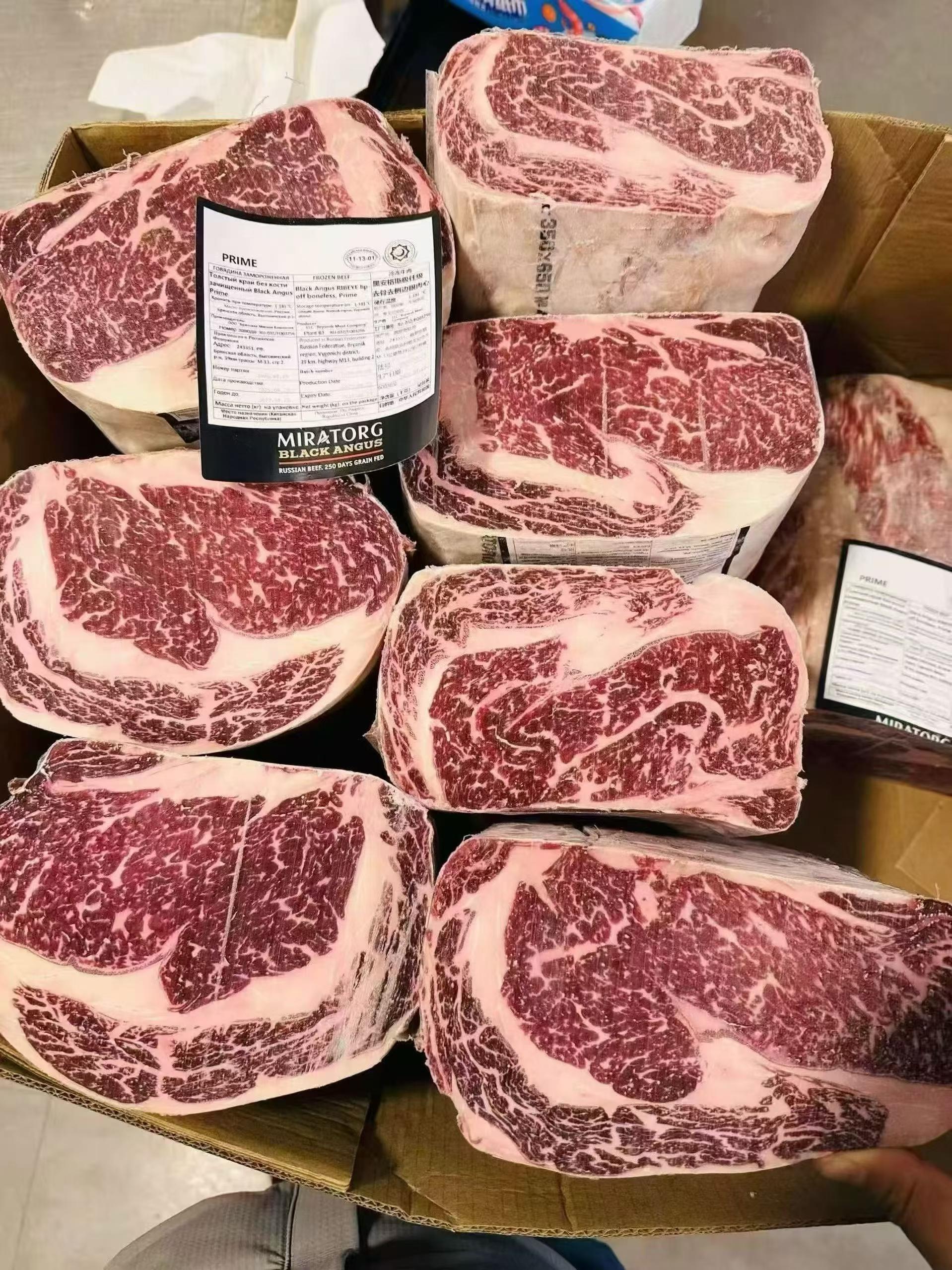
MIRATORG’s Russian Prime designation is visible. Similar grade names do not make this a USDA-certified product.
View this cut ↗A production-system claim. It does not tell you an exact marbling score or automatically mean “leaner is better”.
Read the processor’s eating-quality selection and carcass specification separately. Silver Fern Farms’ grass-fed story belongs to its programme; it is not a national M0–M9 ladder.
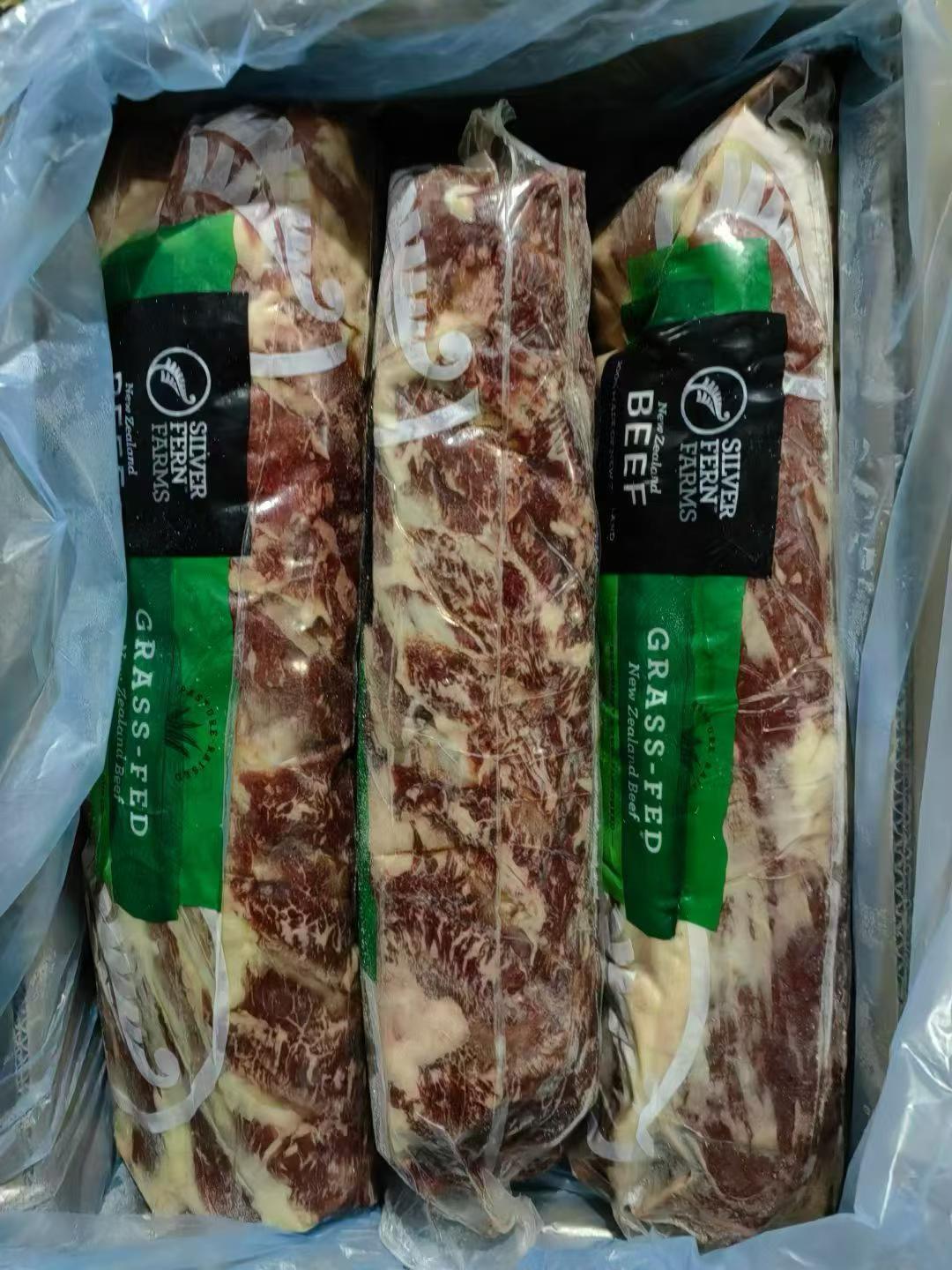
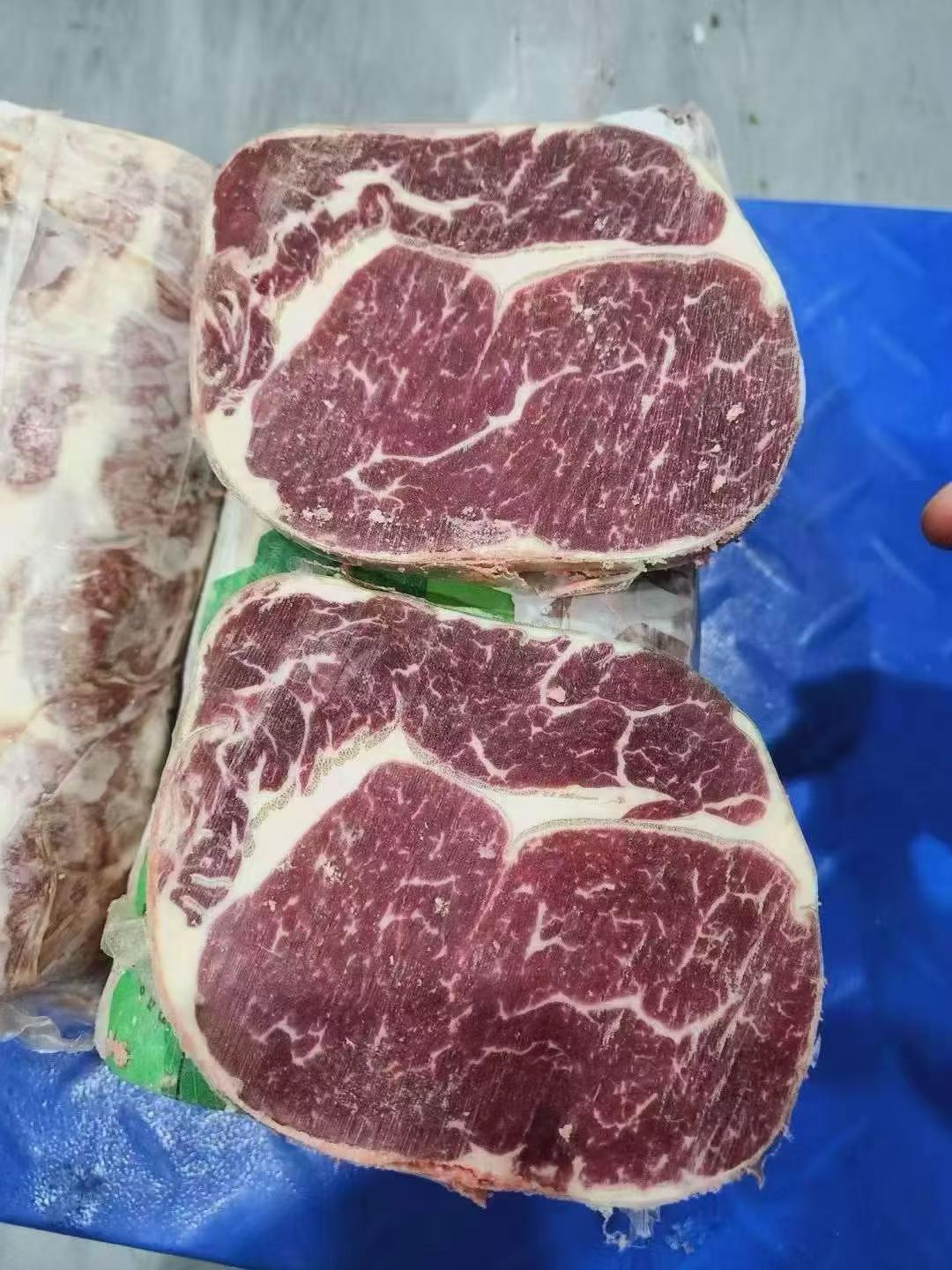
Grass-fed is visible; ribeye is the supplier’s description. Feeding style is not a marbling grade.
View this cut ↗Carcass conformation describes muscle development and profiles, from S to P.
Fat-cover classes 1–5 describe external fat coverage. They do not measure intramuscular marbling like a BMS score.
Animal category is another field. An EU A category can mean a young bull, not Japan’s yield A. These letters are meaningful only within their own system.
European Commission · Carcass classification ↗INAC’s carcass classification distinguishes animal categories, muscle conformation and external fat cover. A supplier’s additional marbling notation must be checked against that programme, rather than presented as a universal national MB scale.
INAC · Beef cuts and classification ↗Photo rule: intramuscular flecks are marbling; outer fat caps and seams between muscles are different. Our archive mixes cuts, lighting and batches, so these photographs are evidence examples—not a controlled grading calibration, and not live inventory.
Official standards, producer documentation and actual archive photos are presented separately. Grades, pedigree and available products are confirmed from their corresponding records.
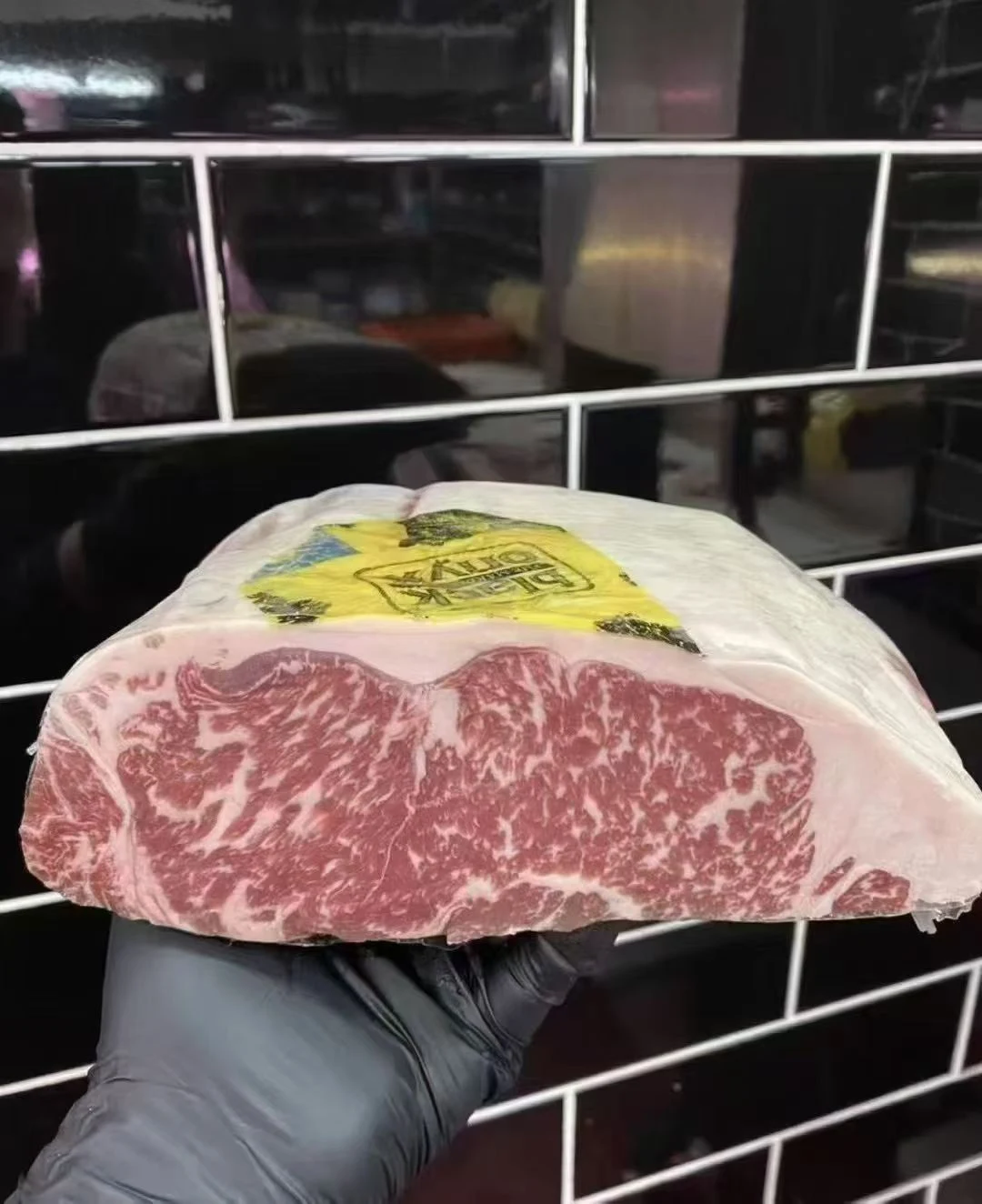
Choose imported steak around your occasion, kitchen, appetite and budget. A practical first-order guide with real Angus and Wagyu product photographs.
Read the guide ↗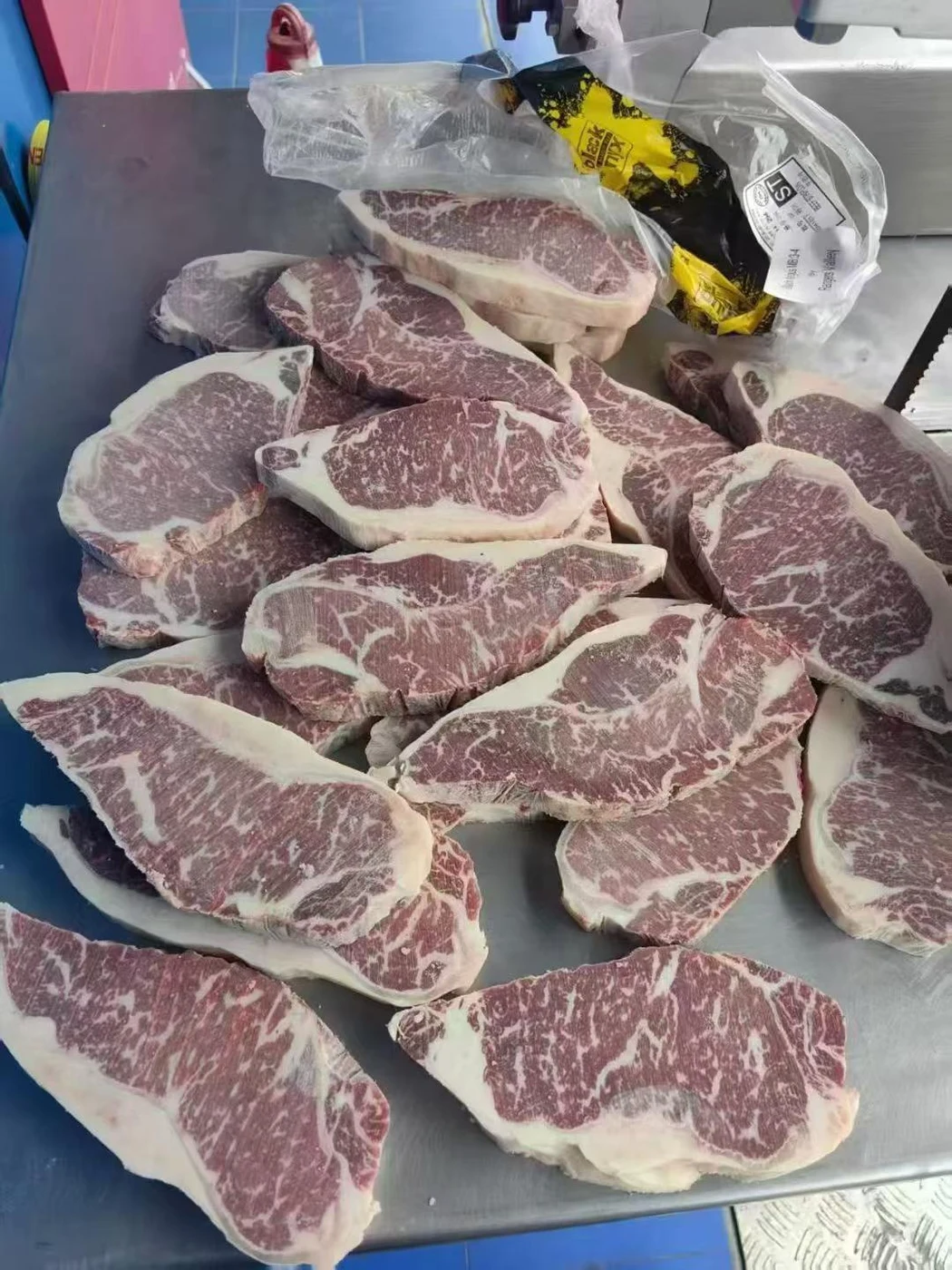
Separate origin, breed, cut and grade using photographed BLACK ONYX, LOTTE L’grow and Creekstone labels. Understand what a sample can and cannot prove.
Read the guide ↗
A practical checklist for overseas gift buyers: recipient preferences, city, contents, packaging, payment and delivery confirmation before ordering.
Read the guide ↗Share your city, cooking style and budget. Ask for two suitable whole cuts with actual photos, grade labels, weights and a complete quote.